
How to Generate Real Estate Leads Using AI
A practical 2026 guide to using AI for real estate lead generation, faster qualification, better follow-up, cleaner CRM workflows, and more consistent conversions.
Quick Answer: How to Generate Real Estate Leads Using AI
The best way to generate real estate leads using AI is to build a simple system: attract traffic, capture inquiries instantly, qualify leads early, and follow up automatically.
- Attract: use SEO, ads, local content, and landing pages
- Capture: use forms, chatbots, and click-to-message flows
- Qualify: ask about budget, location, timeline, and intent
- Nurture: use CRM reminders, email, and WhatsApp follow-up
In other words, AI works best when it helps you respond faster, organize better, and move serious prospects into real conversations before they go cold.
Introduction
Let’s be honest:
Most real estate agents do not have a traffic problem. They have a lead handling problem.
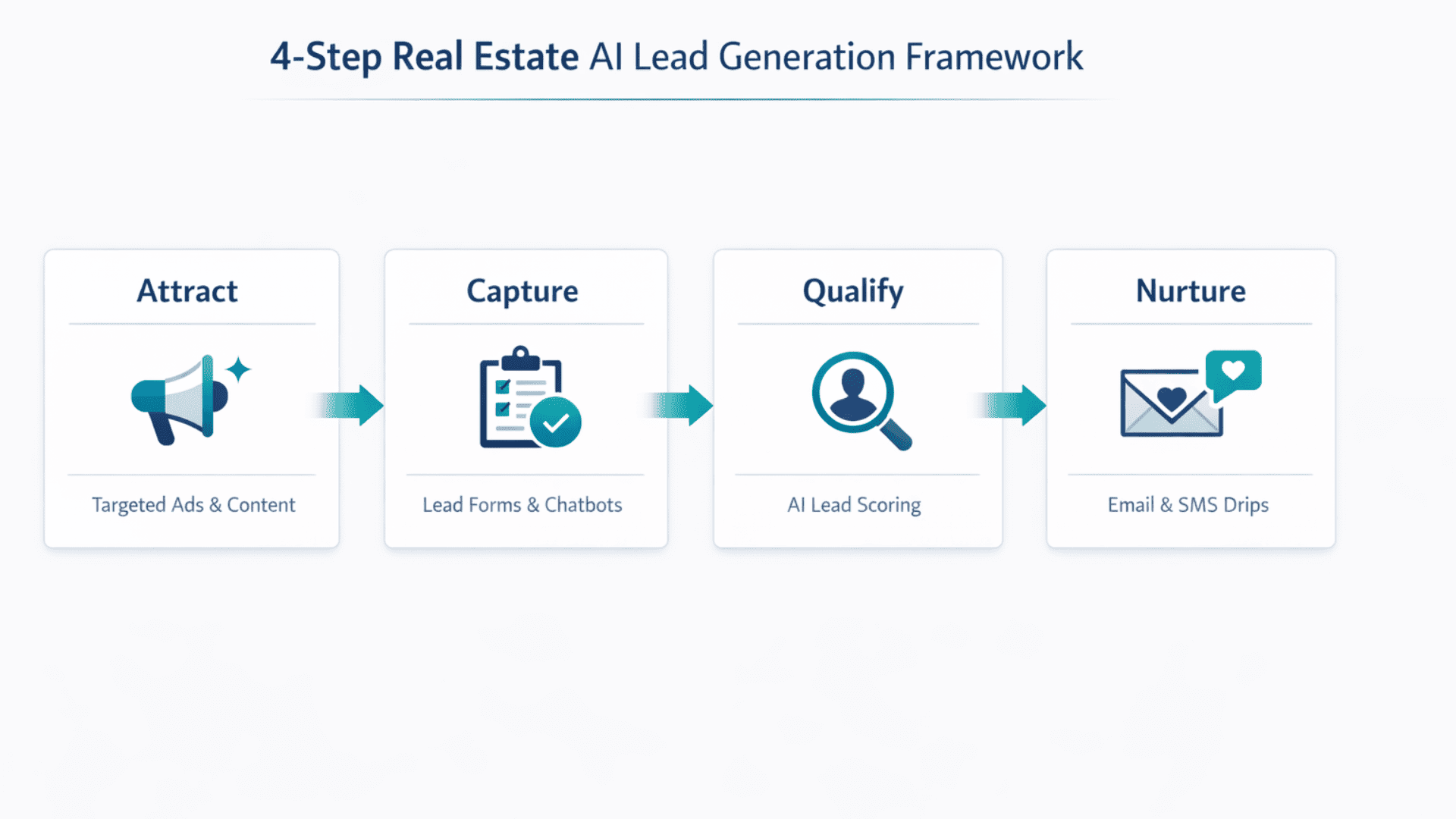
Leads come in.
No reply.
Late reply.
No system.
No clear next step.
👉 Result: lost conversations, missed appointments, and deals that never even get a chance to happen.
That is where AI can help. Not because it replaces the agent. And not because it somehow closes deals by itself.
It helps because it improves the parts of the process that usually break first: speed-to-lead, qualification, follow-up consistency, and pipeline visibility.
In this guide, you will learn how to generate real estate leads using AI in a practical, system-first way. You will see what the workflow looks like, where AI actually fits, and which parts of the process matter most. You will also see how the stack behind AI tools for real estate lead generation becomes much more useful when it is connected to a real lead-handling system instead of a random collection of apps.
But here’s the thing: more tools do not automatically mean more leads.
A better system does.
What Is AI Lead Generation in Real Estate?
AI lead generation in real estate means using software, automation, and AI-assisted workflows to help capture, qualify, nurture, and convert property inquiries more efficiently.
In practice, that can include chatbots, forms, CRM automation, lead scoring, reminder sequences, retargeting, AI-assisted content, and automated first-response systems.
One of the most practical ways to implement this is by using ChatGPT workflows that handle content, qualification, and follow-ups. This becomes much clearer when you see how the entire system works in detail inside a ChatGPT-based real estate lead generation setup .
Simple Definition
AI does not create demand out of nowhere.
What it does is make your lead generation process faster, more organized, and more consistent.
Simple Example
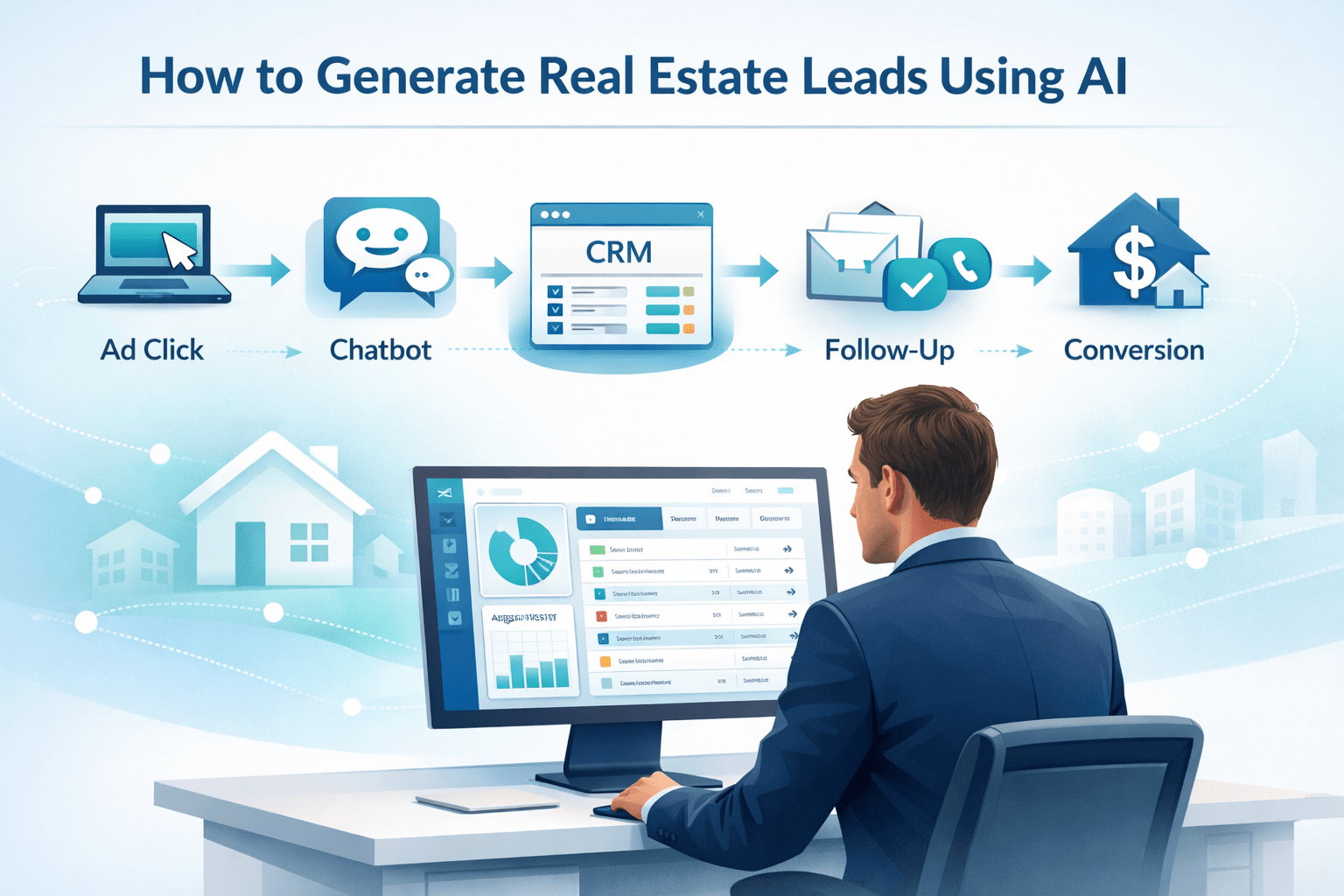
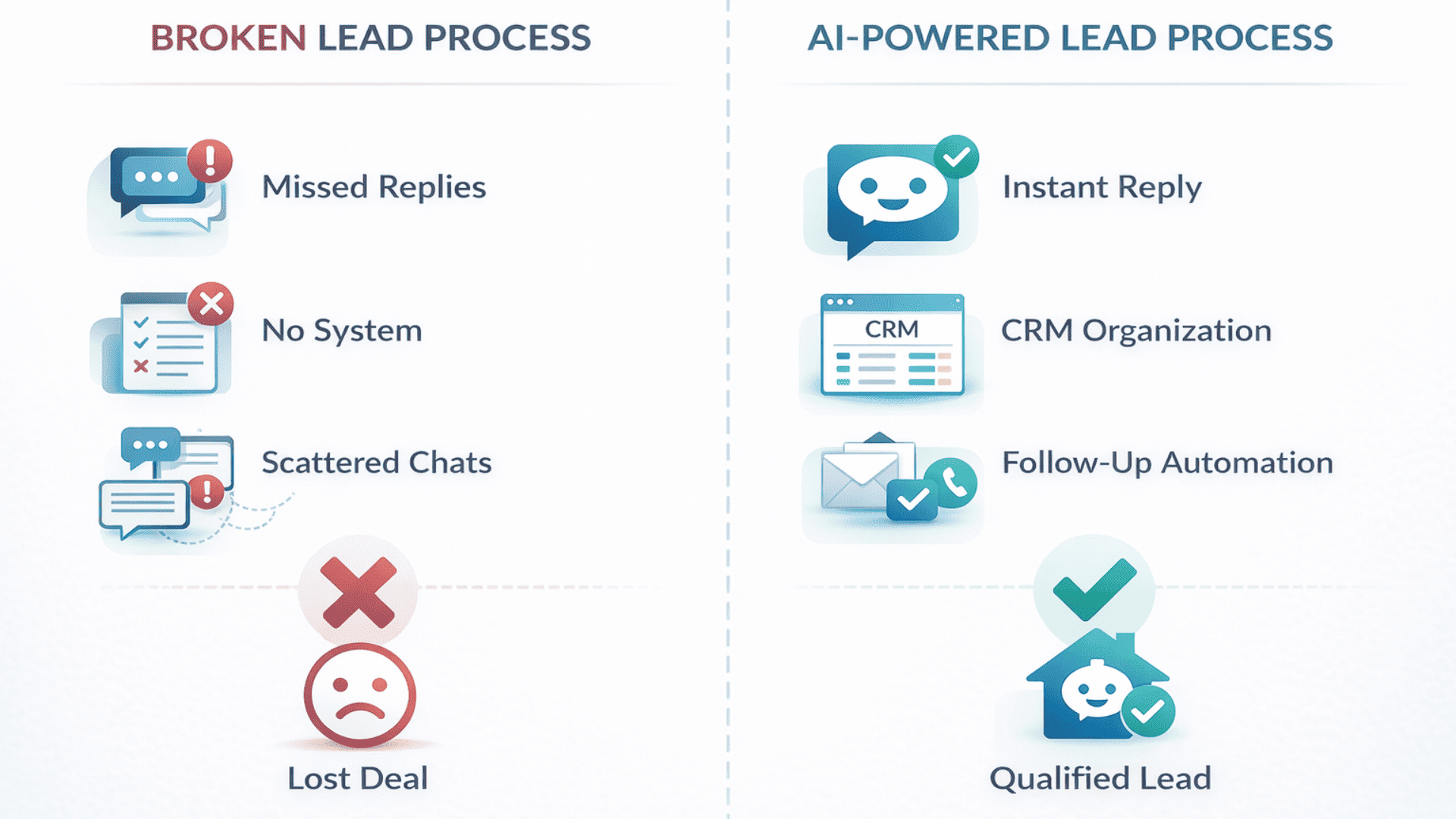
A buyer visits your website. A chatbot or form captures the inquiry. The lead is saved inside your CRM. An acknowledgment goes out instantly. The system asks a few qualification questions. Then you step in when the prospect is ready for a serious conversation.
👉 Result: less manual chaos and a much cleaner handoff between automation and human selling.
Why Most Real Estate Leads Don’t Convert
Before we talk about tactics, we need to talk about what usually goes wrong.
Because in many cases, agents are not losing leads because the market is too competitive. They are losing leads because the workflow breaks after the inquiry comes in.
Slow Response Time
A buyer fills out a form, sends a message, or clicks an ad, but the reply comes too late. By then, the prospect is already colder.
No Qualification Process
Not every inquiry is serious. Without a system, agents end up spending too much time on weak or mismatched leads.
Weak Follow-Up
Many leads do not convert the first time they interact with you. That is exactly why the system behind automating real estate lead follow-up using AI matters so much once the initial inquiry has been captured.
No Pipeline Visibility
When leads are scattered across calls, DMs, emails, notes, and memory, it becomes hard to know who needs attention next.
👉 The real issue: most agents do not need more random features.
They need a cleaner operating system for lead generation: capture, qualify, organize, follow up, and move the right people toward the next step.
How AI Changes the Real Estate Lead Generation Process
Let’s make this real with a simple scenario.
A buyer clicks your ad at 10:45 PM and lands on your page.
Instead of waiting until the next morning, your system can reply instantly, ask qualification questions like budget, preferred area, and buying timeline, and save those answers inside your CRM.
It can also send an acknowledgment, tag the lead by intent level, notify you if the prospect looks serious, and queue the next follow-up automatically.
👉 Result: fewer missed opportunities and more time spent on qualified conversations.
That’s the difference between traffic and a real lead system.
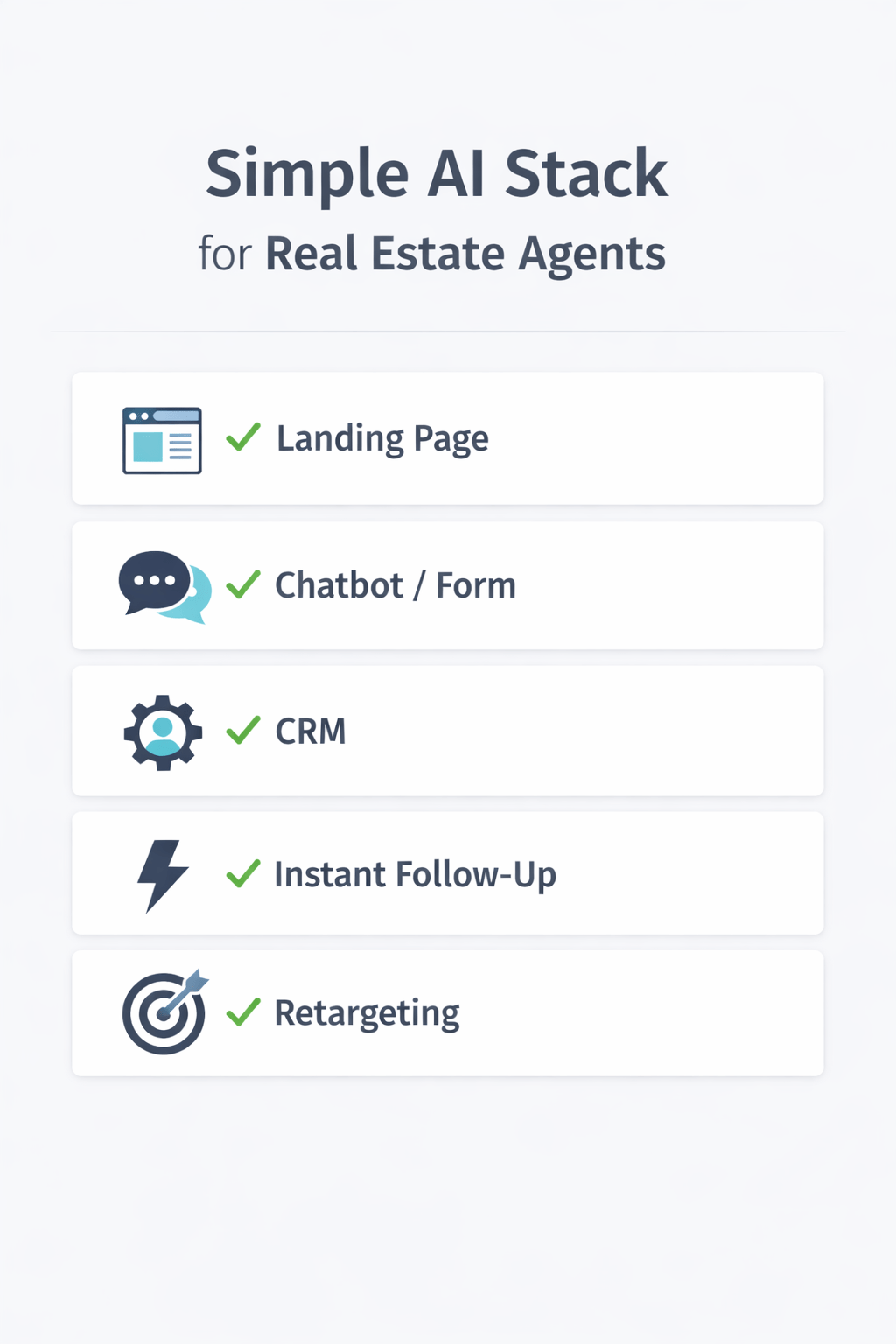
The AI Lead Engine Framework for Real Estate
Here is the simplest way to understand how AI fits into the full funnel.
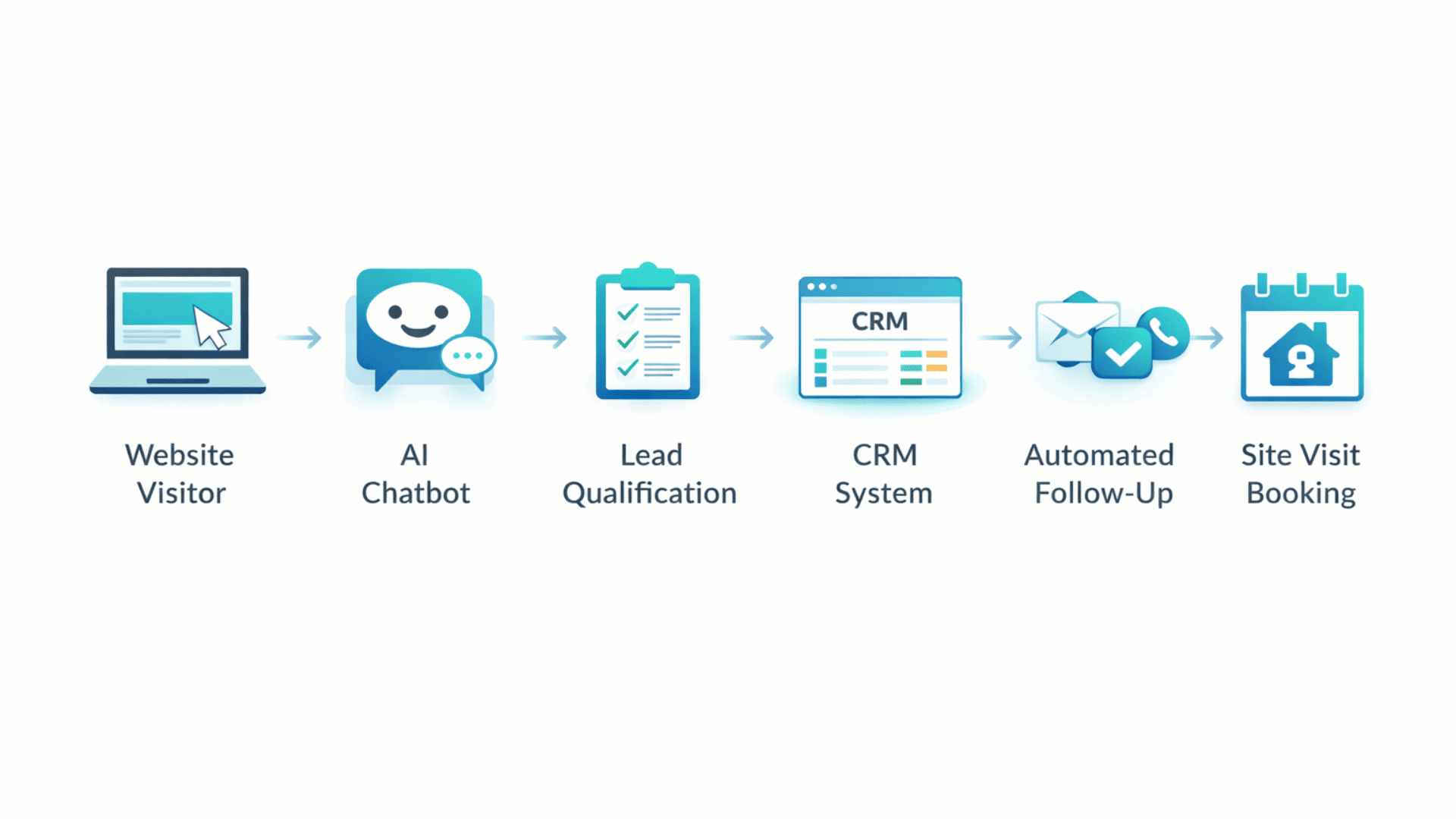
Think of this as your lead engine:
traffic comes in → inquiries get captured → qualified → followed up → moved toward calls, visits, and deals.
When this engine is strong, lead generation becomes more predictable and less dependent on manual luck.
Attract
Bring in attention through SEO, local content, Google Ads, Meta Ads, landing pages, and social media.
Capture
Use forms, chatbots, click-to-message flows, and landing pages to collect inquiries while intent is still high.
Qualify
Ask about budget, location, property type, financing readiness, and timeline automatically.
Nurture
Use CRM workflows, WhatsApp, and email follow-up to move warm prospects toward a real next step.
👉 Key point: AI works best when it supports a structured funnel.
Tools by themselves do not create a growth system. A connected workflow does.
Quick Picks
If you want the short version, start here.
Best when your main problem is missed inquiries outside working hours.
Best when leads are scattered and follow-up lacks structure.
Best when you want steady high-intent traffic over time.
Best when delayed response is quietly killing good leads.
7 Practical Ways to Generate Real Estate Leads Using AI
Now let’s move from theory into execution.
These are the most practical ways agents and teams can use AI for real estate lead generation right now.
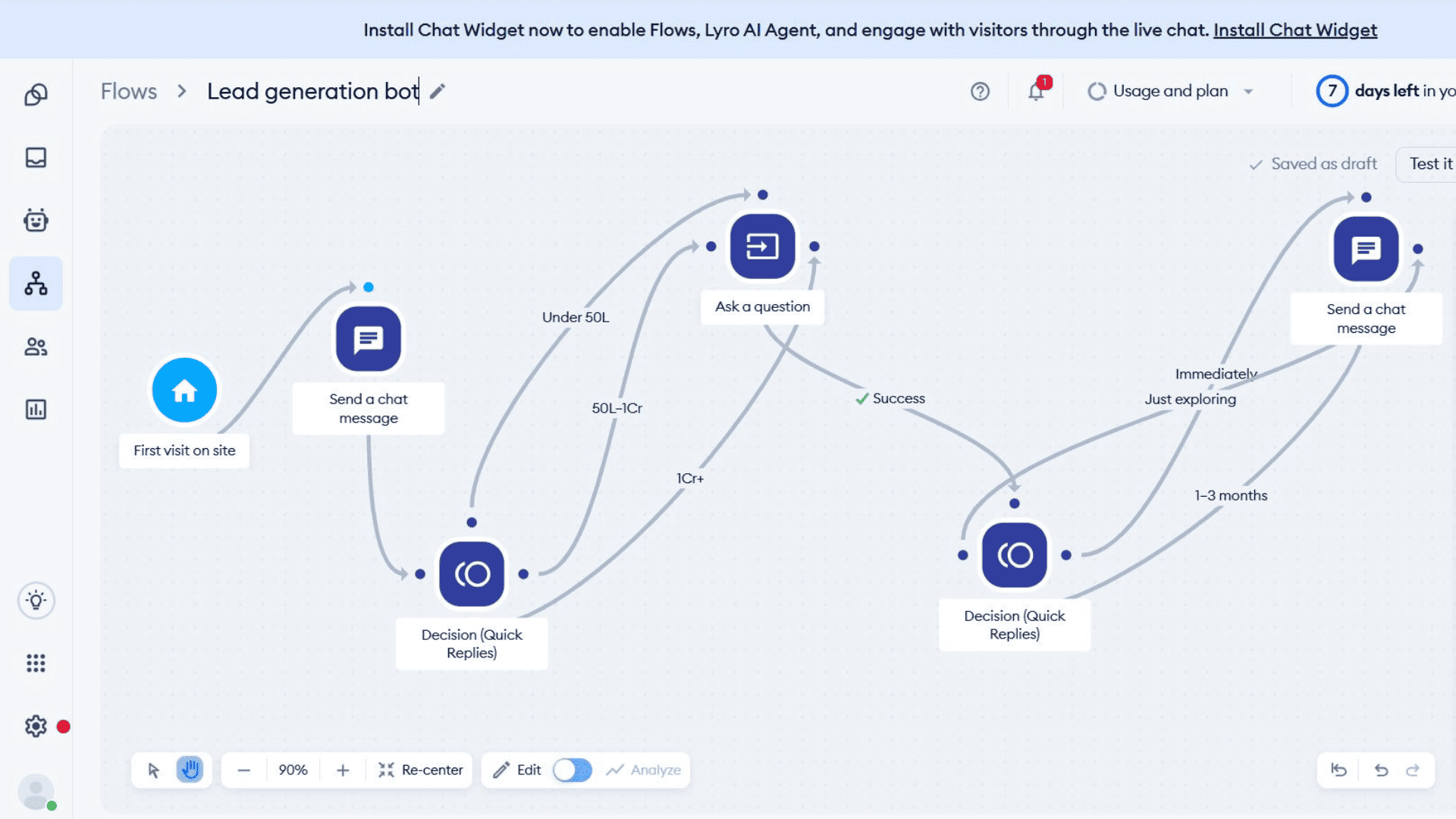
1. Use AI Chatbots for Instant Lead Capture
Why it matters: chatbots help reduce lead drop-off by replying instantly when buyers visit your site or message through social channels.
What it helps with:
- Capturing inquiries outside working hours
- Asking basic qualification questions automatically
- Keeping engagement alive while interest is still high
Best for: agents who regularly miss leads because they cannot respond quickly enough.
In most real-world implementations, this isn’t just a basic chatbot replying with generic answers. It’s a structured flow designed to guide users, capture intent, and pass qualified data into your system. When you break it down, this involves conversation logic, qualification steps, and CRM integration working together—which becomes much clearer when you see how an AI chatbot for a real estate website is actually built from the ground up .
2. Run AI-Assisted Facebook and Google Ads
Why it matters: paid traffic still matters, but raw traffic is not enough. Ads work much better when clicks are connected to capture and follow-up systems.
What it helps with:
- Reaching people actively searching for properties
- Sending traffic into structured landing pages or forms
- Retargeting visitors who do not convert on the first visit
Best for: agents who need faster lead flow and already have a basic response system in place.
3. Use CRM Automation for Lead Management
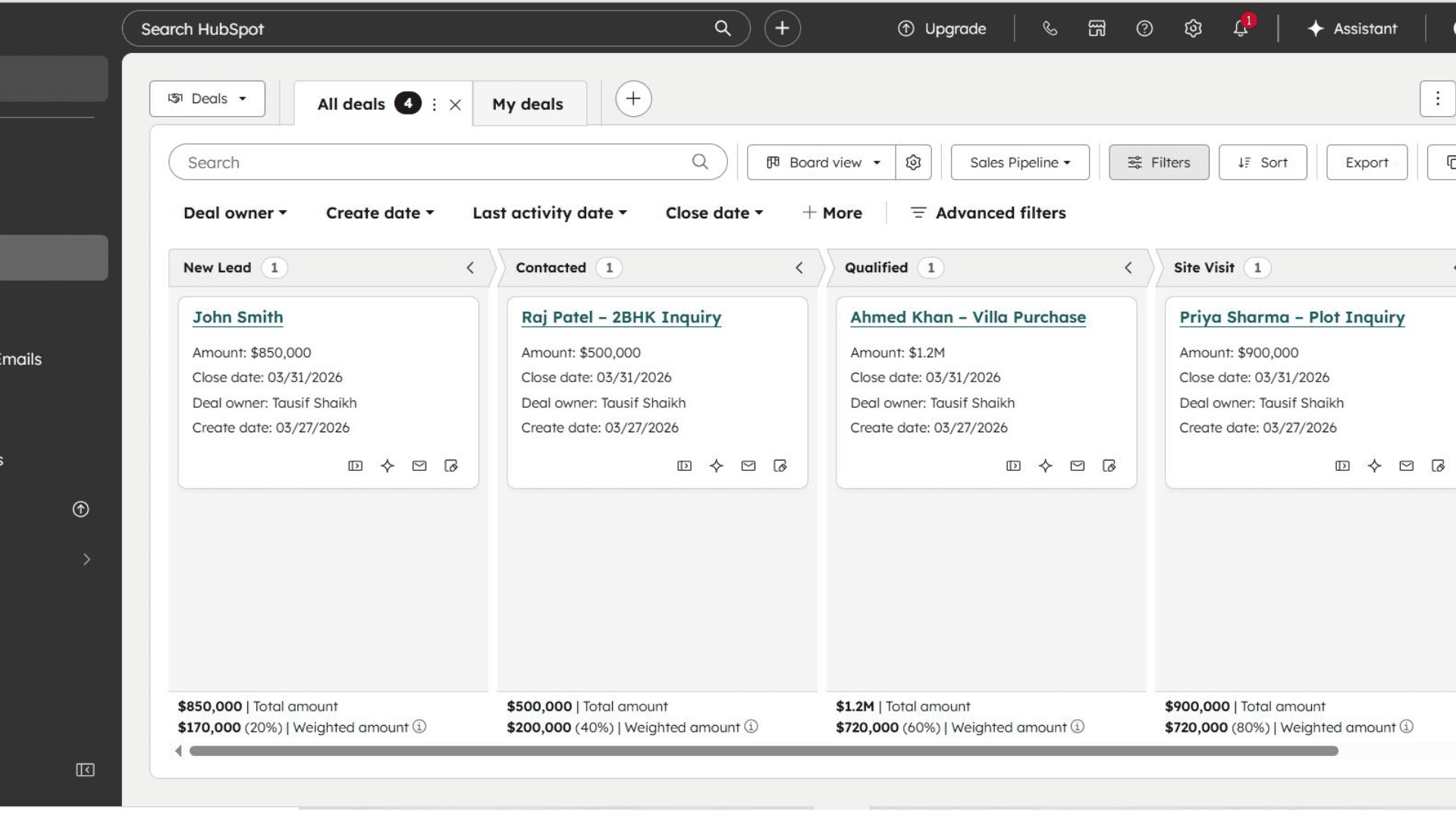
Why it matters: one of the easiest ways to generate more real estate leads is to stop losing the leads you already paid for or worked hard to attract.
- Track new, warm, and qualified leads clearly
- Set reminders, tags, and deal stages
- Keep lead history visible in one place
- Make follow-up much more consistent
Best for: agents who want clarity instead of scattered notes, chats, and memory-based selling.
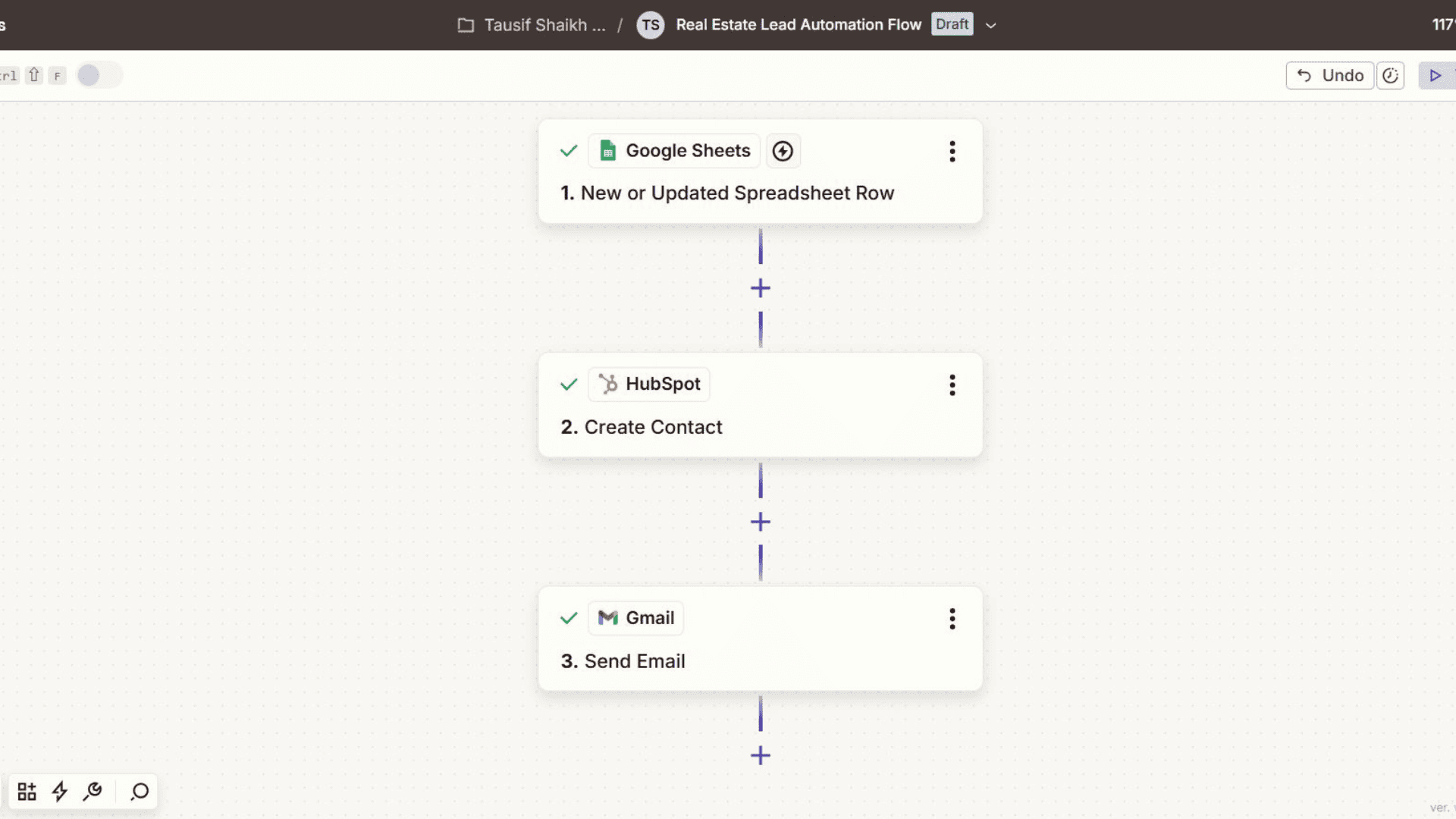
4. Automate Follow-Up Through Email and WhatsApp
Why it matters: many leads do not convert from the first message. They need reminders, reassurance, answers, and timing.
- Send instant acknowledgment messages
- Deliver next-step details automatically
- Re-engage open inquiries consistently
- Support longer buying cycles without manual chaos
Best for: teams that lose leads because follow-up is inconsistent, delayed, or forgotten.

5. Use AI for Real Estate SEO and Content
Why it matters: organic search can bring highly relevant traffic when people search for location pages, buyer questions, and property-specific topics.
- Create area pages and local guides
- Answer buyer questions clearly
- Target long-tail real estate keywords naturally
- Bring in high-intent traffic over time
Example: a page like “best neighborhoods for first-time buyers in Pune” can attract visitors with clear local intent long before they are ready to fill out a generic form.
6. Add Lead Scoring to Prioritize Serious Prospects
Why it matters: not every inquiry deserves the same amount of time at the same moment.
- Prioritize higher-intent leads first
- Reduce time spent on weak inquiries
- Improve response quality for better-fit prospects
Simple logic: a prospect with budget clarity, timeline urgency, and location preference is usually more actionable than a casual inquiry with no decision signal at all.
7. Use Retargeting to Bring Back Lost Leads
Why it matters: many buyers visit a page, open a form, or click an ad and leave without converting.
- Reconnect with interested visitors
- Support longer decision cycles
- Increase efficiency from traffic you already paid for
Best for: agents and teams who want to squeeze more value out of existing attention instead of always starting from zero.
Best AI Workflow for Real Estate Agents
If you are wondering what a practical setup actually looks like, here is the simplest version:
Traffic source → landing page or chatbot → CRM capture → instant first response → qualification → manual follow-up for warm leads
That is usually enough to build a much stronger system than the average “message me and I’ll get back to you” approach.
The mistake most people make is trying to build the perfect automation stack on day one. A simpler workflow used consistently usually performs better.
Common Mistakes to Avoid
Using Too Many Tools Too Early
Start with the core workflow first and add more only when there is a real need.
Thinking AI Will Replace Sales Skills
AI can improve lead handling, but trust, objection handling, and closing still depend heavily on the agent.
Not Following Up Fast Enough
Even strong leads cool down quickly. Response speed is still one of the biggest practical advantages of automation.
Not Qualifying Leads Properly
If your system collects only names and phone numbers, you still do not have real clarity on intent.
Ignoring Organic Lead Generation
Ads can bring speed, but SEO and local content can bring steady high-intent traffic over time.
No Clear Next Step
Every lead flow should move toward something: a call, site visit, consultation, or a qualification conversation.
How We Approached This Guide
This guide was written with a practical workflow lens, not a hype lens.
What this guide focuses on:
- How AI fits into real estate lead generation step by step
- Which parts of the process can realistically be automated
- Where human follow-up still matters most
- How agents can build simpler, cleaner workflows without unnecessary complexity
Last reviewed: March 2026
Trust note: product features, pricing, and implementation depth can change, so final tool-level decisions should always be verified on official sites.
Frequently Asked Questions
How do real estate agents generate leads using AI?
Real estate agents generate leads using AI by combining traffic sources, chatbots or forms, CRM automation, qualification steps, follow-up systems, and retargeting into one connected workflow.
What is the best way to use AI for real estate lead generation?
The best approach is to use AI inside a simple system: attract traffic, capture inquiries, qualify leads early, automate the first part of follow-up, and move warm prospects into direct conversations.
Can AI help generate better quality real estate leads?
AI can improve lead quality by asking qualification questions earlier, organizing inquiries better, and helping agents focus on stronger prospects first.
Is AI lead generation only for large real estate teams?
No. Solo agents and small teams can also benefit, especially from faster response, cleaner CRM workflows, and more reliable follow-up.
Do I need many tools to start?
No. One landing page, one lead capture method, one CRM, and one simple follow-up workflow is enough for a strong start.
What matters more: more tools or better follow-up?
Better follow-up usually matters more. A simpler system used consistently often beats a larger stack that no one fully manages.
Focus on Quality First. Build Consistency. Then Scale.
The real advantage of using AI for real estate lead generation is not just getting more leads. It is about attracting the right people, capturing their intent early, and creating a predictable flow of opportunities.
The smartest next step usually looks like this:
- Start with one high-intent lead source
- Use AI to capture and qualify leads instantly
- Focus on consistency before expanding channels
- Optimize messaging based on real responses and data
A strong starting point usually looks like this:
- Set up one landing page or funnel
- Add a chatbot or AI-based capture layer
- Connect leads to a CRM or tracking system
- Ensure fast first response (manual or automated)
- Scale only after the system starts producing consistent results
The goal is not to be everywhere at once. It is to build one reliable channel that consistently brings in qualified leads.
Once that system is working, AI makes it easier to expand, optimize, and scale without losing control over quality.