
How to Automate Real Estate Lead Follow-Up Using AI (2026 Guide)
Most real estate leads don’t convert because the follow-up process breaks down. Responses are delayed, conversations get scattered, and strong prospects go cold before an agent ever gets a real chance to move them forward.
This guide shows you how to build an AI-powered follow-up system that responds instantly, qualifies leads, stores data in your CRM, and nurtures prospects across email, WhatsApp, SMS, and behavior-based automation.
Quick Answer:
AI follow-up automates the most repetitive parts of lead management: instant replies, qualification, CRM updates, reminders, and nurture sequences. That means every lead is handled faster and more consistently.
Introduction
Real estate teams usually spend a lot of energy on lead generation.
But here’s the problem:
the real leakage happens after the inquiry comes in.
With AI-powered follow-up:
✔ You respond instantly
✔ You reduce missed opportunities
✔ You keep your pipeline organized
✔ You create a process that can scale
Here’s the reality: leads rarely go cold because they were “bad.”
They go cold because the system behind them is slow, inconsistent, or manual.
That matters even more when you look at how modern businesses generate real estate leads using AI, because acquisition and follow-up work best when they are built as one connected process.
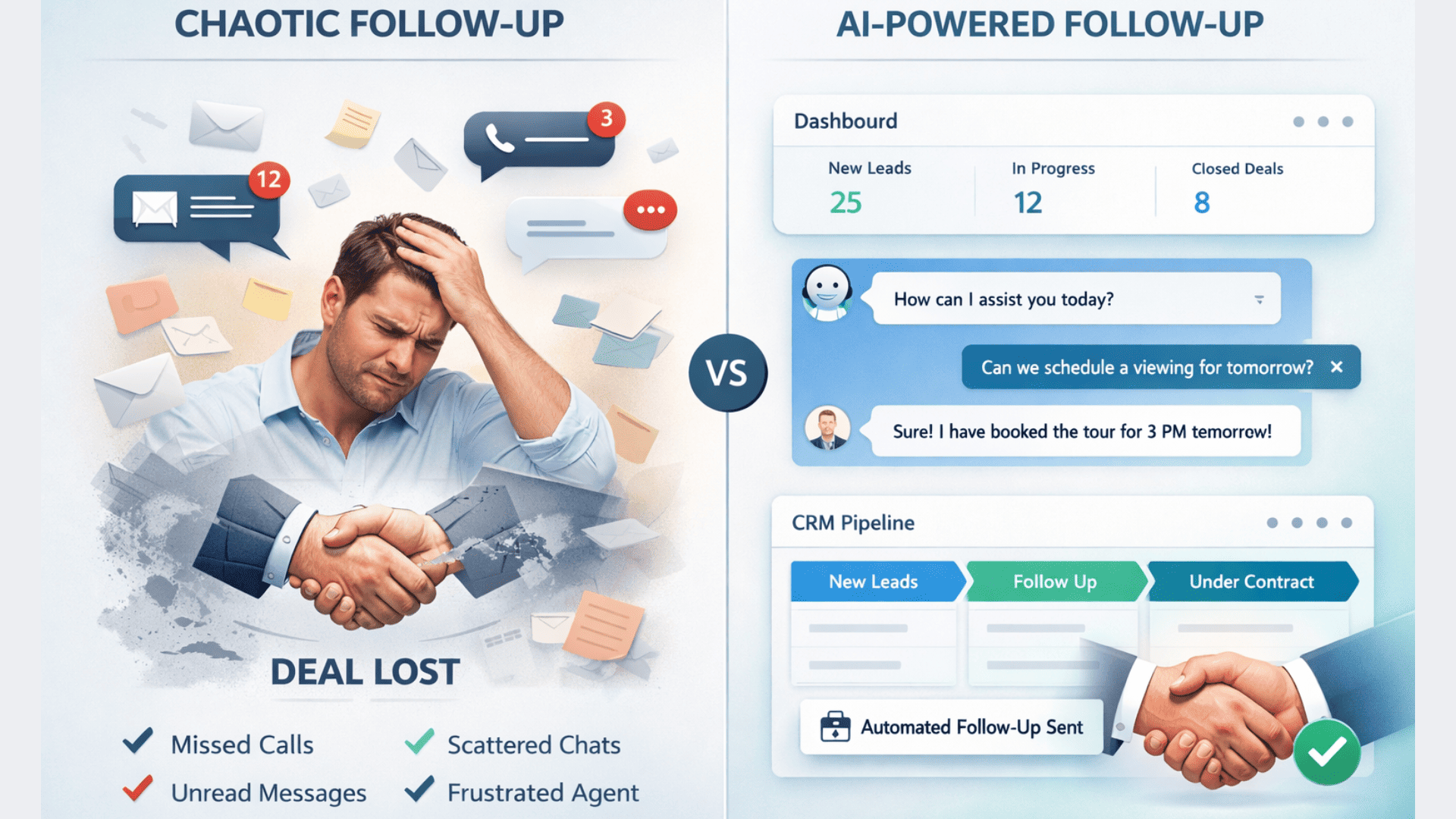
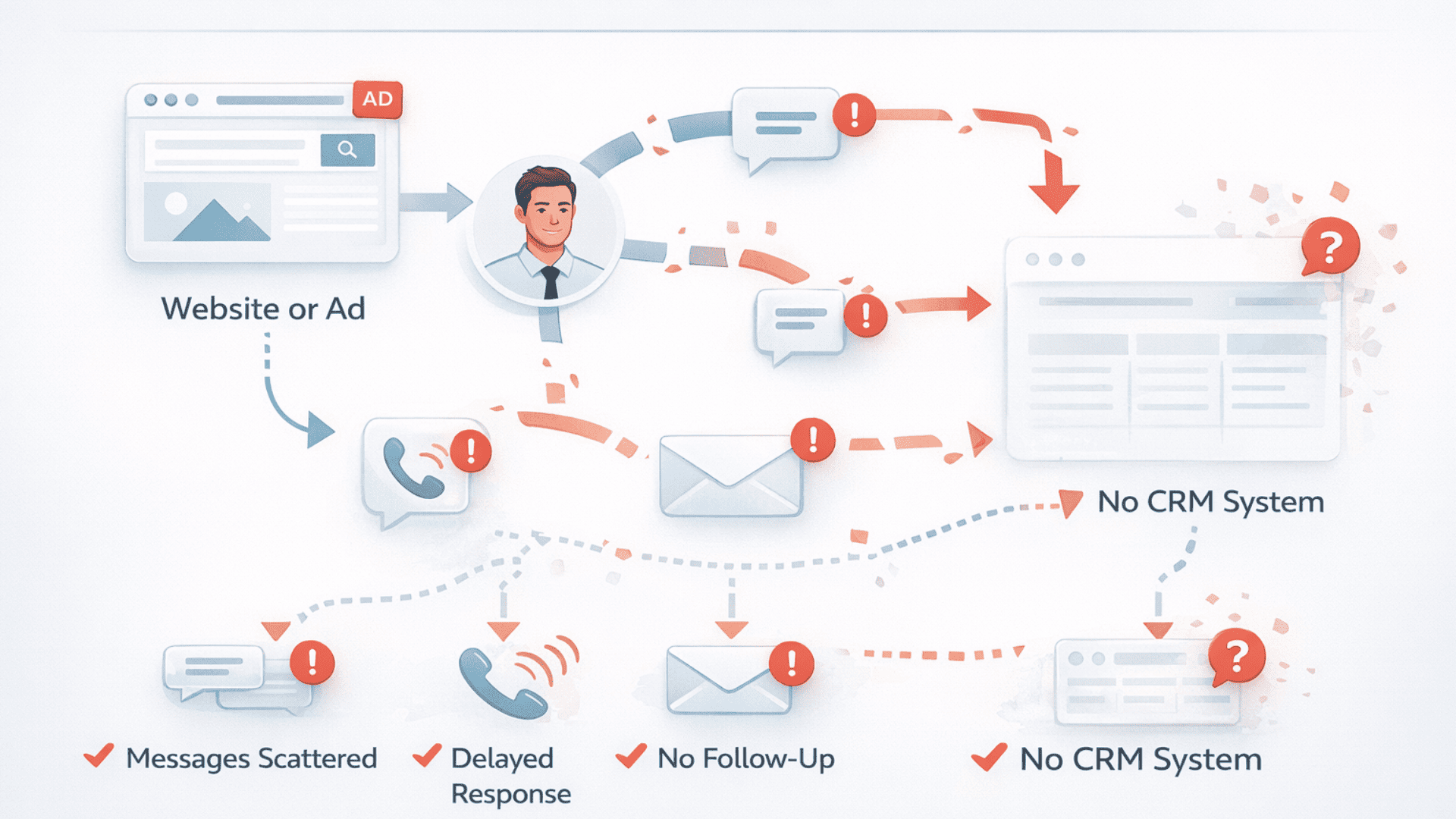
Why Most Real Estate Leads Are Lost
Let’s break this down.
The issue usually isn’t getting leads.
It’s what happens after they come in.
No Instant Response
A lead submits a form or message, but the reply comes too late. By then, the prospect may already be speaking with another agent.
Manual Follow-Ups
Agents often depend on memory, notes, or scattered chats to remember who needs a follow-up next.
Disconnected Communication
WhatsApp, email, calls, and web forms sit in different places, making visibility difficult.
No Tracking System
Without CRM structure and automation, even strong leads can slip through the cracks.
Why speed matters:
In lead generation, response speed directly affects engagement. The longer the delay, the more likely a prospect is to lose interest, forget context, or move to a competitor.
The AI Follow-Up System Framework
To make this simple, think of AI follow-up as a five-part system:
1. Capture
Collect the inquiry from forms, chat, landing pages, or ads.
2. Respond
Reply instantly so intent stays high and the conversation starts immediately.
3. Qualify
Ask key questions like budget, location, property type, and timeline.
4. Nurture
Send structured follow-ups across channels based on timing and behavior.
5. Convert
Surface high-intent leads so the agent steps in at the right moment.
What Is AI-Powered Lead Follow-Up?
AI-powered lead follow-up is a system that automates the repetitive parts of lead management so agents can focus more on serious conversations, site visits, and deal-making.
With AI-powered follow-up:
✔ You respond instantly
✔ You reduce missed opportunities
✔ You keep your pipeline organized
✔ You create a process that can scale
In other words, AI does not replace the agent.
It removes delay, inconsistency, and manual friction from the follow-up process.
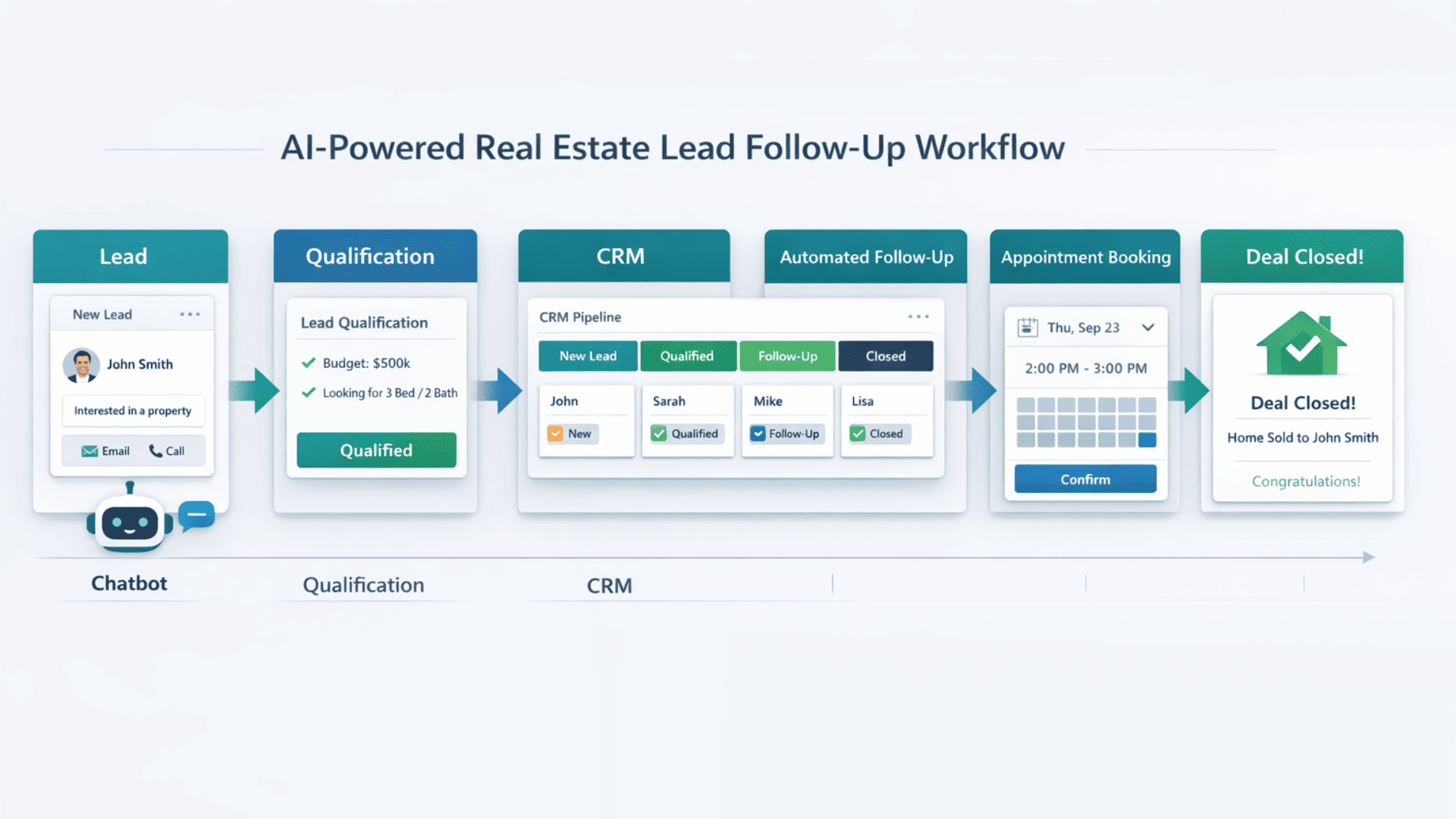
How AI Automates Real Estate Lead Follow-Up Step by Step
Now let’s walk through the actual workflow.
A system like this becomes much easier to build when the stack includes the right AI tools for real estate lead generation, because the handoff between capture, qualification, automation, and CRM tracking needs to feel seamless.
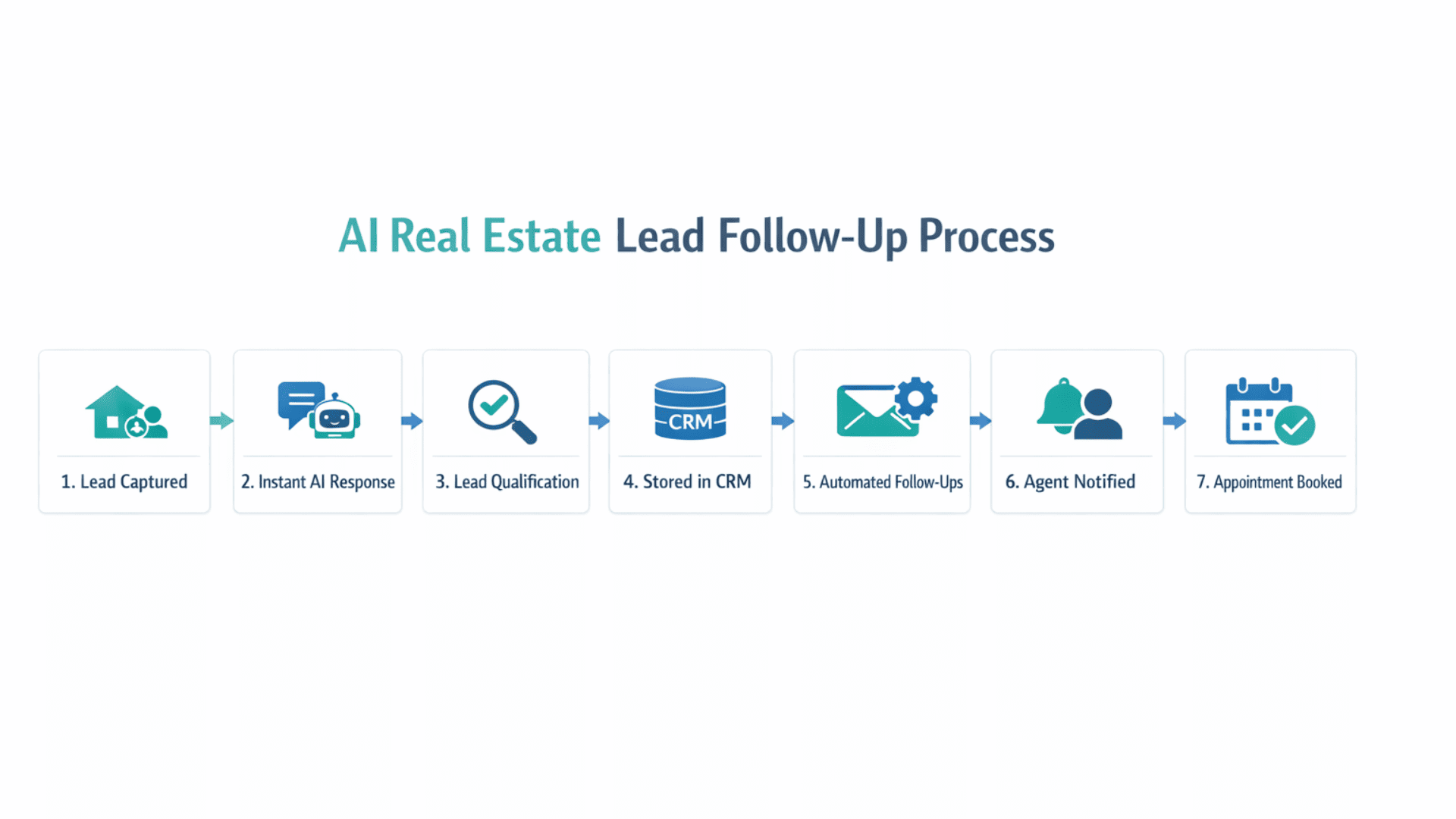
Lead Capture
The lead enters through a website form, landing page, chatbot, ad form, or click-to-message channel. In many cases, that first interaction is handled through a chatbot layer, and understanding how that layer is structured makes the entire follow-up system easier to implement—especially when you look at how an AI chatbot for a real estate website is actually built and integrated into the lead flow .
Instant AI Response
The system replies immediately, which keeps intent high and reduces the chance of losing momentum.
Lead Qualification
AI asks key questions like budget, location, preferred property type, and buying timeline.
CRM Storage
The lead’s answers and activity are stored in your CRM so nothing gets lost or forgotten.
Automated Follow-Ups
Email, WhatsApp, or SMS sequences go out automatically based on timing, inactivity, or user behavior.
Lead Scoring and Agent Notification
When a lead shows stronger intent, the system flags it as warm or hot and alerts the agent to step in.
Conversion
The prospect moves toward a consultation, call, site visit, or deal closure with less friction.
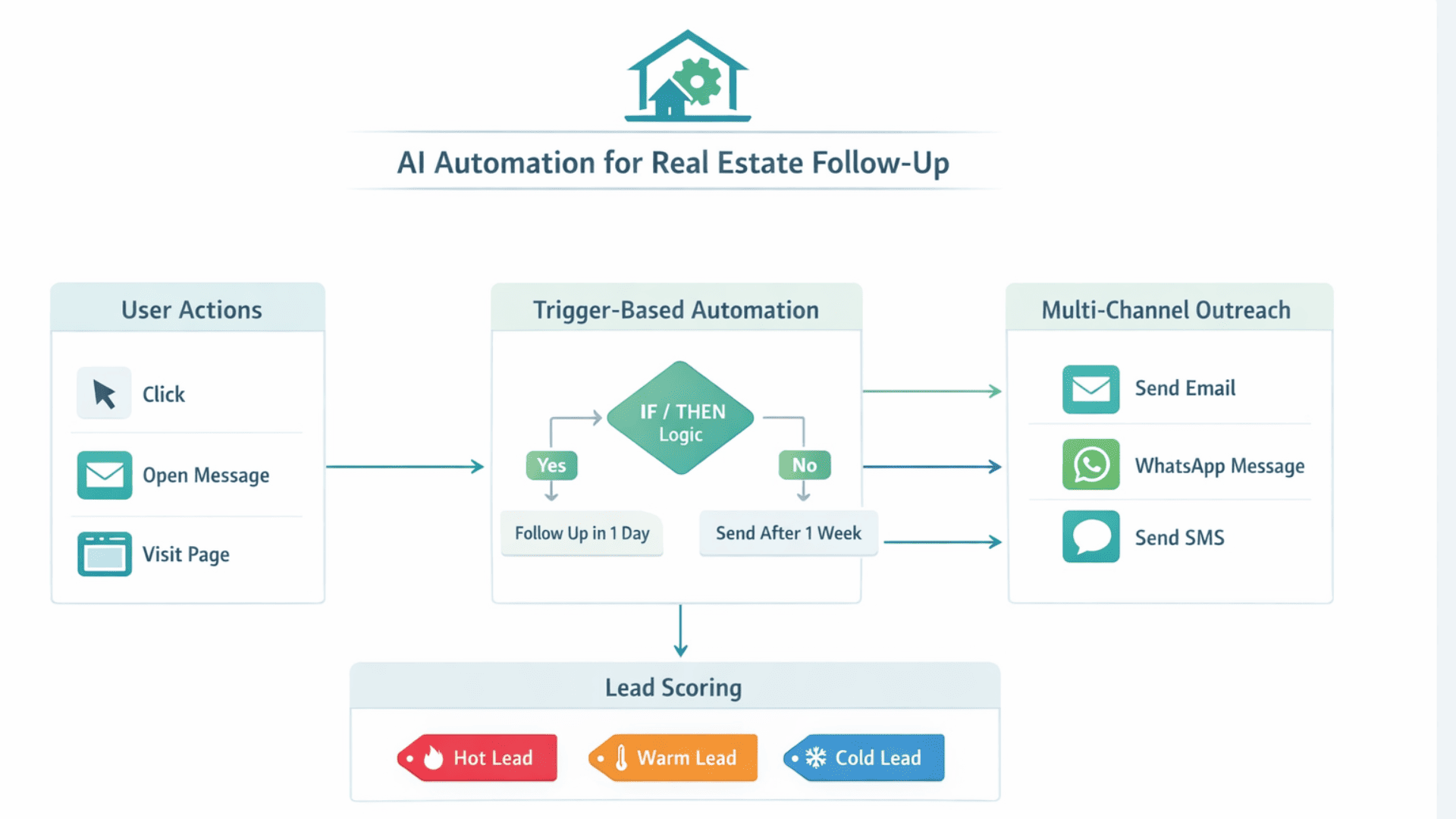
How AI Automation Actually Works Behind the Scenes
This is the part many people overcomplicate.
But the core logic is simple:
automation is just a chain of triggers and conditions.
This is also where tools like ChatGPT start to play a bigger role, especially when the goal is to structure responses, qualification, and follow-ups as part of a connected lead generation system rather than isolated tasks.
If a lead submits a form → send an instant response
If the lead doesn’t reply → send a reminder
If the lead opens an email → trigger the next step
If the lead clicks a link or revisits a page → notify the agent
If the lead shows stronger intent → assign a hot lead score
That’s the big idea.
Every action creates the next action automatically.
Before vs After AI Follow-Up
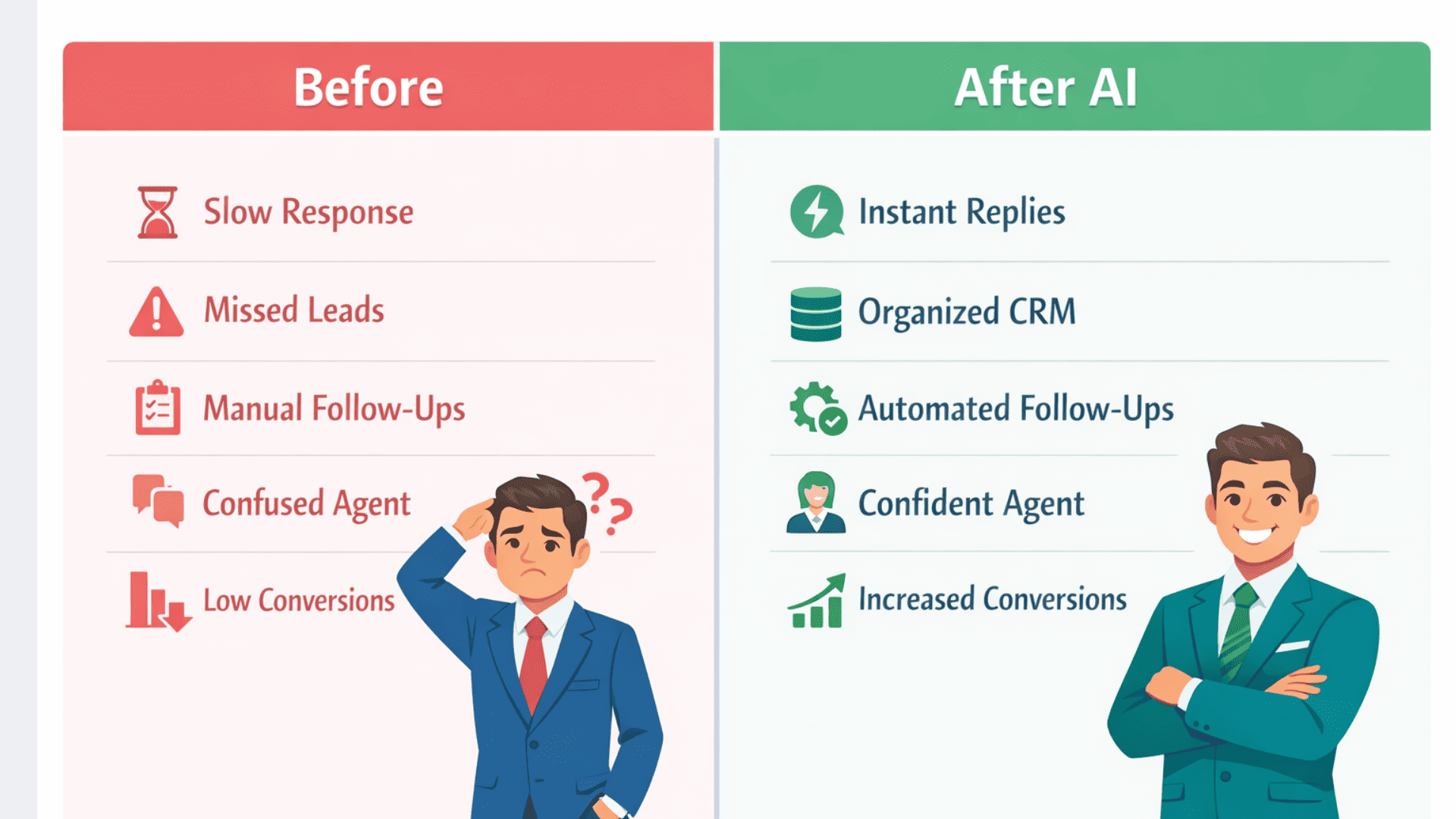
Here’s where the difference becomes obvious.
Before AI
Slow response time
Missed leads
Manual follow-ups
No clear visibility
Lower conversion consistency
After AI
Instant replies
Consistent nurturing
Organized CRM tracking
Better prioritization
Higher conversion readiness
Real Example: Why CRM Tracking Matters
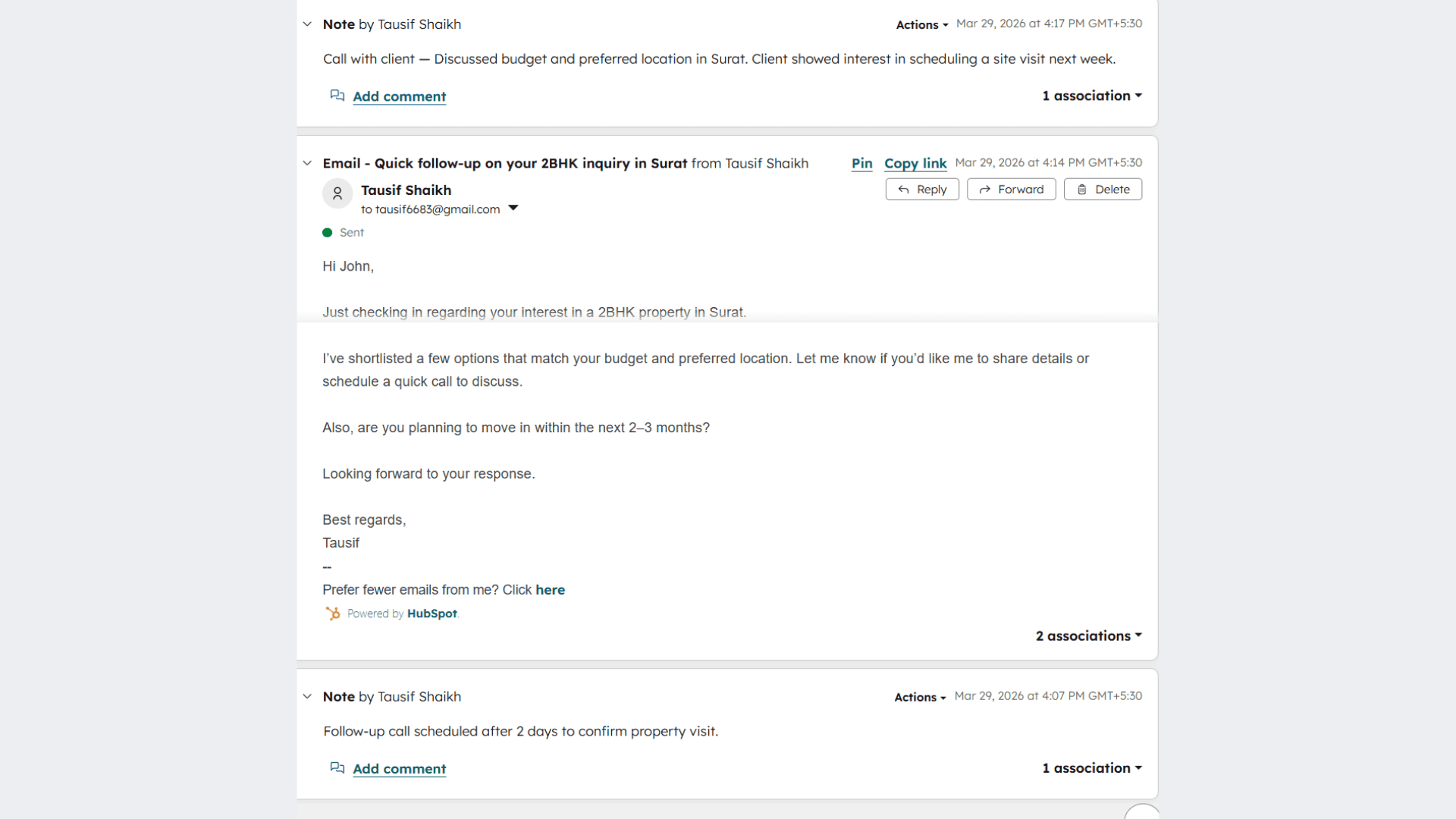
A CRM is the operational center of the follow-up system.
Without it, conversations stay fragmented.
With it, every interaction has context.
Track Every Lead Stage
See whether a lead is new, contacted, qualified, nurtured, or ready for a site visit.
View Communication History
Understand previous interactions without digging through multiple channels.
Manage Follow-Ups
Use reminders, tasks, and automations instead of depending on memory.
Prioritize Hot Leads
Know which conversations deserve immediate human attention.
How the Workflow Connects Across Tools
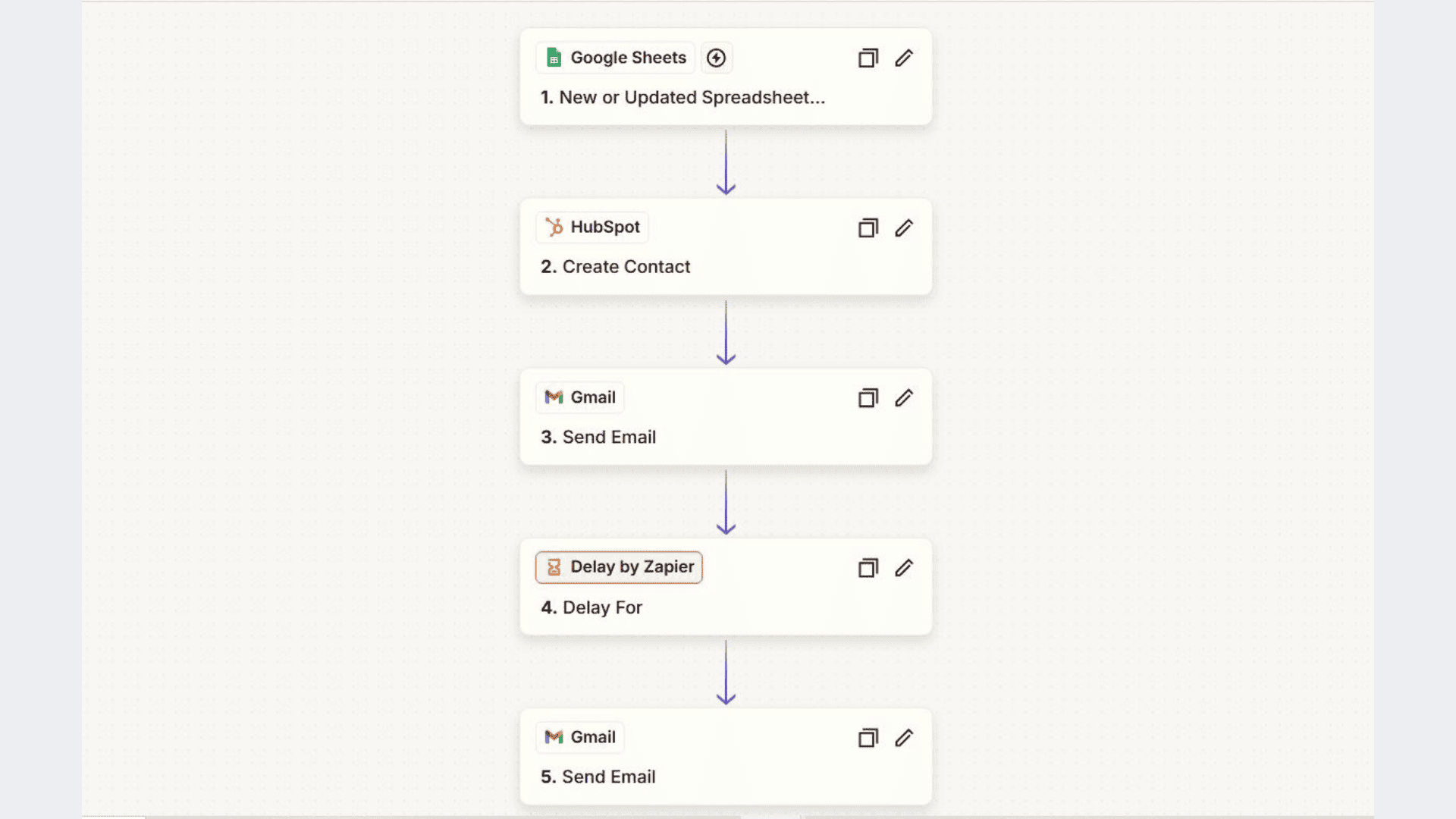
A practical automation system usually connects multiple tools behind the scenes.
That sounds technical, but the workflow itself is straightforward.
Simple example workflow
Lead fills out a form
→ automation tool detects the submission
→ CRM entry gets created
→ instant reply is sent
→ follow-up sequence begins
In other words, the tools do the routing while the agent focuses on the closing conversation.
Why Lead Scoring Makes AI Follow-Up Smarter
Not every lead needs the same response.
That’s where lead scoring becomes powerful.
Cold Lead
Low engagement, early-stage curiosity, or incomplete information.
Warm Lead
Moderate engagement, some intent signals, and clearer qualification details.
Hot Lead
Strong engagement, repeat actions, high-intent behavior, or readiness to talk to an agent.
This is where AI helps the most.
Instead of treating every inquiry the same, the system helps you focus personal attention where it matters most.
Best Practices for AI Follow-Up in Real Estate
Before you build anything advanced, get these basics right.
- Respond fast, even if the first response is automated.
- Ask only the questions that actually help qualification.
- Store every answer and activity in one CRM.
- Use clear timing rules for reminders and nurture messages.
- Escalate warm and hot leads to an agent quickly.
- Review the workflow regularly so the automation stays relevant.
Frequently Asked Questions
Does AI replace real estate agents?
No. AI handles repetitive work like instant replies, reminders, qualification, and routing. The agent still plays the most important role when it comes to trust, negotiation, and closing.
Can AI really improve lead conversion?
AI can improve conversion indirectly by improving response speed, consistency, organization, and follow-up coverage. It does not guarantee conversions, but it reduces the operational gaps that often cause leads to go cold.
What channels can AI handle for follow-up?
Depending on the tools you use, AI follow-up can support email, WhatsApp, SMS, chat widgets, and CRM-based reminders. The exact setup depends on your stack and region.
Is AI follow-up expensive to implement?
Not always. Many businesses start with a simple stack: form or chatbot, CRM, and one automation layer. The system becomes more advanced over time, but it does not need to be expensive on day one.
What is the biggest mistake in automated follow-up?
Over-automating without context. If every message feels generic, irrelevant, or mistimed, the system stops helping. Good automation should support human selling, not imitate it badly.
Start With One Workflow. Build Consistency. Then Scale.
Real estate success today is not just about generating more leads. It is about building a system that helps you respond faster, follow up more consistently, and move qualified prospects toward real conversations.
The biggest advantage of AI in follow-up is this:
- Every lead gets a faster response
- Every follow-up has more structure
- Warm prospects are less likely to slip away
- Your team stays more consistent as volume grows
A strong starting point usually looks like this:
- Start with one follow-up workflow
- Automate one response or reminder sequence
- Connect it to one CRM handoff
- Keep human follow-up for warm and qualified leads
- Improve the system before adding more complexity
The real advantage is not automation by itself. It is consistency at every stage of the lead journey.
That is how stronger follow-up systems are built: one working process at a time, improved over time, and scaled only when the foundation is ready.