15 Best AI Tools for Real Estate Lead Generation (2026 Guide)
🏡 Real Estate AI Stack Guide

Table of Contents

15 Best AI Tools for Real Estate Lead Generation

The best AI tools for real estate do not just help you collect more leads. They help you capture inquiries faster, qualify them earlier, and follow up before interest disappears.

Updated for 2026 System-first guide Built for agents, teams, and brokers
✔ Quick picks if you want the short version
✔ Honest “best for” and “skip if” guidance
✔ A practical framework to turn tools into appointments
Quick Answer

What are the best AI tools for real estate lead generation?

The best AI tools for real estate lead generation usually fall into five buckets: chat automation, CRM and pipeline management, lead nurturing, workflow automation, and content + scheduling support.

Short version: ManyChat is excellent for chat-based lead capture, HubSpot is strong for CRM and workflow visibility, Structurely is built for follow-up and appointment-setting, Zapier and Make connect your stack, and ChatGPT helps with messaging, scripts, and content.

But here is the real difference-maker: the same tools perform very differently depending on whether your business already has a repeatable lead flow.

In other words, lead generation and follow-up should never be treated as separate processes. The real advantage comes when both are built together as one connected system.

Best starting stack for most agents

Simple, practical, and realistic

  • ManyChat for instant chat capture
  • HubSpot or Follow Up Boss for lead tracking
  • Zapier or Make for automation
  • ChatGPT for message drafts, replies, and content
  • Calendly for fast booking
Who this guide is for

Agents who want system clarity

This guide is for solo agents, growing teams, and brokerages that want to stop losing leads to slow response, scattered follow-up, and disconnected tools.

Introduction

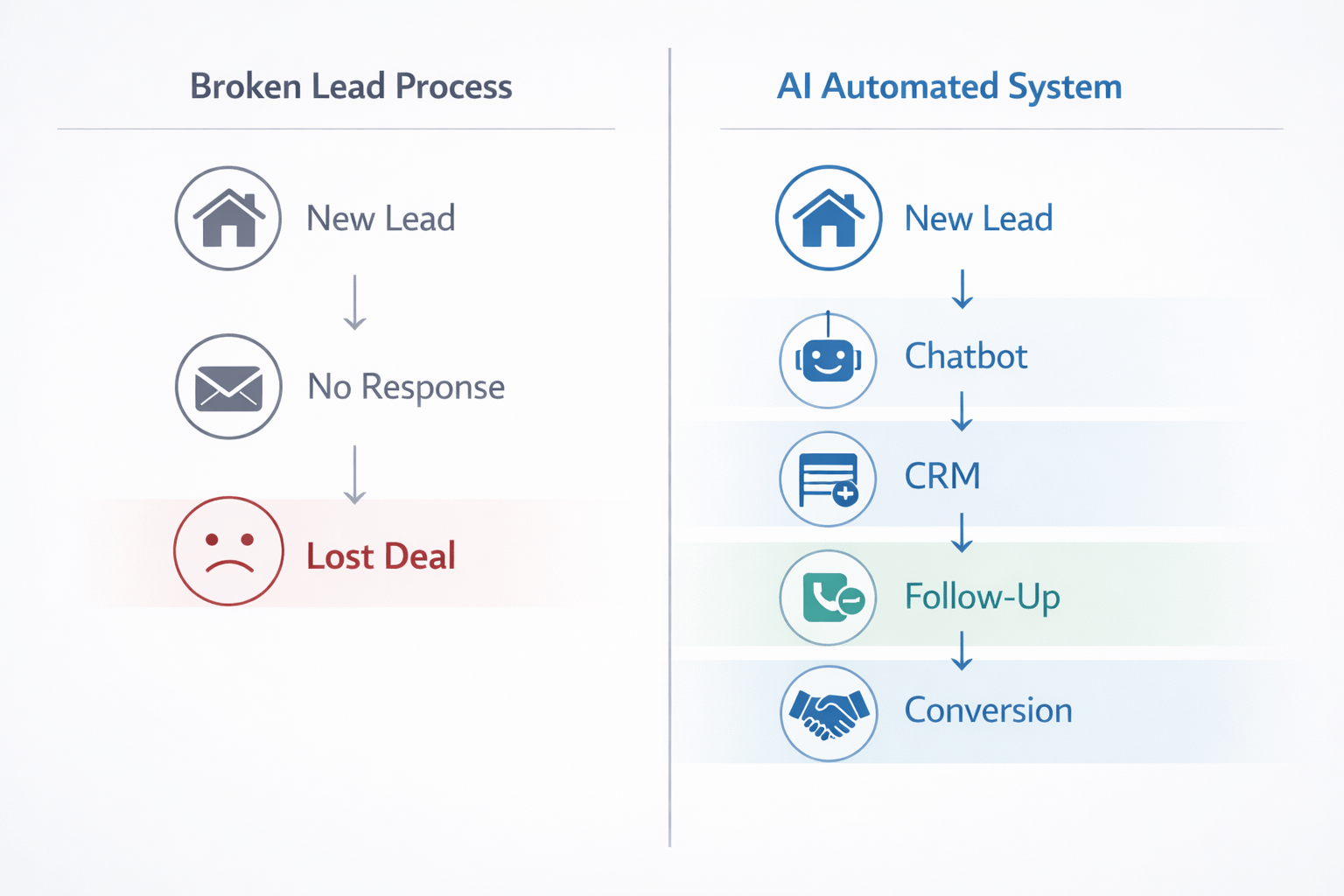
Let’s be honest: most real estate agents do not actually have a lead shortage.

They have a lead handling problem.

Leads come in.

No reply.
Late reply.
No workflow.
No clear next step.

👉 Result: lost conversations, missed appointments, and deals that quietly disappear before they ever become real opportunities.

This is exactly where most deals are lost. Fixing it usually comes down to building a reliable system for automating real estate lead follow-up so every inquiry gets handled before interest drops off.

AI can help here. Not because it replaces the agent. And not because it magically closes deals.

It helps because it improves the parts of the process that usually break first: speed-to-lead, qualification, follow-up consistency, and pipeline visibility.

Of course, none of this works without a consistent flow of new inquiries coming in. That’s why many agents first focus on building a steady pipeline through AI-driven real estate lead generation before trying to optimize conversion.

In other words, AI tools work best when they sit inside a clear operating system. That is why teams that already have a structured follow-up process usually get much more value from the exact same software stack.
That is also why ChatGPT is starting to play a bigger role in modern real estate teams—not just as a writing tool, but as part of a larger lead generation system.

In this guide, you’ll learn:

    Here’s what you’ll get in this guide:

    • The 15 best AI tools for real estate lead generation right now
    • Who each tool is best for, and who should probably skip it
    • Tool comparison logic so you do not buy the wrong stack
    • A practical framework to move from inquiry to appointment
    • A smarter next-step path if you are still building your acquisition engine
    AI tools for real estate lead generation hero illustration
    What this visual really shows: the biggest gain from AI is not “more software.” It is fewer dropped leads between the first inquiry and the first real conversation.

    What Are AI Tools for Real Estate Lead Generation?

    AI tools for real estate lead generation are software products that help agents capture, qualify, nurture, and follow up with leads using tools like chatbots, CRM automation, workflow triggers, lead forms, AI-assisted writing, and sales follow-up systems—which becomes much clearer when you look at how an AI chatbot for a real estate website is actually structured and integrated into the lead flow .

    That can include:

    • Chatbots that reply instantly on your website or social channels
    • CRMs that track lead stages and reminders
    • Automation platforms that move data between tools
    • AI follow-up systems that text, email, or call at the right time
    • Content tools that help with listing copy, ad angles, and lead magnets

    Simple example

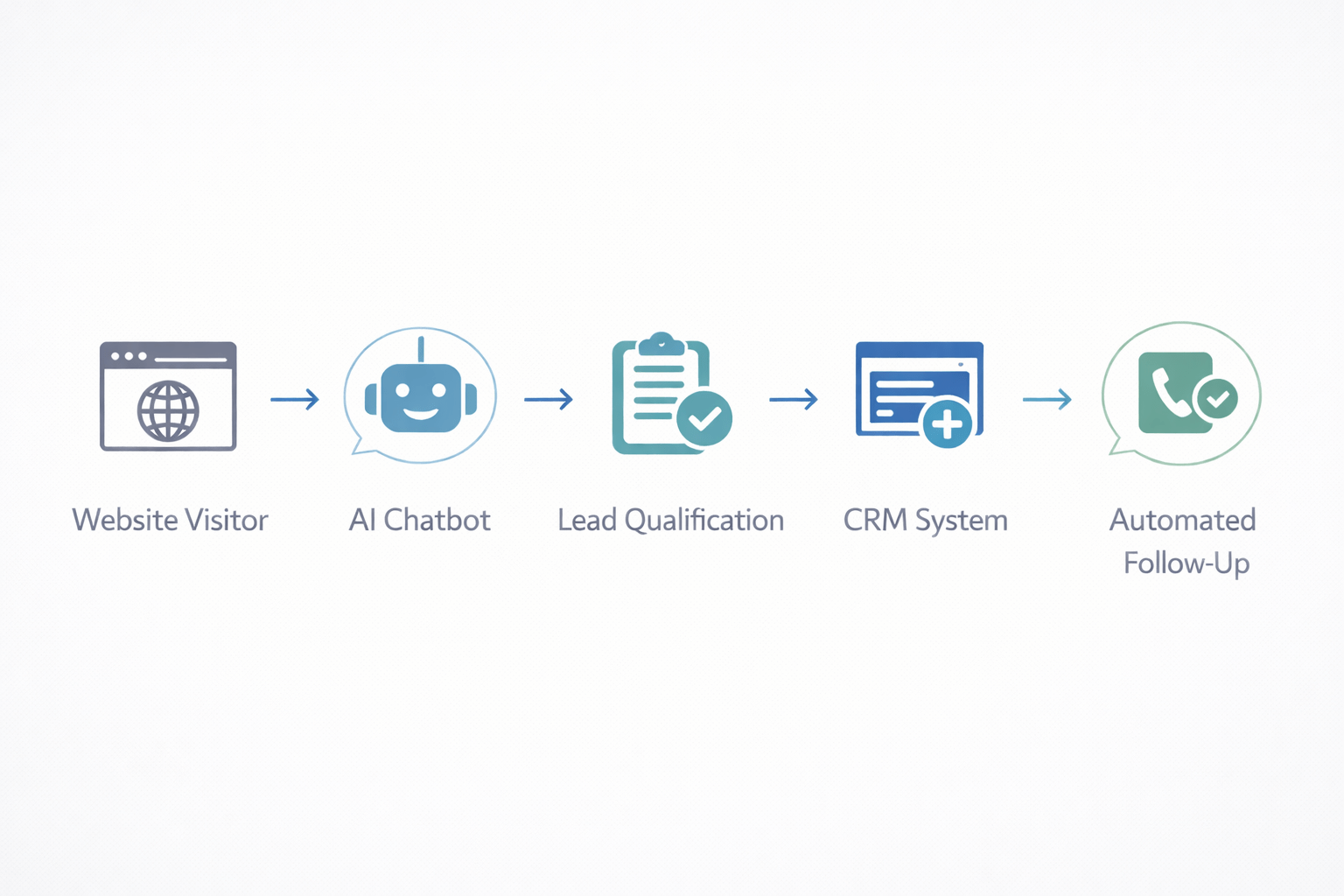
    A prospect clicks your ad, asks about a property, gets an instant response, answers a few qualifying questions, enters your CRM, receives structured follow-up, and books a call or site visit without you manually pushing every step.

    That is the real promise: less chaos, better timing, and more consistent lead handling.

    Workflow image showing how AI tools help real estate lead generation
    Why this matters: most tools are not “lead generators” on their own. They become lead generators when they reduce friction between inquiry, qualification, and follow-up.

    Why Real Estate Agents Are Using AI for Lead Generation

    Faster response time

    If a lead waits too long, interest drops fast. AI helps you respond while intent is still high.

    Less manual follow-up

    Routine replies, reminders, tagging, and routing can be automated so agents can focus on live conversations.

    Better qualification

    AI can help collect the details that actually matter: budget, location, timeline, financing status, and intent.

    Cleaner pipeline visibility

    Once leads move into a CRM properly, it becomes easier to see who needs a reply, a call, or a second touch.

    But there’s a catch: more automation is not always better. If your messages feel robotic or your handoff is weak, trust drops. In real estate, the goal is not to remove the human touch. It is to protect it by removing avoidable delays and repetitive admin work.

    How We Selected These Tools

    This list is built around practical workflow fit, not hype.

    What mattered most:

    • Lead capture usefulness
    • Automation and follow-up depth
    • CRM compatibility
    • Ease of setup for agents and lean teams
    • Clear “best for” and “skip if” logic
    • Real estate workflow relevance
    Important note: pricing, packaging, and AI features change often. So this guide stays focused on what each platform is actually good at, instead of pretending that temporary plan details will stay the same for long.

    Lead capture fit

    Can it help start the conversation at the moment of inquiry?

    Follow-up usefulness

    Does it help leads move forward after the first touch?

    System value

    Does it strengthen the workflow, or just add one more dashboard?

    Quick Picks

    If you want the short version, start here.

    Best for social/chat capture
    ManyChat

    Strong for Instagram, WhatsApp, Messenger, and fast lead engagement.

    Best all-in-one CRM option
    HubSpot

    Great when you want contacts, deal stages, workflow logic, and reporting in one place.

    Best for lead nurturing
    Structurely

    Strong if your biggest problem is follow-up speed, lead qualification, and booking appointments.

    Best connector tool
    Zapier

    Ideal when your forms, ads, CRM, and spreadsheets need to work together without manual work.

    How to Choose the Right Tool Faster

    Here’s the deal: most agents do not need 15 tools.

    They need the right combination of tools.

    If your biggest issue is... Start by looking at... Why
    Slow response on Instagram, WhatsApp, or Messenger ManyChat It is built for interactive chat automation and instant replies.
    Messy lead tracking and no pipeline visibility HubSpot or Follow Up Boss You need a real CRM, not just more messages.
    Leads come in, but follow-up breaks Structurely It is designed to nurture and move leads toward appointments.
    Your tools do not talk to each other Zapier or Make These platforms connect forms, CRMs, sheets, email, and other apps.
    You need better ads, copy, scripts, and replies ChatGPT or Jasper These are best used to speed up communication and content work.
    You want a real-estate-native operating system Lofty, CINC, Ylopo, or Follow Up Boss These are closer to specialized real estate workflows.

    Put differently, if you are still building the acquisition side, your first win usually comes from improving how you generate leads. If your leads already exist but the handoff is weak, the bigger upside is typically in strengthening your follow-up system.

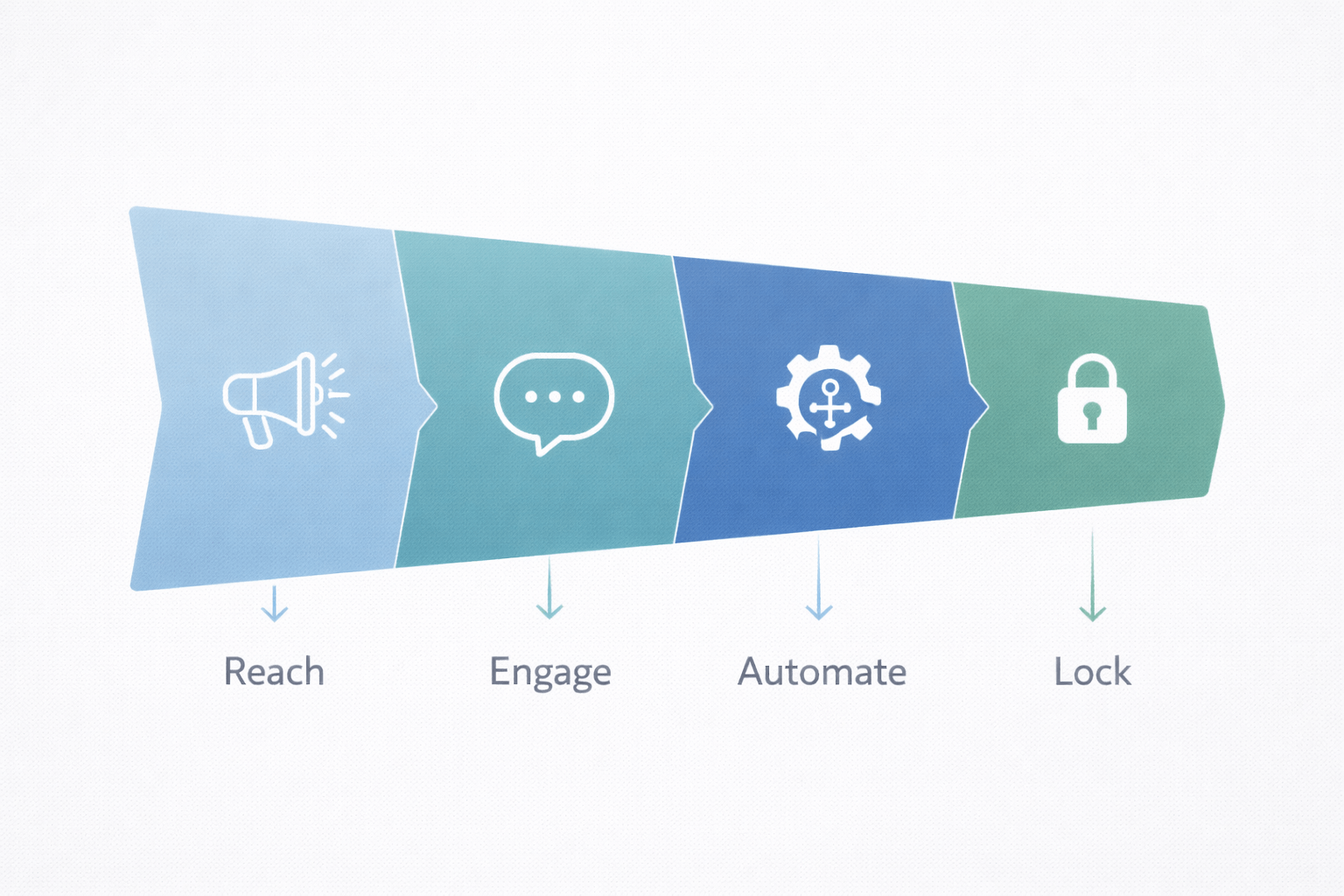
    The R.E.A.L. Framework for Real Estate AI Lead Generation

    This is the system that makes the tools work together.

    1

    Reach

    Bring people in through ads, local SEO, landing pages, social content, and referral funnels.

    2

    Engage

    Use forms, chat, and instant replies to capture the inquiry while motivation is still high.

    3

    Automate

    Push leads into your CRM, trigger reminders, qualify early, and keep follow-up consistent.

    4

    Lock

    Move serious prospects into calls, appointments, site visits, and deals.

    👉 Key point: most agents do not need more apps. They need fewer gaps between these four stages.

    R.E.A.L. framework image for real estate AI lead generation
    The insight behind this framework: every tool in this guide is only useful if it strengthens one of these four moments.

    15 Best AI Tools for Real Estate Lead Generation

    This is not a random list. Each tool below solves a different part of the lead generation stack.

    Chatbots & Lead Capture

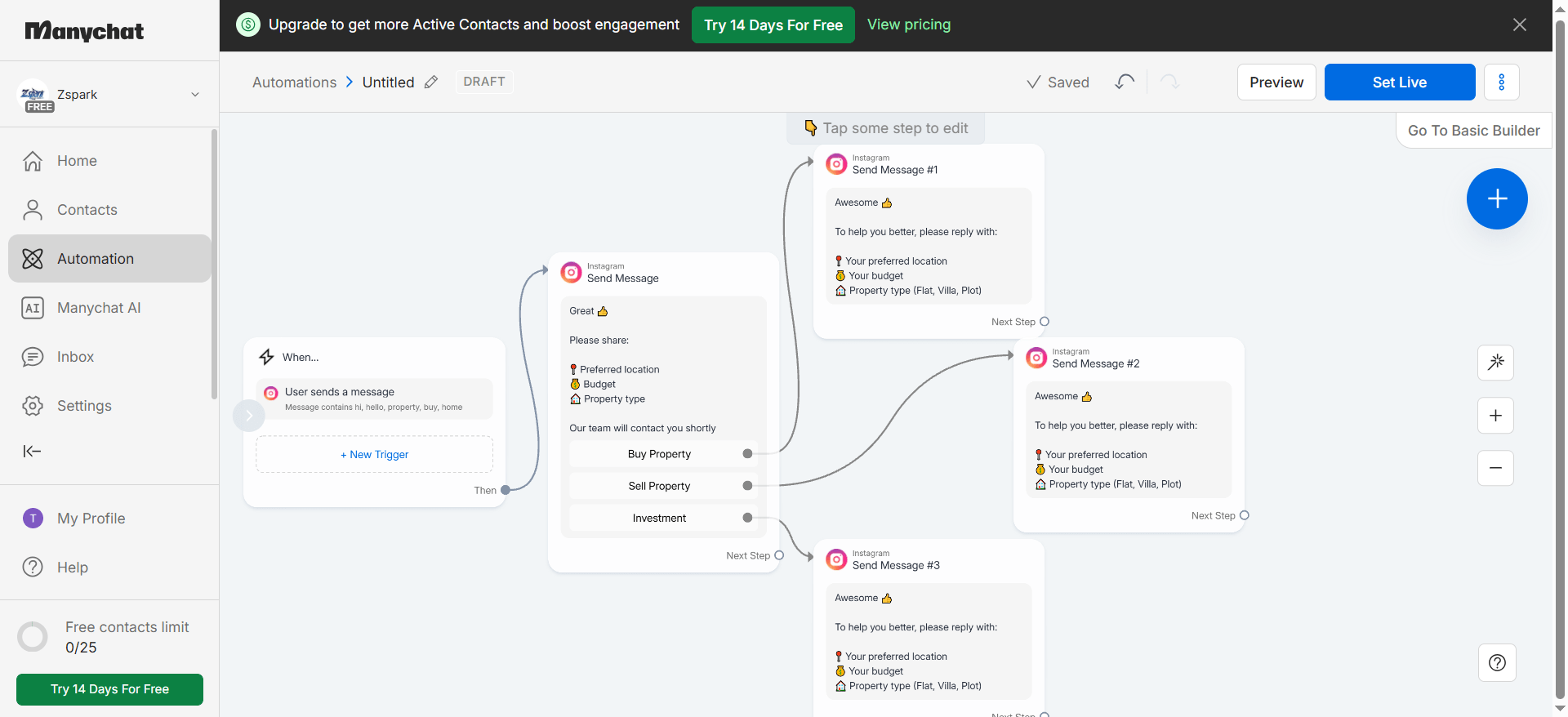
    1. ManyChat

    Best for social and chat automation Fast to start
    ManyChat dashboard screenshot

    What it does: captures and automates conversations across channels like Instagram, WhatsApp, Messenger, and SMS.

    Why it made the list: it is one of the easiest ways to respond instantly when leads come through social or click-to-message campaigns.

    Best for: solo agents and lean teams that get a lot of social inquiries.

    Skip if: you need deep pipeline management and advanced reporting inside the same tool.

    Choose it if: your biggest pain is “people DM us, but nobody replies fast enough.”

    2. Drift

    Best for website conversation flow Stronger with good site traffic

    What it does: helps turn website visits into conversations through conversational site engagement.

    Why it made the list: it is useful when your website already gets meaningful traffic and you want more than a static contact form.

    Best for: website-led lead generation where immediate conversation matters.

    Skip if: you are a solo agent with very low website traffic and no need for a heavier site-conversation layer.

    Choose it if: you want the website itself to behave more like a live sales assistant.

    3. Typeform

    Best for higher-quality lead forms Simple but powerful

    What it does: builds interactive, conversational forms that often feel smoother than old-school static forms.

    Why it made the list: sometimes the biggest win is not a chatbot. It is a better lead form that more people actually complete.

    Best for: landing pages, lead magnets, home valuation flows, and qualification forms.

    Skip if: you already have great form conversion and your issue starts after submission.

    Choose it if: you want cleaner lead data before the follow-up begins.

    4. Calendly

    Best for faster booking Easy conversion layer

    What it does: lets prospects book time through shared scheduling links, embeds, and booking flows.

    Why it made the list: lead generation does not end with a reply. It ends when the prospect actually books the next step.

    Best for: turning warm leads into calls, consultations, and property discussions.

    Skip if: your process still requires full manual qualification before anyone can book.

    Choose it if: your leads often reply, but scheduling creates unnecessary friction.

    CRM & Lead Management

    5. HubSpot

    Best all-in-one CRM option Great visibility

    What it does: combines CRM, contact records, pipeline tracking, automation, and AI-assisted workflows in one ecosystem.

    Why it made the list: if your biggest issue is scattered lead data, HubSpot can bring structure fast.

    Best for: agents and teams that want one clean place for contacts, stages, reminders, and follow-up logic.

    Skip if: you want a highly real-estate-native CRM with industry-specific workflows out of the box.

    Choose it if: you care more about system clarity than niche real estate branding.

    6. Follow Up Boss

    Best real-estate-native CRM Built around lead conversion

    What it does: gives real estate teams a CRM focused on lead flow, texting, emailing, reminders, calling, and source integrations.

    Why it made the list: it stays tightly focused on real estate lead processing and follow-up.

    Best for: agents and teams that already have lead sources and need a CRM to help process them better.

    Skip if: you want a broader general-business CRM that spans service, marketing, and operations beyond sales.

    Choose it if: your main question is “which leads should I call next?”

    7. Lofty

    Best for all-in-one real estate platform Bigger stack

    What it does: bundles CRM, websites, team management, lead generation, and AI tools into one real-estate-focused platform.

    Why it made the list: it is attractive for teams that want fewer disconnected systems.

    Best for: agents, teams, or brokers who want a more unified real estate operating platform.

    Skip if: you prefer a light, modular stack where each tool does one job.

    Choose it if: you want to reduce tool sprawl and keep more of the workflow inside one environment.

    8. CINC

    Best for lead generation plus CRM Better for stronger teams

    What it does: combines real estate lead generation, CRM, nurturing, and website-driven conversion tools.

    Why it made the list: it is designed around the full path from lead acquisition to lead management.

    Best for: top agents and teams that want a more serious lead-gen-plus-conversion platform.

    Skip if: you only need a simple CRM or just a chatbot layer.

    Choose it if: you want one platform that lives close to the acquisition side as well as the follow-up side.

    Lead Nurture & AI Follow-Up

    9. Structurely

    Best for AI lead follow-up Appointment-focused

    What it does: uses AI texting, calling, emailing, qualification, and appointment-setting workflows.

    Why it made the list: this is one of the clearest examples of a platform built around the exact moment where many real estate leads are lost: follow-up after inquiry.

    Best for: teams that already have lead flow and want more consistent nurture without relying on manual texting for every touch.

    Skip if: your main need is still top-of-funnel traffic generation rather than lead conversion.

    Choose it if: your bottleneck is not “getting leads,” but “working the leads we already have.”

    10. Ylopo

    Best for AI-driven nurture and marketing More advanced setup

    What it does: focuses on AI-driven digital marketing, nurture tools, and lead communication for real estate.

    Why it made the list: it sits closer to a full marketing and nurture engine than a lightweight tool.

    Best for: teams that want marketing plus AI text/voice nurture in a real-estate-focused setup.

    Skip if: you are looking for the simplest possible stack.

    Choose it if: your growth plan depends on both lead generation and sustained nurture over time.

    Workflow Automation

    11. Zapier

    Best connector tool Easy ecosystem coverage

    What it does: connects thousands of apps so your forms, CRMs, sheets, email tools, and notifications move automatically.

    Why it made the list: many real estate systems fail because tools are disconnected, not because the tools themselves are bad.

    Best for: automating repetitive handoffs without building custom code.

    Skip if: your stack is already unified and you rarely need cross-tool workflows.

    Choose it if: leads currently fall through the cracks between submission and follow-up.

    12. Make

    Best for visual automation logic More flexible than basic zaps

    What it does: builds visual workflows across thousands of apps with more control over branching and orchestration.

    Why it made the list: it is powerful when your logic is no longer simple enough for one-trigger-one-action workflows.

    Best for: teams that want more advanced automation maps and multi-step logic.

    Skip if: you want the quickest beginner-friendly automation setup possible.

    Choose it if: Zapier feels too linear for the workflow you are building.

    AI Communication & Content Support

    13. ChatGPT

    Best for scripts, replies, and content High everyday usefulness

    What it does: helps with brainstorming, writing, editing, planning, and communication tasks.

    Why it made the list: it is one of the most practical tools for ad angles, follow-up messages, listing copy, email drafts, objection handling, and lead magnet ideas.

    Best for: agents who want faster execution in communication-heavy parts of the business.

    Skip if: you expect it to replace your CRM, automation layer, or sales process.

    Choose it if: the work slows down every time you need to write, rewrite, explain, or structure a message.

    14. Jasper

    Best for marketing content workflows Better for content-heavy teams

    What it does: focuses on AI-powered marketing content, workflows, and on-brand content execution.

    Why it made the list: it is more marketing-ops-oriented than a simple chatbot assistant.

    Best for: teams producing lots of ad copy, landing page content, nurture emails, and campaign assets.

    Skip if: you only need lightweight copy help a few times per week.

    Choose it if: content production has become a real bottleneck in your lead generation system.

    15. Salesforce

    Best for enterprise-scale CRM structure Usually too heavy for small teams

    What it does: provides a large-scale CRM platform across sales, service, marketing, and AI-driven workflows.

    Why it made the list: it becomes relevant when lead generation sits inside a much bigger, more complex organization.

    Best for: larger brokerages, enterprise operations, or businesses with multi-team CRM complexity.

    Skip if: you want a fast, lean setup that a small team can deploy without heavy process overhead.

    Choose it if: scale, governance, and cross-department CRM structure matter more than simplicity.

    Quick Comparison Moments: Choose X If, Choose Y If

    ManyChat vs Typeform

    Choose ManyChat if your leads mostly start in DMs or message-based flows.

    Choose Typeform if your leads start on landing pages and you need cleaner form completion.

    HubSpot vs Follow Up Boss

    Choose HubSpot if you want a broader, more general CRM ecosystem.

    Choose Follow Up Boss if you want a CRM built much closer to real estate lead handling.

    Zapier vs Make

    Choose Zapier if you want faster setup and easier everyday automation.

    Choose Make if you need more visual control and more advanced multi-step logic.

    ChatGPT vs Jasper

    Choose ChatGPT if you want broad day-to-day writing and idea support.

    Choose Jasper if your content workflow is marketing-heavy and needs more brand/process structure.

    Best AI Tool Stacks by Business Stage

    Starter

    Simple stack

    • ManyChat
    • ChatGPT
    • Calendly
    • Zapier

    Best for solo agents who want speed without tool overload.

    Growth

    Structured stack

    • HubSpot or Follow Up Boss
    • ManyChat or Typeform
    • Zapier or Make
    • ChatGPT
    • Calendly

    Best for teams that need clearer pipeline visibility and consistent follow-up.

    Advanced

    Scale-oriented stack

    • Lofty or CINC
    • Structurely or Ylopo
    • Make or Zapier
    • Jasper or ChatGPT

    Best for larger teams that want acquisition, nurture, and conversion to work as one machine.

    How to Implement These Tools Without Creating More Chaos

    Now: this is where many agents get it wrong.

    They buy tools first and figure out the process later.

    1

    Map your current lead path

    Where do leads come from? Where do they land? Who replies? How long does it take? Where do they get lost?

    2

    Fix the biggest break first

    If response speed is broken, start with chat or follow-up automation. If tracking is broken, start with the CRM. If handoffs are broken, start with workflow automation.

    3

    Connect the stack

    Leads should not die in inboxes, spreadsheets, or disconnected forms. They should move into one trackable workflow.

    4

    Keep human touch for warm leads

    Automation should speed up qualification and consistency, not remove real relationship-building.

    5

    Measure appointments, not just lead count

    More leads mean very little if booked conversations do not increase.

    Common Mistakes to Avoid

    No system

    Buying tools without a workflow usually creates more confusion, not more deals.

    No follow-up discipline

    Many leads are lost because nobody replies quickly or consistently enough.

    Over-automation

    If everything sounds robotic, trust drops. Automation should support relationships, not replace them.

    Measuring the wrong thing

    Lead count looks exciting, but appointments, conversations, and conversion quality matter more.

    FAQ

    Simple, direct answers for high-intent search questions.

    What is the best AI tool for real estate lead generation?

    There is no single best tool for every agent. ManyChat is strong for chat automation, HubSpot and Follow Up Boss are strong for CRM and lead tracking, Structurely is strong for follow-up, and Zapier or Make are strong for connecting the stack.

    Can AI generate real estate leads automatically?

    AI can help capture, qualify, and nurture leads automatically, but strong results still depend on targeting, messaging, follow-up quality, and human sales skill.

    What is better for agents: a chatbot or a CRM?

    They solve different problems. A chatbot helps start the conversation faster. A CRM helps manage the relationship after the lead enters your system. Most teams eventually need both.

    Do solo agents need expensive AI software?

    No. Many solo agents can start with a smaller stack like ManyChat, ChatGPT, Calendly, and Zapier, then upgrade when lead volume and workflow complexity justify it.

    What matters more: tool quality or follow-up speed?

    Follow-up speed and consistency usually matter more. A simpler tool used properly often beats a powerful tool used poorly.

    How do I know whether I should improve lead generation or lead follow-up first?

    If you do not have enough inquiries, improve acquisition first. If inquiries already exist but conversion is weak, improve the follow-up system first. In practice, both sides are connected.

    Can ChatGPT replace a real estate CRM?

    No. ChatGPT is useful for writing, brainstorming, and communication support, but it does not replace the structured tracking, automation, and reporting of a CRM.

    🧠 Final Thoughts

    Start Small. Build the System. Then Scale.

    The best AI setup for real estate lead generation is usually not the most expensive one. It is the one that helps you capture better leads, respond faster, and turn interest into real conversations without adding unnecessary complexity.

    The smartest next step usually looks like this:

    • Find the biggest gap in your current lead generation process
    • Choose one tool that solves that problem well
    • Focus on consistency before adding more software
    • Build a simple system that your team can actually use

    A strong starting point usually looks like this:

    • Add one reliable lead capture channel
    • Connect it to a CRM or tracking system
    • Use automation to speed up first response
    • Keep the human touch for qualified prospects
    • Upgrade tools only when the workflow outgrows the simple setup

    The key is not using more tools. It is using the right tools in the right order to create a lead generation system that is easier to manage and easier to scale.

    That is the real advantage of AI in real estate lead generation: not more complexity, but a better system for attracting, organizing, and converting the right opportunities.

Tausif Shaikh
About the Author

Tausif Shaikh

AI Tools Research • Lead Gen Systems • Automation Workflows

Hi, I’m Tausif. I write practical, research-backed content on AI tools, automation, lead generation, and conversion-focused systems for real businesses.

My focus is simple: study how tools actually fit into workflows, explain where they help, where they fall short, and help readers choose based on realistic business value rather than hype.

  • Workflow-based evaluation
  • AI software research
  • Lead capture systems
  • CRM & follow-up analysis
  • Conversion-focused content
Why you can trust this content

This article is built around product research, official product positioning, workflow comparison, and practical use-case analysis for businesses that want better lead capture and follow-up systems.

Editorial transparency

Recommendations are written to help readers make better decisions, not to promote tools blindly. Features, pricing, and positioning can change, so readers should verify current details on the official website before buying.

Last reviewed: March 2026
Content approach: research-backed + workflow-focused + people-first
Best for: readers who want practical tool recommendations with realistic context