
How to Qualify Real Estate Leads Using AI: A Practical Framework for Real Estate Teams
A complete guide for real estate agents, brokerages, inbound sales teams, and marketers who want to use AI to pre-qualify leads, score intent, improve routing, and make follow-up more consistent without turning the sales process into a mess.
Most real estate teams do not need more leads.
They need fewer junk leads.
That is the real problem.
Inquiries come in from ads, organic search, landing pages, property portals, chat widgets, and WhatsApp.
But a name and phone number alone do not tell you who is serious, who is browsing, who is price checking, and who is ready to take the next step.
So agents end up doing the hard part manually.
They call too many low-intent leads, miss the serious ones, and waste time digging for details that should have been collected at the start.
This is where AI stops being hype and starts being useful.
Used the right way, AI can collect more structured data, ask follow-up questions automatically, score lead signals, and speed up routing.
That does not mean AI closes deals on its own. It does not.
Real estate is still a trust-driven business.
But AI can make the first part of the sales process cleaner, faster, and far more consistent.

In this guide, you will learn how to build an AI real estate lead qualification system that works in the real world for buyer leads, seller leads, investor leads, and nurture leads.
Quick Answer: What Is AI Lead Qualification in Real Estate?
AI lead qualification in real estate means using automation and AI-assisted logic to collect lead details, ask follow-up questions, score buying or selling signals, and decide the next action. That next action could be an agent callback, a site visit, a nurture sequence, or disqualification.
In simple terms: AI helps you stop treating every inquiry the same.
Here is the deal:
A good qualification system does four things well.
It captures intent.
It reduces guessing.
It improves speed to lead.
And it keeps your team focused on the inquiries most likely to move forward.
What Real Estate Lead Qualification Actually Means
A qualified real estate lead is not just someone who submitted a form.
It is someone who shows a believable mix of need, fit, and next-step readiness.
That usually includes some combination of these signals:
- Clear goal such as buying, selling, investing, renting, or requesting a valuation
- Budget or expected price range
- Timeline such as now, within 3 months, within 6 months, or just researching
- Financing status such as cash buyer, pre-approved, loan planned, or unclear
- Location and property preference
- Engagement behavior such as replies, brochure downloads, repeat visits, or site visit requests
| Lead Type | What It Usually Means | Typical Next Step |
|---|---|---|
| Raw inquiry | You have contact information, but intent is still unclear. | Ask first-round qualification questions |
| Pre-qualified lead | You know the basic need, budget band, area, and timeline. | Score lead and decide routing |
| Sales-ready lead | The lead fits your offering and shows real next-step intent. | Send to agent quickly |
| Appointment-ready lead | The lead has enough fit and urgency for a call, consultation, or site visit. | Book the meeting |
| Nurture lead | Real lead, but timing or readiness is weak right now. | Move into follow-up workflow |
| Disqualified lead | Spam, duplicate, wrong geography, no fit, or no real buying or selling intent. | Exclude from agent queue |
That distinction matters because lead generation and lead qualification are not the same thing.
Lead generation fills the pipeline.
Qualification tells you which inquiries deserve immediate attention.
In practice, the way you generate real estate leads using AI directly affects how effective your qualification process will be later.
Qualification Stages Real Estate Teams Can Actually Use
If your team only uses “good lead” and “bad lead,” routing will stay messy. Clear stages make scoring, handoff, and reporting much easier.
Let’s make this simple.
You do not need complex B2B jargon for this to work.
But you do need consistent stage logic.
| Stage | Definition | What Must Be Known | Typical Owner |
|---|---|---|---|
| New inquiry | A lead just entered the system. | Name plus at least one contact method | AI or intake layer |
| Pre-qualified | Basic fit and need are visible. | Goal, area, budget band, timeline | AI or inside sales |
| Sales-qualified | The lead appears to fit your offer and shows serious intent. | Need, fit, urgency, financing signal | Inside sales or agent |
| Appointment-ready | The lead is ready for a consultation, call, or site visit. | Preferred time plus a confirmed next step | Assigned agent |
| Nurture | The lead is real, but timing is weak or unclear. | Reason for delay or uncertainty | Automation plus periodic human check-in |
| Disqualified | The lead should not consume agent time right now. | Reason code such as spam, wrong market, duplicate, or no-fit inquiry | System or ops review |
Why Traditional Lead Qualification Breaks Down
Manual qualification usually fails for three reasons: response is slow, questions are inconsistent, and nobody agrees on what counts as a good lead.
Now:
On paper, the old process sounds fine.
A lead comes in.
An agent calls.
Questions are asked.
A decision is made.
In reality, that process breaks down fast once volume rises, weekends hit, or agents get busy.
Slow response time
Interest fades quickly when nobody replies while intent is still fresh.
Inconsistent questioning
One agent asks about budget first. Another asks about property type. Another asks too little.
Thin lead records
Basic forms often capture too little context to prioritize properly.
No stage logic
Teams say “good lead” or “bad lead” without clear definitions.
No routing rules
Leads sit in a shared bucket instead of reaching the right person fast.
Weak follow-up
Even qualified leads stall when the next action is delayed or forgotten.
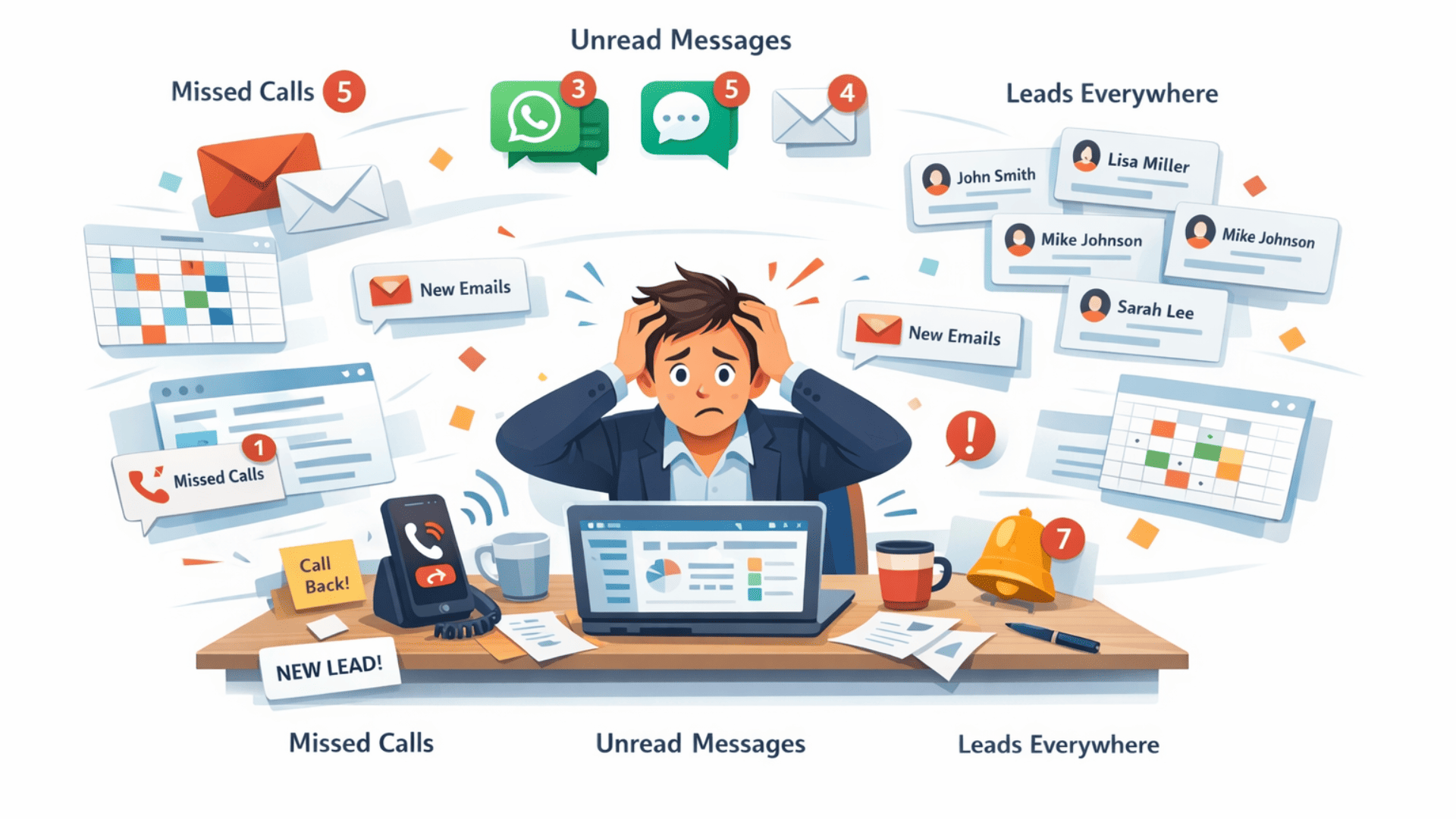
In many teams, the mess starts even earlier with the acquisition process itself.
If your lead sources are messy, your qualification layer will feel messy too.
This is why the tools you use at the top of funnel, including modern AI tools for real estate lead generation, play a bigger role than most teams expect.
How AI Improves Real Estate Lead Qualification
AI helps in three practical ways: it replies faster, asks better follow-up questions in a structured way, and helps your team focus on the leads most likely to move forward.
Here’s the big idea:
AI does not magically know who will buy a property.
But it can make the first layer of qualification far more consistent.
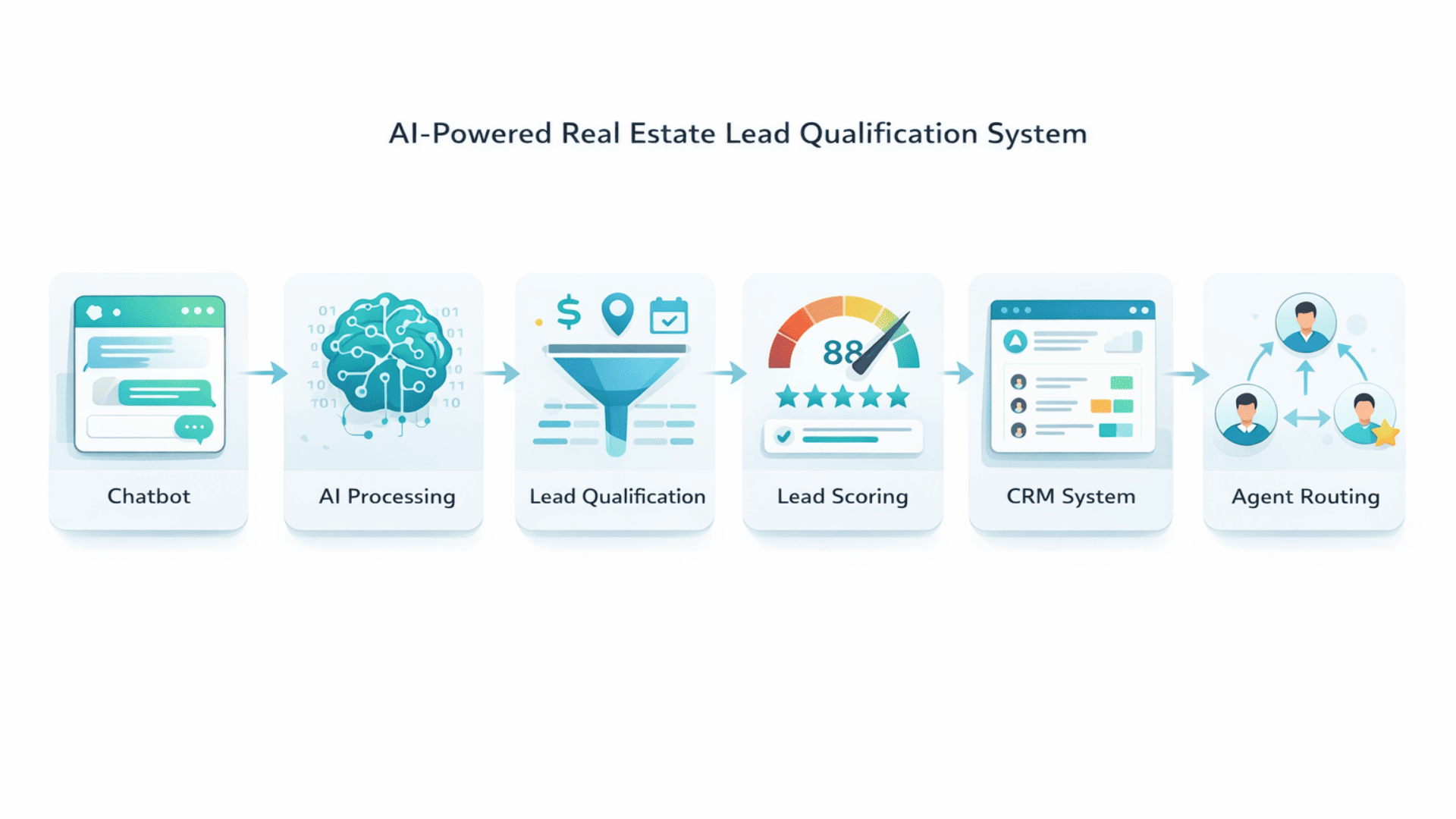
With the right setup, AI can:
- capture structured data at the moment the lead shows interest
- ask progressive follow-up questions instead of dropping a long form in front of the user
- classify lead intent using simple rules or model-assisted summaries
- score fit and urgency signals
- flag spam, duplicate, or low-fit inquiries
- suggest the next action inside your CRM
- support follow-up workflows for leads that are not ready yet
This becomes even more useful when AI is also involved in early conversations.
Many teams now use ChatGPT for real estate leads to handle first responses, summarize intent, and keep lead records cleaner from the start.
One of the most practical starting points is conversational qualification.
A chatbot can collect answers conversationally, which may feel less rigid than a static form for some users.
That is why many teams now build AI chatbots for real estate websites as the first layer of qualification.
The 5 Core Signals AI Should Use to Qualify Real Estate Leads
Do not judge a lead on one signal alone. Budget matters. Timeline matters. Financing matters. Behavior matters. The strongest qualification systems combine multiple signals.
Here’s the mistake most teams make:
They judge a lead on one thing.
Maybe budget.
Maybe response speed.
Maybe whether the person asked for a brochure.
That is not enough.
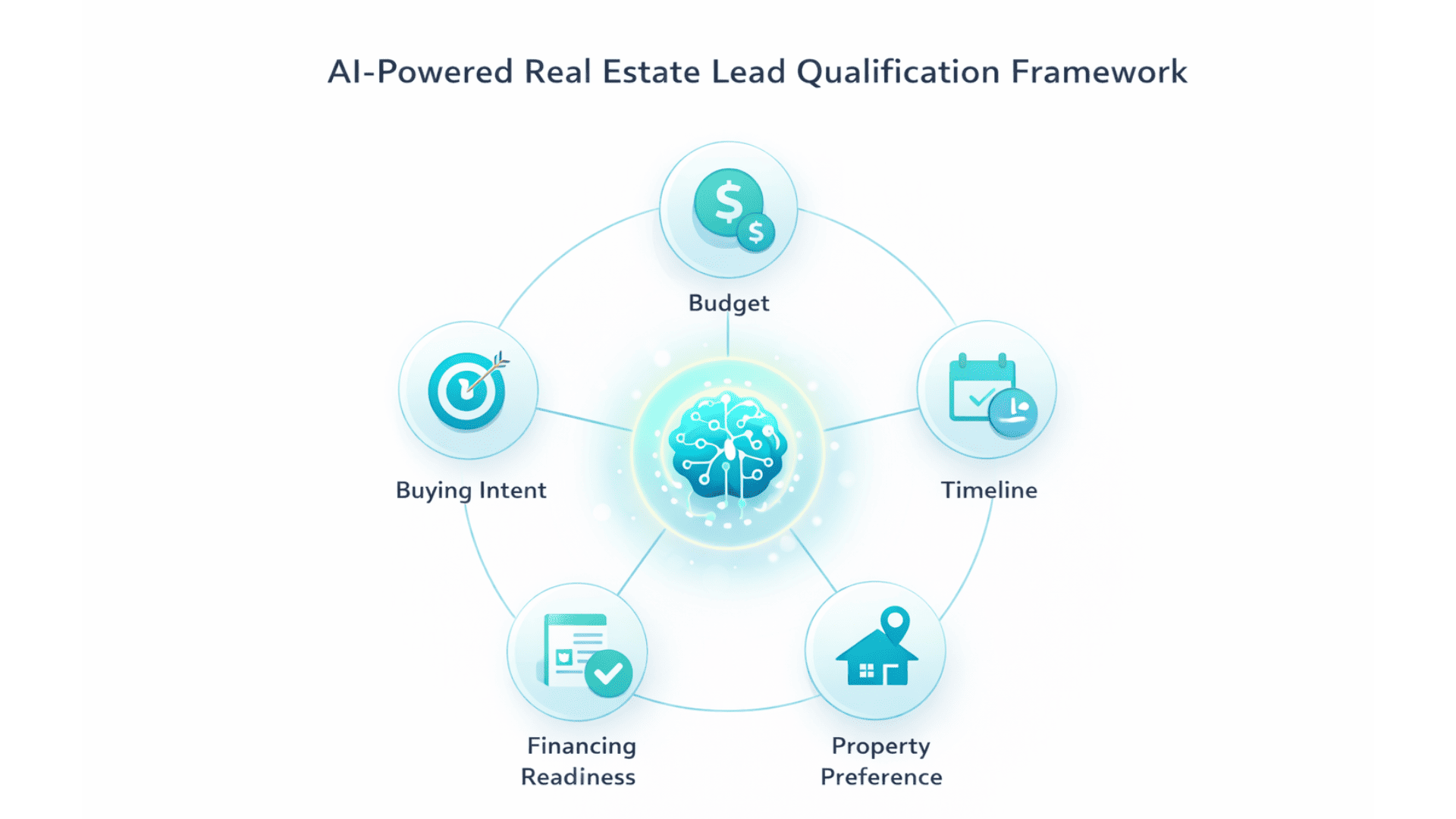
Can the lead realistically afford the project, area, or property range they are viewing?
Are they planning to move now, within 3 months, within 6 months, or later?
Cash buyer, pre-approved, loan planned, or not yet clear?
Do they want something your team actually sells or serves?
Do they reply, revisit listings, request pricing, or want a site visit?
Questions Your AI System Should Ask First
The first question should identify the lead type. The next few questions should reveal fit, urgency, and next-step readiness. Do not ask everything at once.
First-round questions for buyer leads
- Are you looking to buy for self-use or investment?
- Which city, micro-market, or area are you considering?
- What type of property are you looking for?
- What is your budget range?
- When are you planning to buy?
- Will this be a cash purchase or loan-based purchase?
- Would you like listings, pricing details, a callback, or a site visit?
First-round questions for seller leads
- Are you planning to sell, rent out, or request a valuation?
- What type of property is it?
- Which location is it in?
- What price range are you expecting?
- How soon do you want to sell?
- Are you already speaking with other agents?
- Would you like a valuation first or a direct consultation?
Good follow-up questions after the basics
- What is the best time to contact you?
- Would you prefer a call, WhatsApp message, or email?
- Are there any must-have requirements I should note before someone calls you?
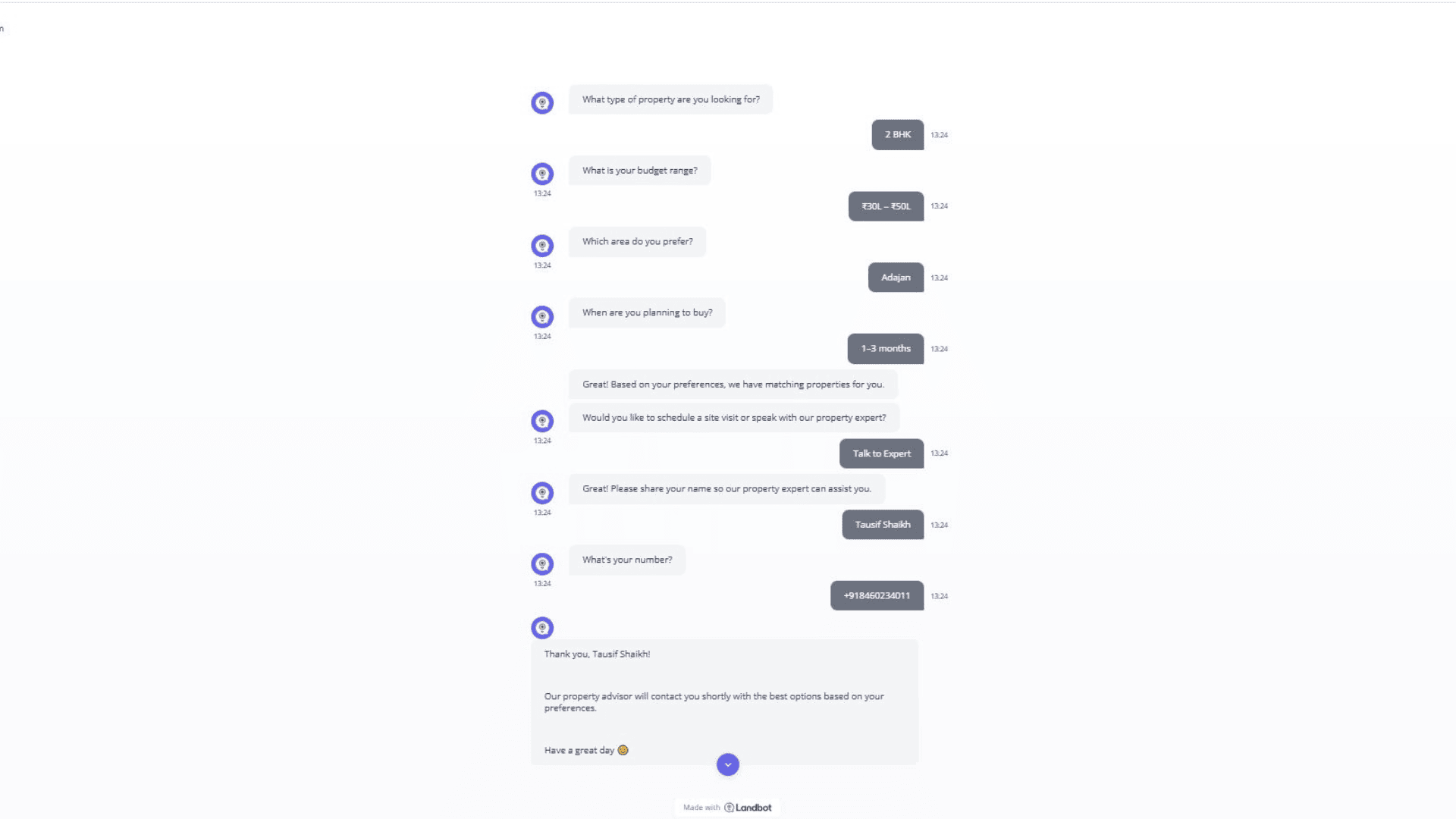
Sample AI Chatbot Conversation Flow for Real Estate Lead Qualification
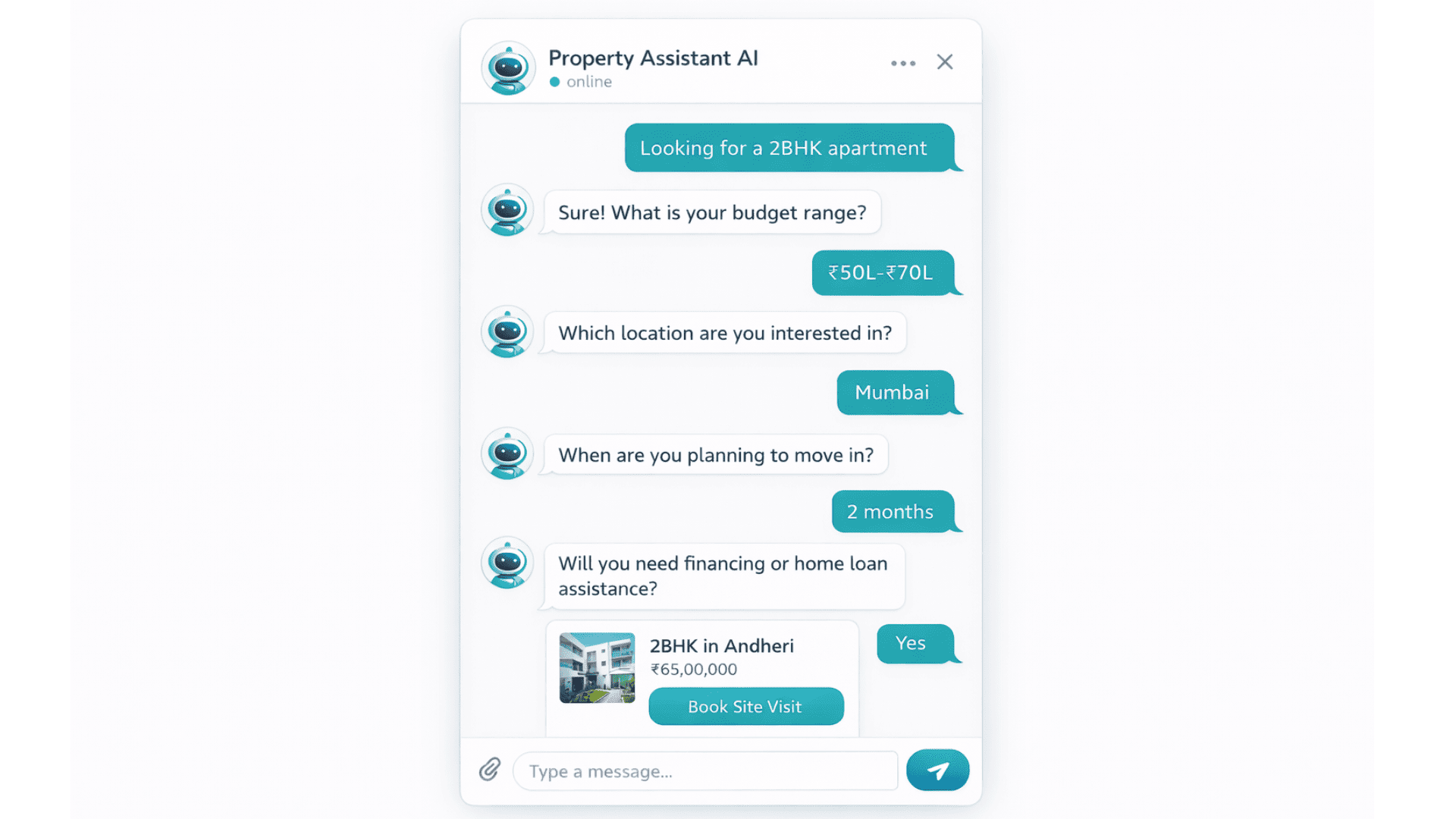
A practical chatbot flow should identify the lead type first, ask only the minimum number of questions needed to route correctly, and hand off to a human when intent is strong or questions become nuanced.
Here’s what that looks like:
| Step | Chatbot asks | Why it matters | What happens next |
|---|---|---|---|
| 1 | Are you buying, selling, investing, or just exploring? | Sets the path immediately | Branches into the right flow |
| 2 | Which city or area are you focused on? | Checks market fit | If outside service area, reroute or disqualify |
| 3 | What is your budget or expected price range? | Checks affordability band | Assigns budget score |
| 4 | When are you planning to move or transact? | Measures urgency | Assigns timeline score |
| 5 | Will this be cash or loan-based? | Checks financing readiness | Assigns readiness score |
| 6 | Would you like listings, a callback, a valuation, or a site visit? | Captures next-step intent | Triggers handoff or nurture |
How AI Lead Scoring Works in Real Estate
Lead scoring is a simple way to stop guessing. Instead of treating every inquiry the same, you assign points based on signals that suggest real fit and real intent.
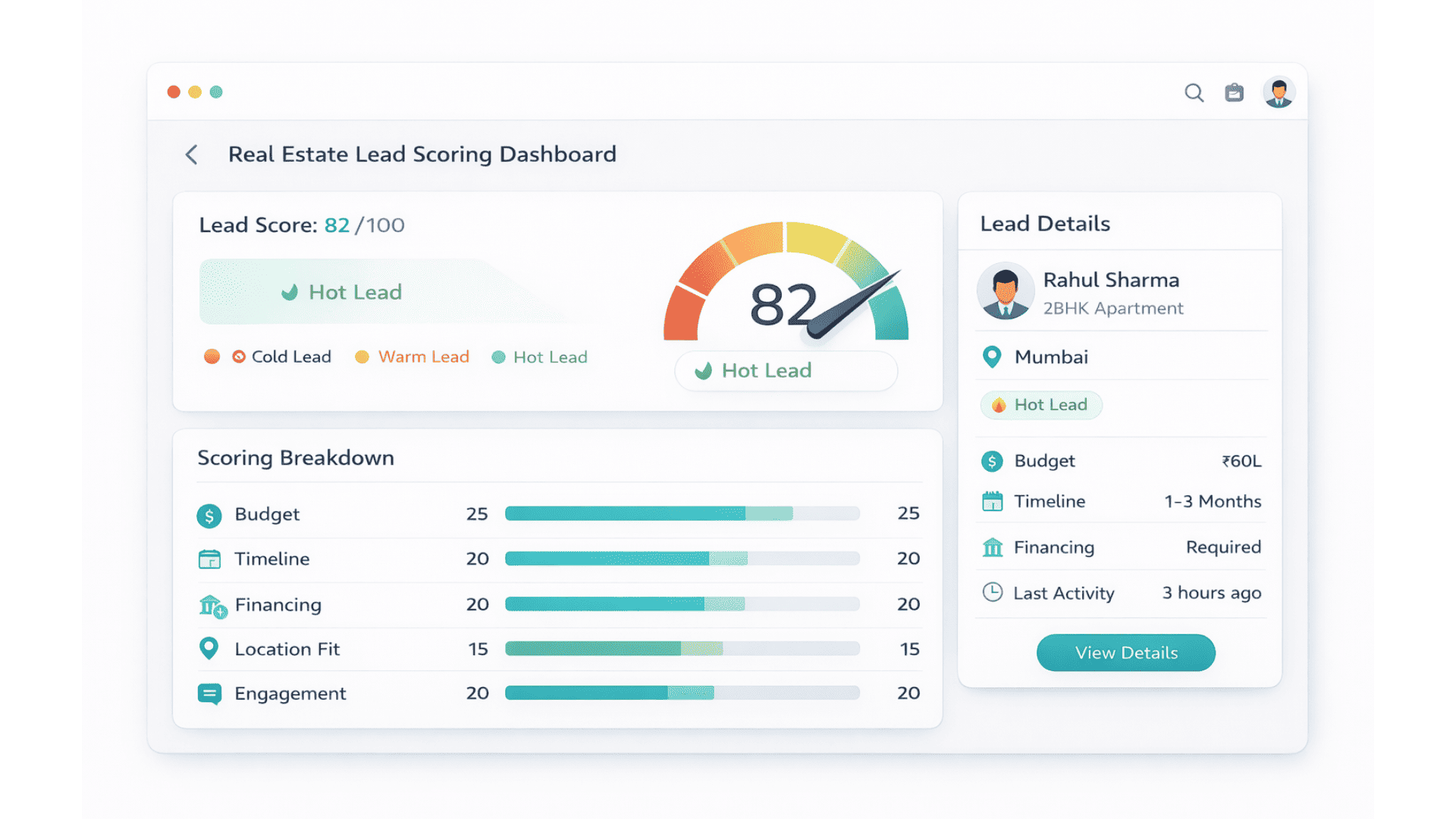
In real estate, a sample model might look like this:
| Factor | Example Weight | What High Score Looks Like |
|---|---|---|
| Budget fit | 25 points | Budget clearly matches available inventory |
| Timeline | 20 points | Lead wants to act soon |
| Financing readiness | 20 points | Cash ready or loan position is clear |
| Location and property match | 15 points | Lead wants what you actually serve |
| Engagement and next-step intent | 20 points | Lead replies, asks for pricing, or wants a visit |
Example only:
- 80–100: high-priority lead
- 60–79: moderate-priority lead
- Below 60: nurture or low-fit lead
Those thresholds are not universal.
They should be based on your market, your close cycle, and your own lead history.
Worked Lead Scoring Examples
This is where scoring becomes useful. Once you see two leads side by side, routing gets much easier.
Lead A: likely high priority
| Signal | Lead detail | Example score |
|---|---|---|
| Budget fit | Budget matches current inventory | 22/25 |
| Timeline | Planning to buy within 60 days | 18/20 |
| Financing readiness | Loan pre-approval already started | 16/20 |
| Location and property match | Requested an active project your team sells | 15/15 |
| Engagement | Asked for pricing and requested a site visit | 19/20 |
| Total | High fit plus high urgency | 90/100 |
Next action: immediate agent handoff plus site visit scheduling.
Lead B: likely nurture
| Signal | Lead detail | Example score |
|---|---|---|
| Budget fit | Budget unclear | 8/25 |
| Timeline | Maybe next year | 6/20 |
| Financing readiness | Has not explored loan options | 6/20 |
| Location and property match | Broad, unspecific preferences | 8/15 |
| Engagement | Wanted general information only | 10/20 |
| Total | Real inquiry, weak readiness | 38/100 |
Next action: move into nurture, send relevant inventory updates, and review again after more engagement.
In other words:
The score is not there to prove who will buy.
It is there to help your team decide what to do next.
Once ChatGPT or another model is being used inside your workflow, it can also help summarize inquiries, draft replies, and support intent classification. That is where using ChatGPT to classify and respond to leads fits naturally into the process.
CRM Field Mapping: What Your System Should Capture
If the data does not land cleanly in your CRM, your qualification system will break later. Capture less, but capture it consistently.
| CRM Field | Example Value | Why It Matters |
|---|---|---|
| Lead type | Buyer | Controls branch logic |
| Source | Google Ads landing page | Useful for reporting and channel analysis |
| Target location | Gurgaon Sector 65 | Used for routing and inventory match |
| Property type | 2 BHK apartment | Improves relevance and agent assignment |
| Budget range | ₹80L to ₹1.2Cr | Used for fit scoring |
| Timeline | Within 3 months | Used for urgency scoring |
| Financing status | Loan pre-approval in progress | Shows purchase readiness |
| Preferred contact channel | Improves response success | |
| Lead score | 82 | Used for prioritization |
| Qualification stage | Sales-qualified | Keeps the pipeline standardized |
| Next action | Schedule site visit | Removes ambiguity for agents |
Lead Routing Logic: Who Gets Routed, Based on What, and How Fast?
Scoring alone is not enough. A useful system needs routing logic that tells the team exactly where each lead goes next.
Here is a simple example:
| Lead Condition | Routing Rule | Target Owner | Response Goal |
|---|---|---|---|
| High score plus site-visit intent | Immediate handoff | Assigned field agent | As fast as your team can manage |
| Moderate score plus unclear financing | Inside sales callback | Pre-sales or qualification team | Same day where possible |
| Seller inquiry in target geography | Seller specialist queue | Listing or valuation team | Fast human follow-up |
| Low score but real inquiry | Nurture automation | CRM workflow | Immediate automated response |
| Wrong market or duplicate | Disqualify or archive | Ops review if needed | No agent assignment |
Routing can also depend on:
- location or project
- language preference
- buyer versus seller intent
- source quality
- property type
- business hours versus after-hours intake
Step-by-Step AI Lead Qualification Workflow
A practical system follows this sequence: capture, classify, ask, score, route, follow up, and measure.
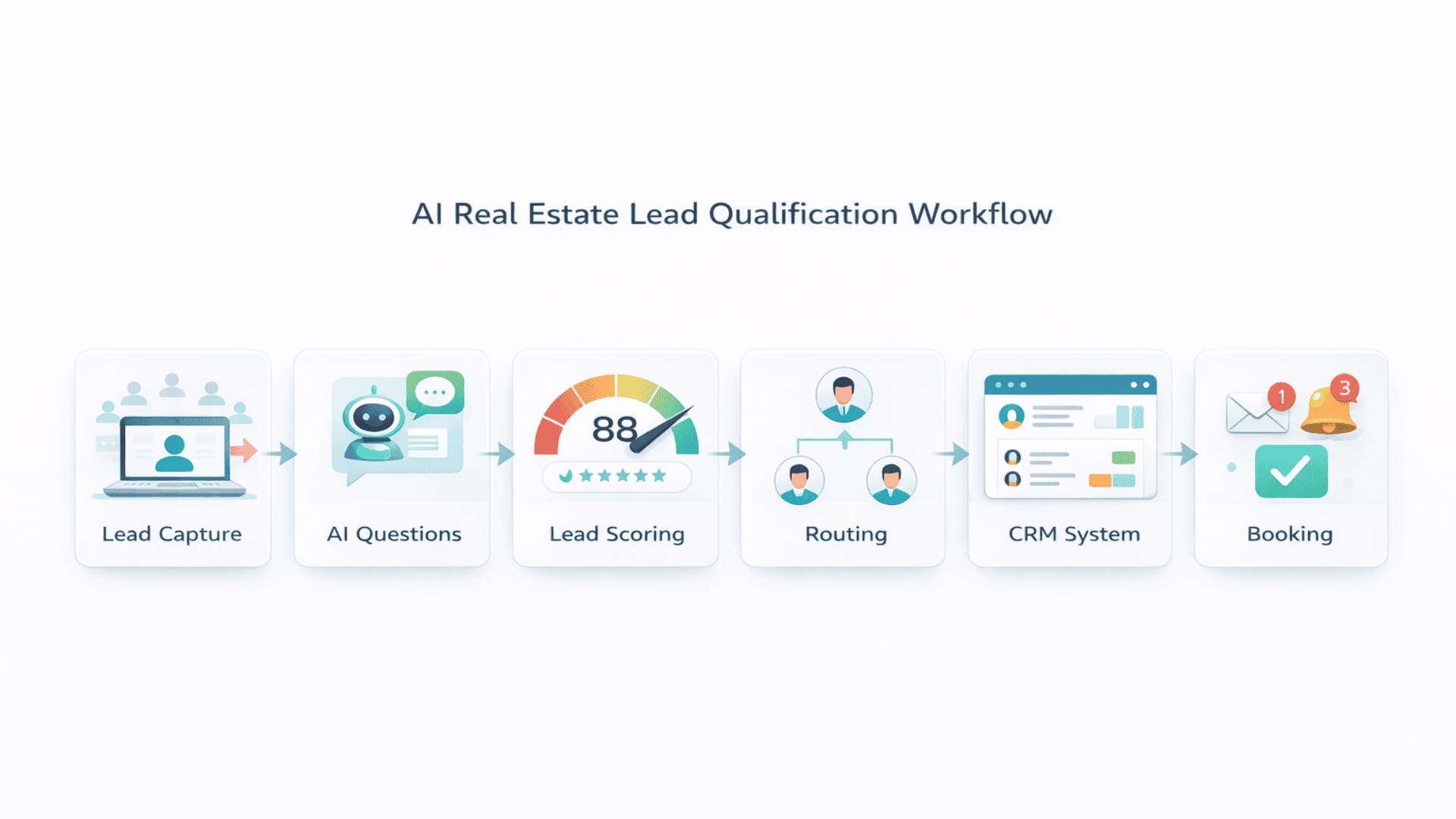
Step 1: Capture every inquiry into one system
Bring leads from paid ads, organic pages, landing pages, property portals, website chat, forms, and WhatsApp into one place.
Step 2: Identify the lead type immediately
Buyer, seller, investor, renter, or unknown.
Step 3: Collect the minimum useful fields
Name, source, geography, budget band, timeline, financing status, and preferred next step are usually enough to start.
Step 4: Let AI ask the next best question
Ask one question that removes uncertainty. Then decide whether you need another.
Step 5: Score the lead
Use example rules or your own historical data to classify fit and urgency.
Step 6: Route the lead
High score plus strong next-step intent should trigger rapid handoff.
Step 7: Trigger the next action automatically
That could be a call task, WhatsApp response, valuation callback, calendar booking link, or site visit scheduling.
But qualification alone is not enough.
The real difference comes from how consistently you follow up.
Teams that scale this properly rely on systems that automate real estate lead follow-up using AI, so qualified leads do not get lost between scoring and contact.
Buyer vs Seller vs Investor Qualification: Why the Questions Should Change
One script for every lead sounds efficient. It usually is not. Buyer intent, seller intent, and investor intent are different, so the qualification path should be different too.
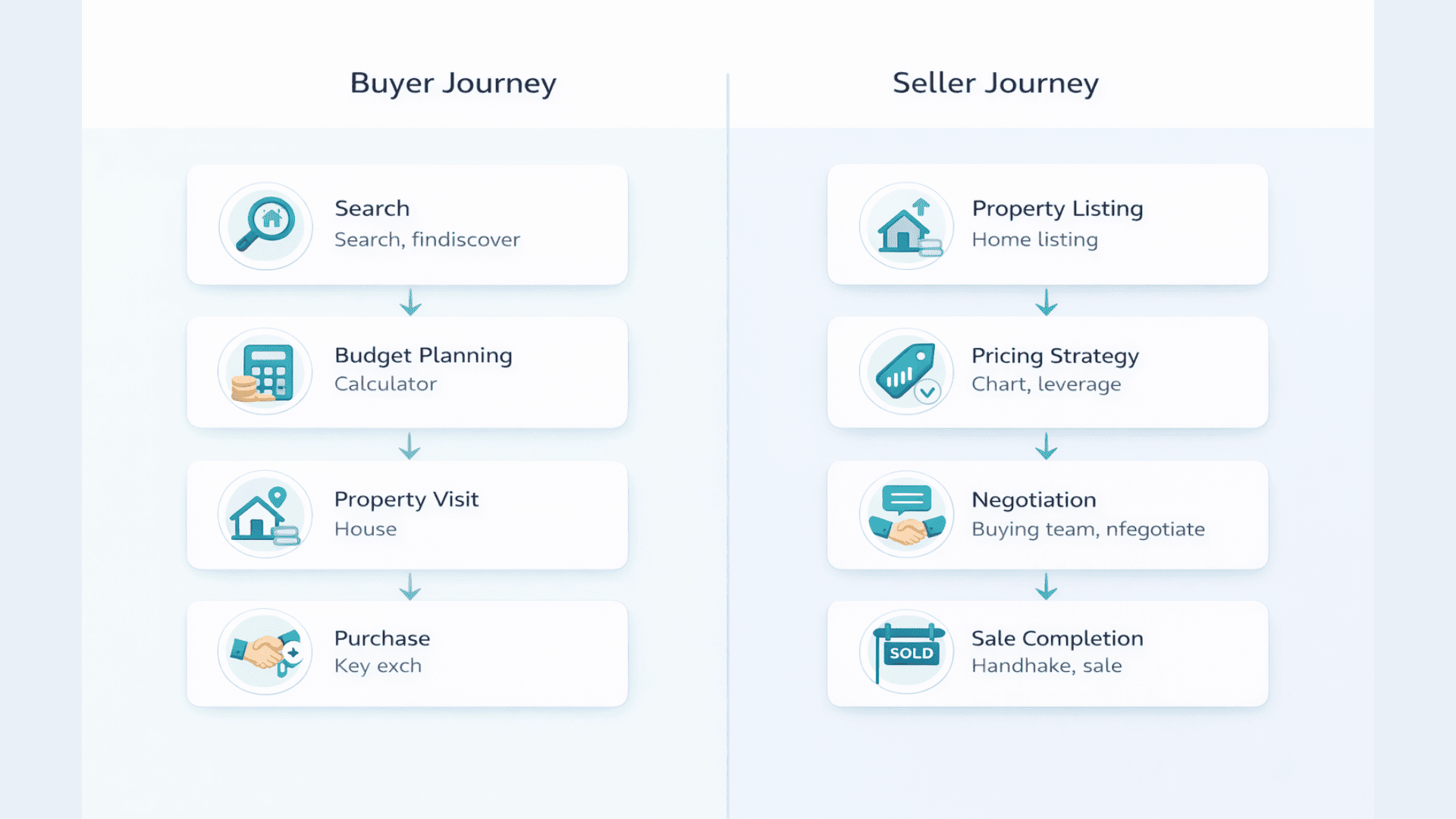
| Lead Type | Main Qualification Focus | Signals That Matter Most |
|---|---|---|
| Buyer | Fit, affordability, financing, and visit readiness | Budget, timeline, loan status, location match |
| Seller | Motivation, property details, expected price, urgency | Reason for selling, location, expected value, timing |
| Investor | Use case, ticket size, ROI expectations, speed | Capital readiness, portfolio intent, preferred asset type |
| Renter or tenant | Move timeline, location, rent budget, occupancy needs | Timeline, budget, unit type, neighborhood fit |
When Should AI Hand Off a Lead to a Human?
AI should collect structure. Humans should handle nuance. The handoff point matters more than most teams realize.
AI should keep going when:
- basic details are still missing
- the next question is simple and low-risk
- the lead is still exploring options
- the system is just clarifying fit, location, or timing
AI should stop and hand off when:
- the lead requests a call, valuation, or site visit
- the question becomes complex or emotional
- the lead asks detailed project or pricing questions that need human judgment
- the lead shows strong urgency
- the conversation becomes confusing or repetitive
Why Channel-Specific Qualification Matters
Not all leads behave the same way. A website chat lead, a portal lead, and a WhatsApp lead often arrive with different context and different intent levels.
Often high volume and mixed quality. Keep the first questions short and fast.
Often more research-driven. These leads may engage deeply before they are ready to talk.
Usually tied to a specific listing. Qualification should confirm fit and timing quickly.
Often conversational and fast. Good for short questions, reminders, and follow-up.
That means your system should not force identical question sequences on every channel.
The goal is not uniformity for the sake of it.
The goal is useful qualification with the least friction possible.
What a Good System Should Disqualify Early
A strong qualification system does not just identify hot leads. It also filters out leads that should not consume agent time right now.
That may include:
- spam submissions
- duplicate leads
- wrong geography
- no realistic fit with your offering
- students or researchers who are not actual buyers or sellers
- inquiries with no intent beyond general curiosity
Privacy, Consent, and Data Handling: What You Should Not Ignore
If AI is collecting lead data, you need basic guardrails. This does not have to be complicated, but it does need to be intentional.
At minimum:
- ask only for information you actually need
- avoid collecting sensitive information that is unrelated to qualification
- make sure the lead knows they are interacting with an automated system where required
- store data in systems your team can review and manage
- keep humans in the loop for important decisions and nuanced conversations
- follow the privacy rules that apply in the regions where you operate
Why does this matter?
Because lead qualification is not just a conversion problem.
It is a trust problem too.
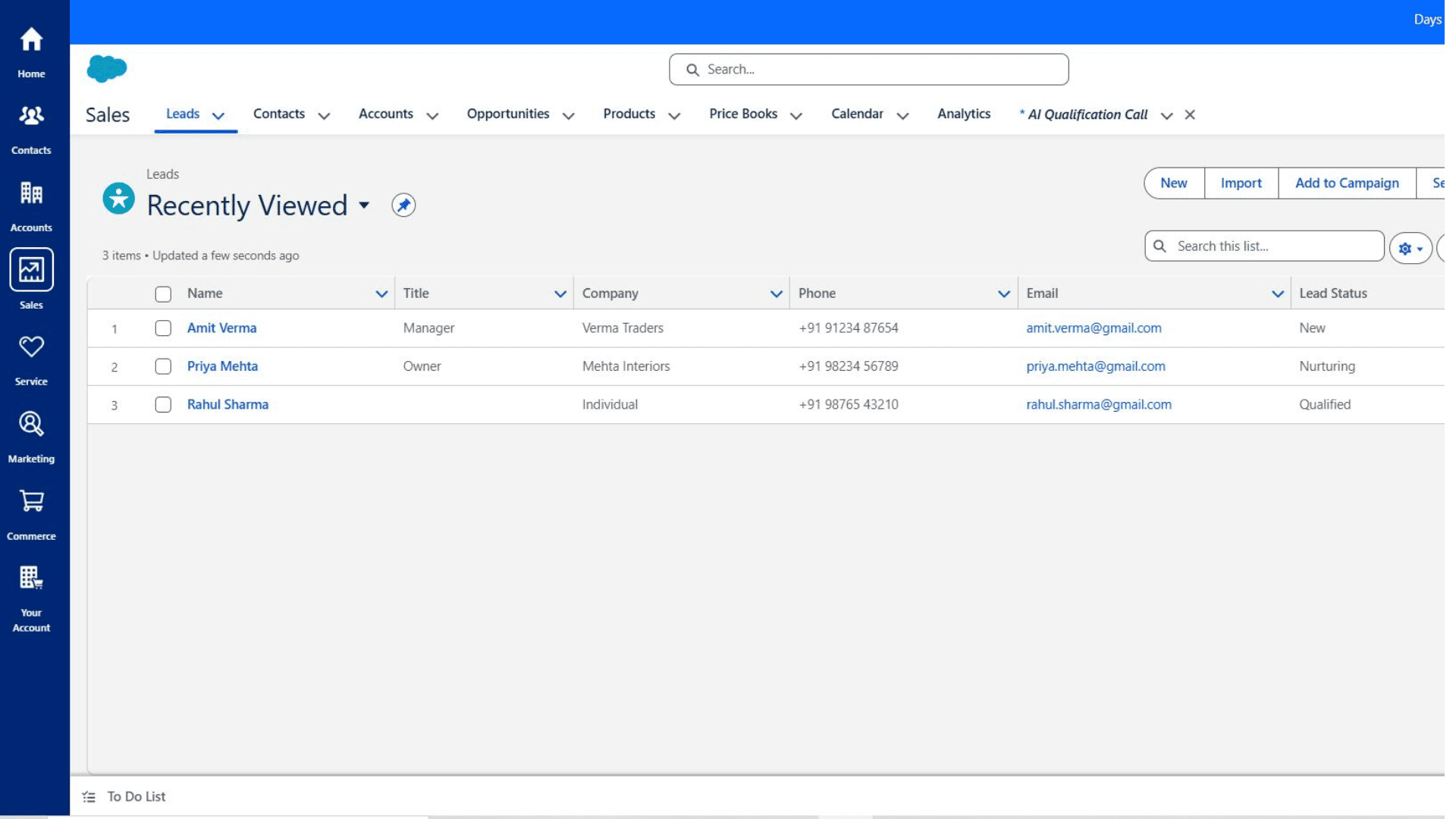
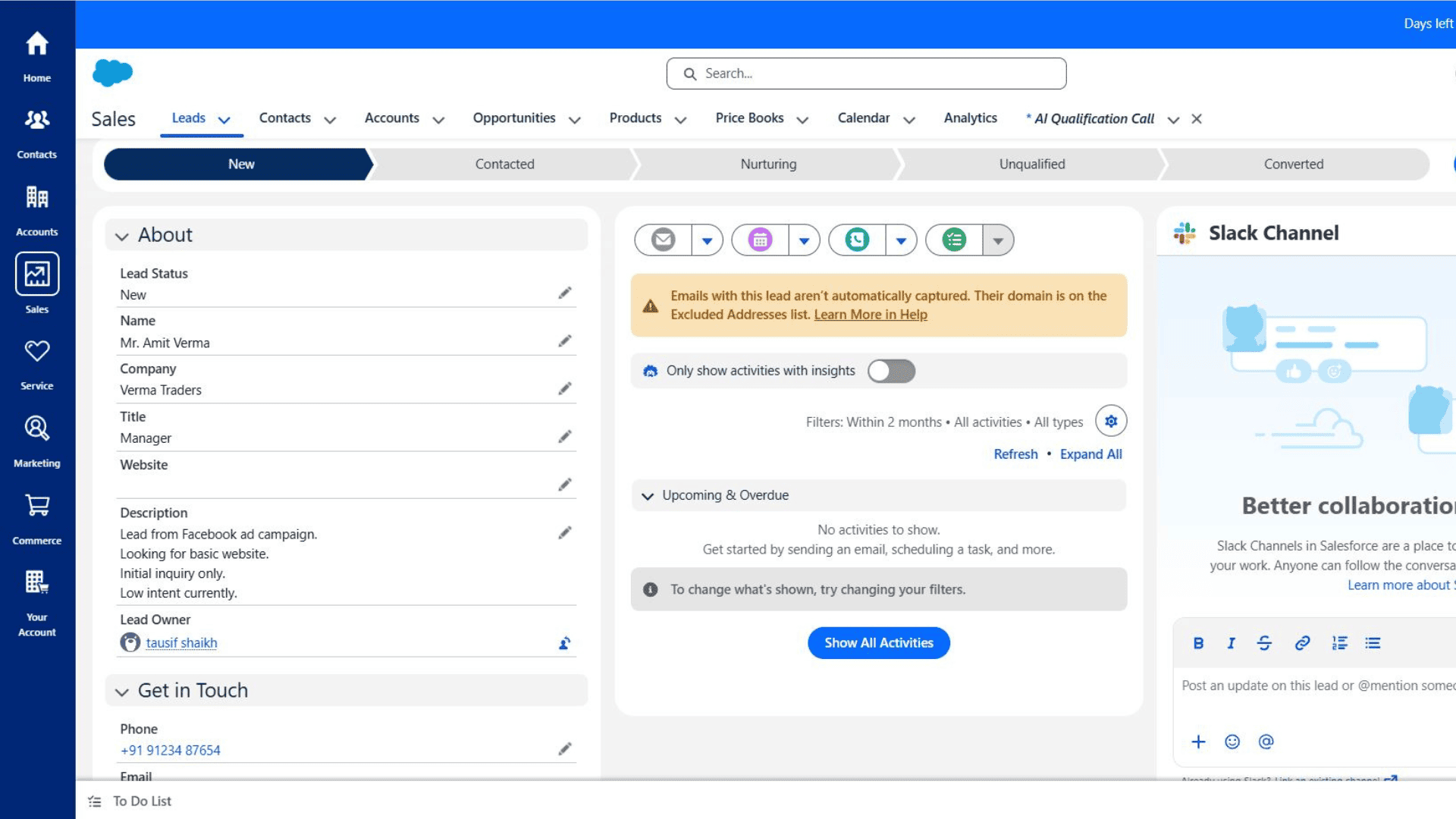
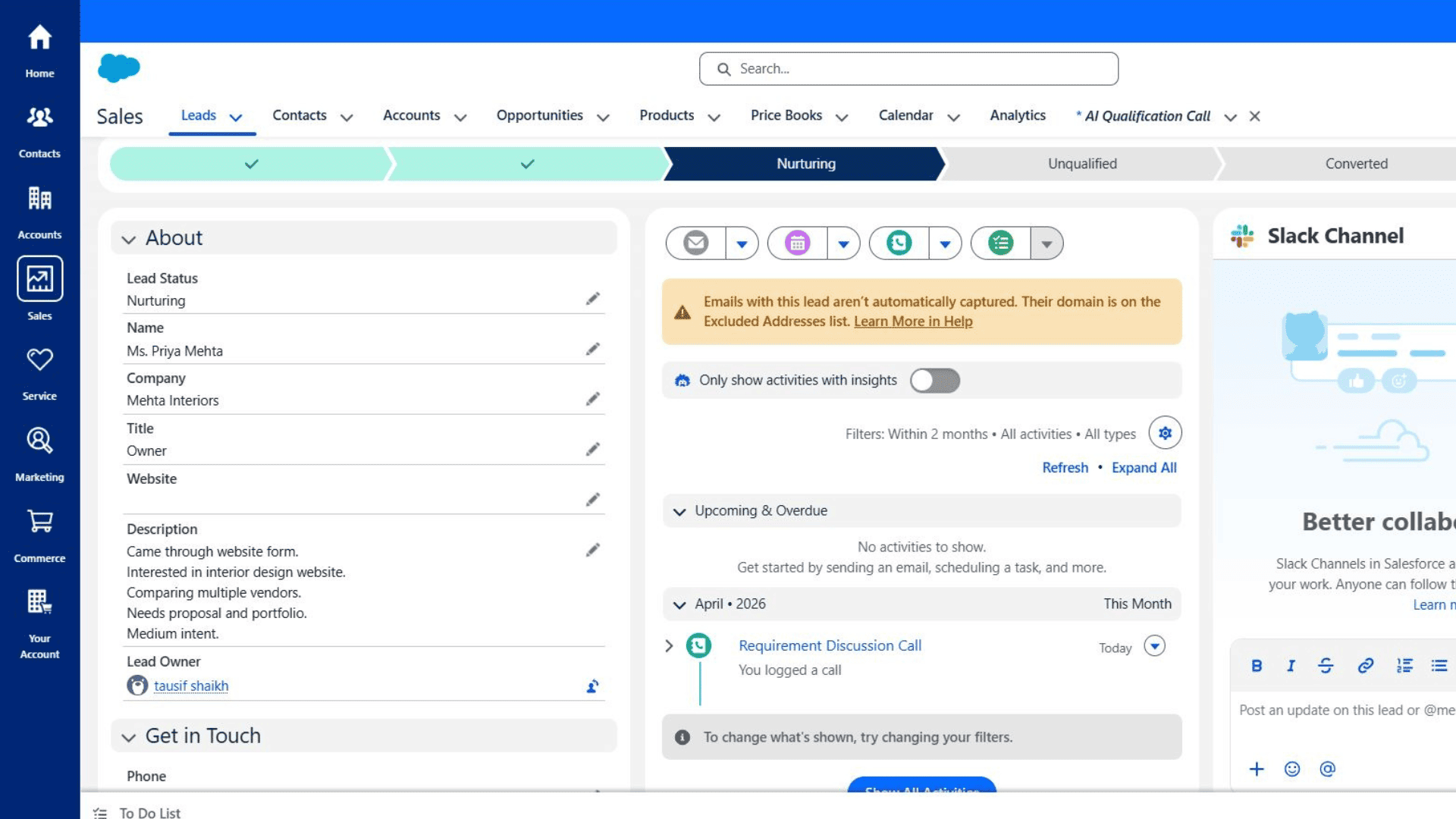
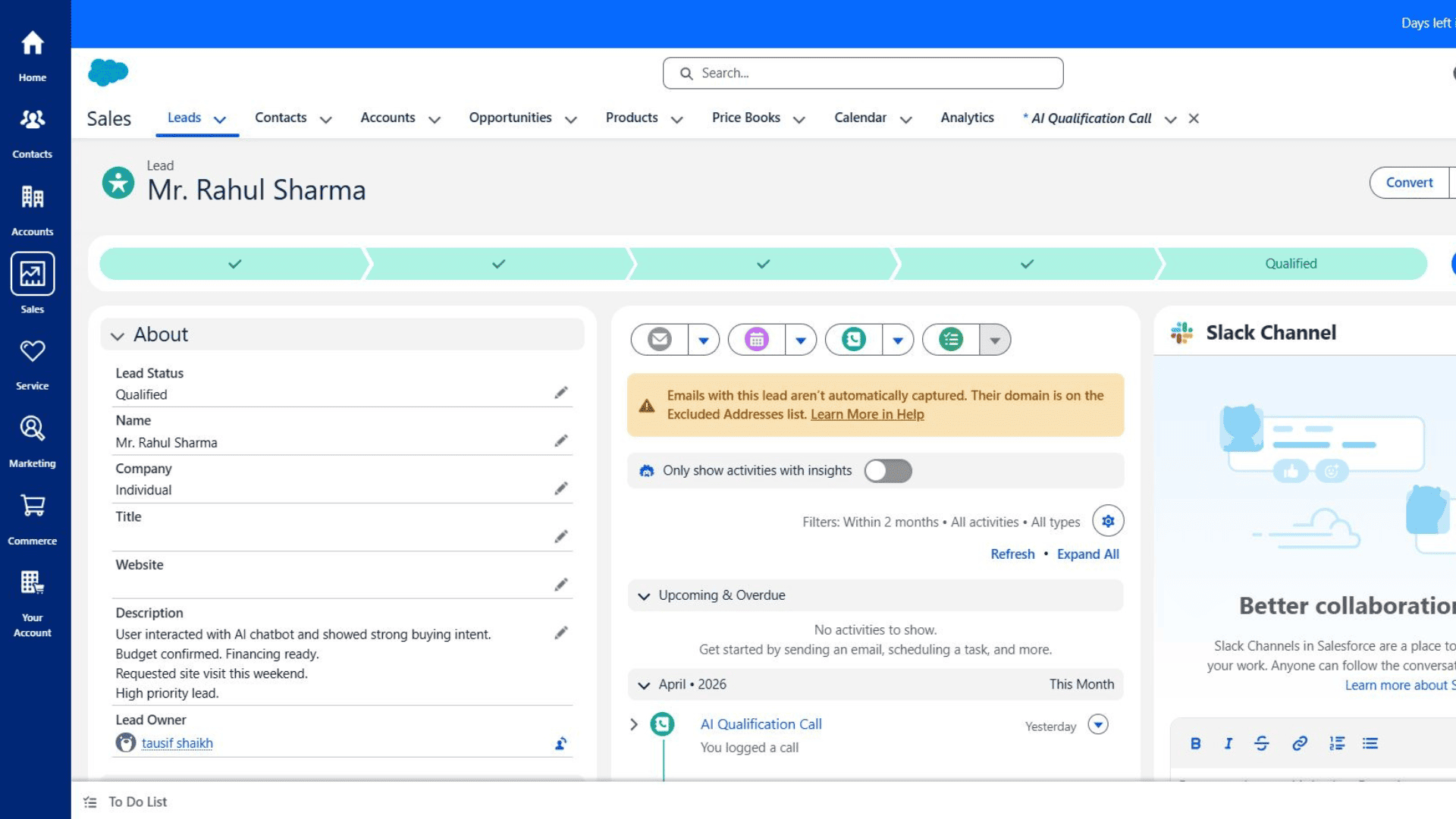
Example Tech Stack for AI Real Estate Lead Qualification
You do not need 12 tools. You need a small stack that actually talks to each other.
Now:
This section is not a “best tools” list.
It is an example stack that shows what roles usually matter in a qualification system.
A chatbot or conversational form to capture details and ask qualification questions.
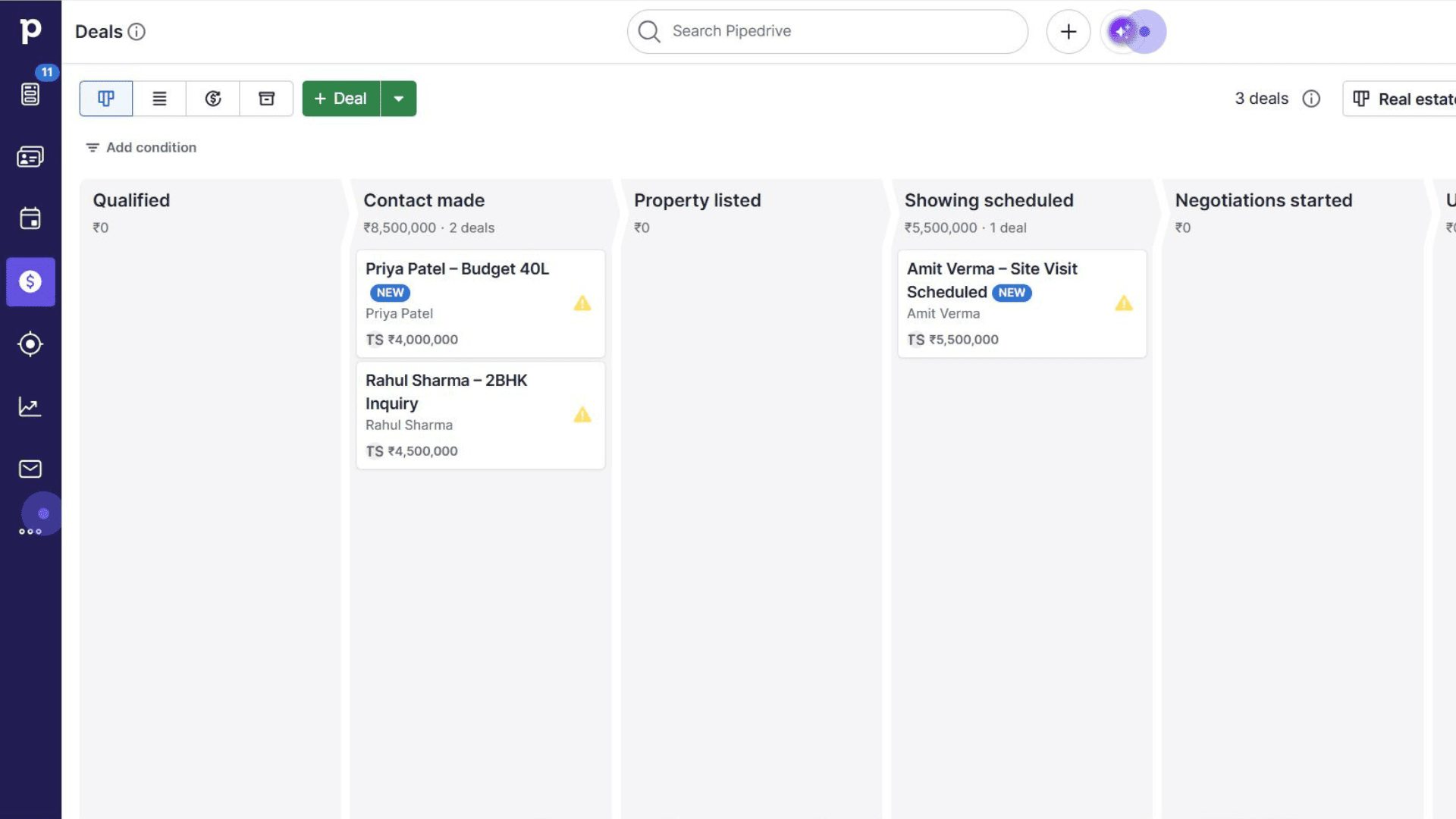
A system to store lead records, status, ownership, and reporting fields.
A way for sales teams to see qualification stages and lead movement clearly.
A channel for callbacks, reminders, confirmations, and nurture conversations.
If you want a broader view of the kind of stack that supports this, the article on AI tools for real estate lead generation is the best next step.

How to Measure Whether Your AI Qualification System Is Working
If you only track one thing, track qualified lead rate. But if you want the full picture, track the quality of handoff, speed, and downstream action too.
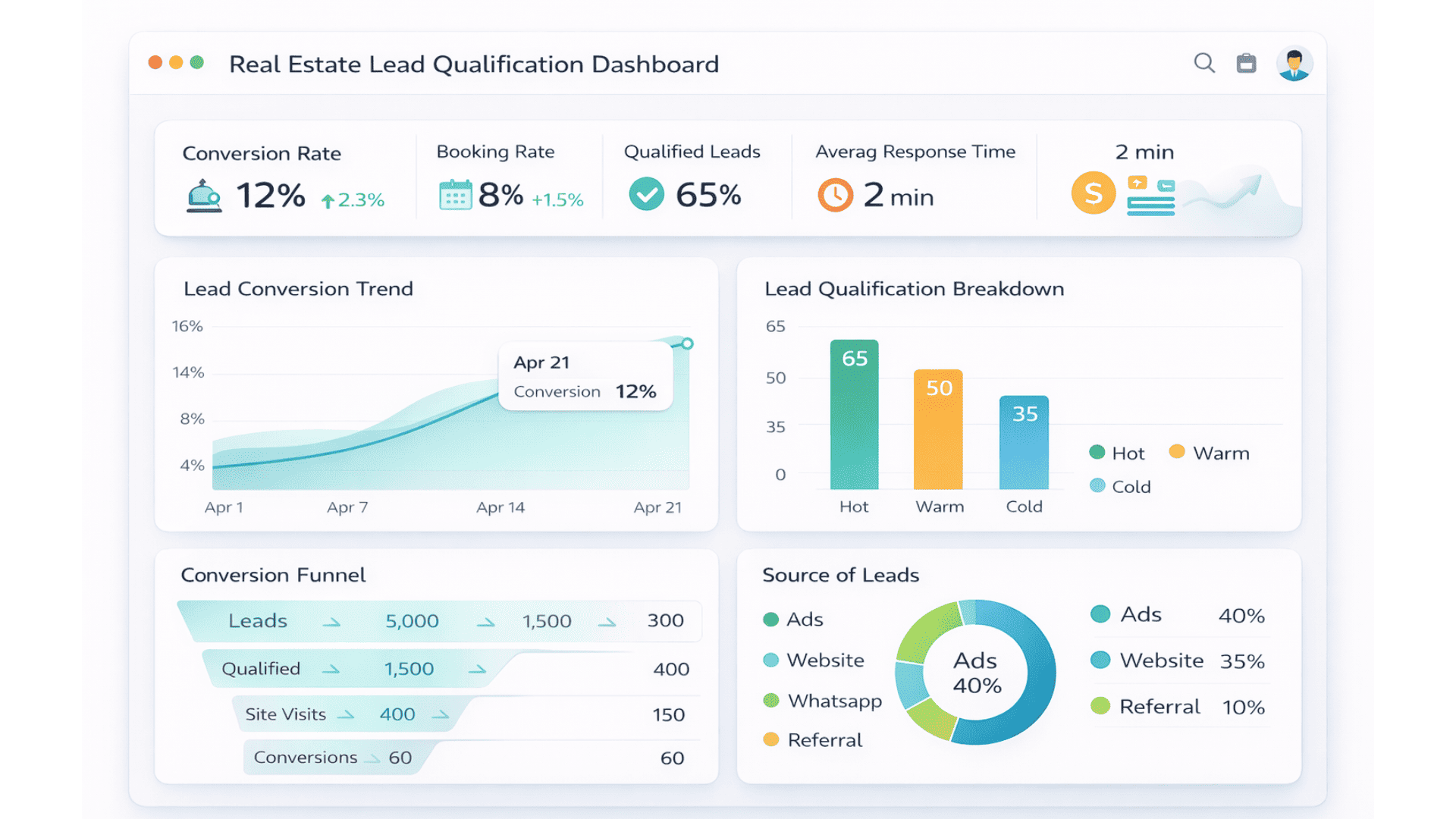
Useful metrics include:
- qualified lead percentage
- lead-to-call-booking rate
- lead-to-site-visit rate
- response time
- cost per qualified lead
- lead-to-conversion rate
- agent contact success rate
What should you compare against?
Compare AI-assisted qualification against your own baseline.
Look at how the process worked before AI, not against a random benchmark from another business model.
How long should you evaluate?
Use a consistent review window.
For many teams, a monthly review is more useful than a daily one because real estate sales cycles can be longer and more uneven.
What counts as improvement?
More clarity in the CRM.
Faster first response.
Better contact rates.
More site visits from the same lead volume.
Those are practical improvements you can actually observe.
Common Mistakes When Using AI to Qualify Real Estate Leads
Asking too many questions too early
This adds friction and lowers completion rates.
Treating every lead the same way
Without segmentation, prioritization gets weak fast.
Ignoring financing readiness
Budget alone is not enough in real estate.
Not syncing with CRM
Qualification insights get lost if they stay trapped inside one tool.
Over-automating everything
AI should support human sales teams, not replace trust-based conversations.
Weak follow-up after qualification
A good score means very little if the next action is slow or inconsistent.
Weak prompt design
Poor prompts create vague summaries, missed signals, or repetitive questions.
No fallback logic
If the AI gets confused and the workflow has no recovery path, the user experience falls apart.
Best Practices to Make AI Lead Qualification More Accurate
- keep the first interaction short and useful
- ask progressive questions instead of everything at once
- combine explicit answers with engagement behavior
- review scoring quality regularly
- separate buyer and seller workflows
- connect qualification to real business outcomes like calls, visits, and booked meetings
- store reason codes for nurture and disqualification
- review failed handoffs to see where the process is breaking
AI vs Human Roles in Real Estate Lead Qualification
| Task | AI Is Good At | Humans Are Better At |
|---|---|---|
| First response | Immediate acknowledgement and basic questions | Personal reassurance when stakes are high |
| Data capture | Collecting structured answers consistently | Spotting nuance not captured in forms |
| Lead scoring | Applying rules at scale | Overriding the score when context matters |
| Follow-up support | Reminders, summaries, and nurture workflows | Handling objections and moving the deal forward |
| Closing | Not the right role | Trust, negotiation, and commitment |
The best model is not AI instead of agents.
It is AI plus agents.
A Simple AI Lead Qualification Framework Real Estate Teams Can Use
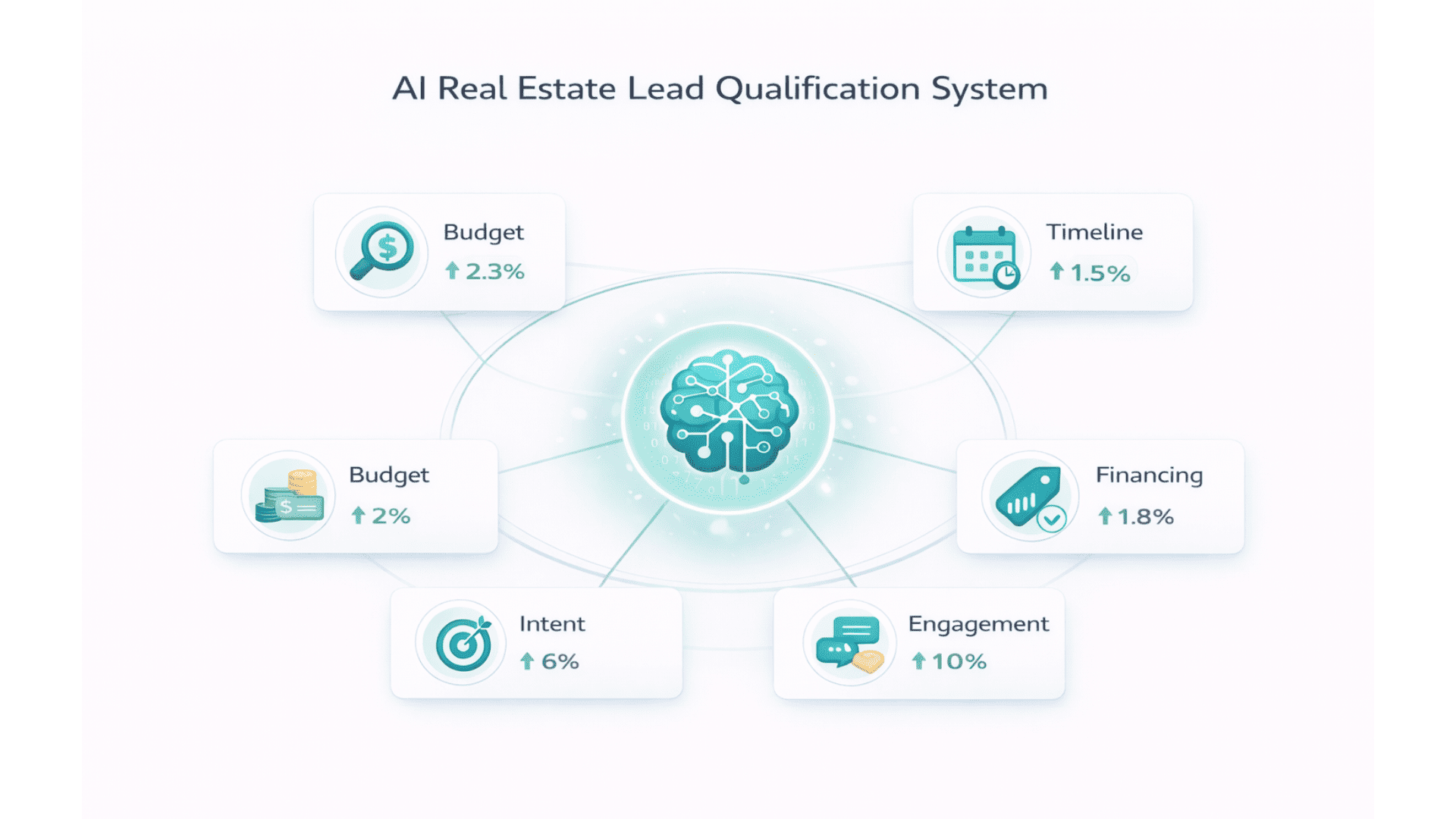
If you want one model to remember, use this:
- Budget
- Timeline
- Financing
- Engagement
- Intent
That gives you a clear first filter for almost any real estate inquiry.
Then add routing, handoff rules, and follow-up logic on top of it.
FAQs About AI Real Estate Lead Qualification
What is a qualified real estate lead?
A qualified real estate lead is someone whose answers, behavior, and intent suggest real potential to move forward in the buying, selling, or investing process.
Can AI score real estate leads automatically?
Yes. With the right rules or model prompts, AI can combine inputs such as budget, timeline, financing status, and engagement to support lead prioritization.
Can a chatbot qualify real estate leads?
Yes. A chatbot can ask structured questions, collect lead details, and guide the next step in a more conversational way than a static form.
What questions should an AI chatbot ask first?
Start with lead type, location, budget, timeline, financing status, and preferred next step. That usually gives you enough context to score and route correctly.
How many qualification questions are too many?
Too many is when the user starts doing work that your team should be doing later. Ask only what you need to route correctly and continue deeper questions only if intent stays strong.
When should AI hand off a lead to an agent?
Hand off when the lead requests a call, valuation, meeting, or site visit, or when the conversation becomes detailed enough that human judgment matters more than automation.
What is the difference between lead generation and lead qualification?
Lead generation brings inquiries into the funnel. Lead qualification helps determine which of those inquiries are most likely to move forward and what action should happen next.
Should buyers and sellers be qualified the same way?
No. Buyers and sellers have different motivations, timelines, and decision signals, so the qualification path should be different.
How does AI help with follow-up after qualification?
With the right integrations, AI can help trigger follow-up messages, summarize conversations, support nurture workflows, and keep lead records updated between human touchpoints.
What is a good lead score threshold?
There is no universal number. A useful threshold is one that matches your own market, inventory, and sales process. Start with sample thresholds, then adjust based on what actually converts.
More Leads Do Not Win. Better Qualification Does.
Most real estate teams ask the wrong question.
They ask: How do we get more leads?
The better question is: Which leads deserve attention first?
If you want AI to improve real estate conversions, the process is simple:
- capture every inquiry
- ask the right questions
- score leads using budget, timeline, financing, engagement, and intent
- route high-priority leads fast
- nurture the rest intelligently
- hand off to humans when nuance matters
- measure what happens after qualification, not just before it
That is the real value of AI in lead qualification.
Not more complexity.
Not more dashboards.
Just clearer data, faster decisions, and a cleaner path from inquiry to action.