
How to Use ChatGPT for Real Estate Leads (2026 Proven System)
A practical 2026 guide to using ChatGPT for real estate lead generation, better follow-up, stronger qualification, and more consistent conversions.
Most real estate agents do not have a lead problem.
They have a system problem.
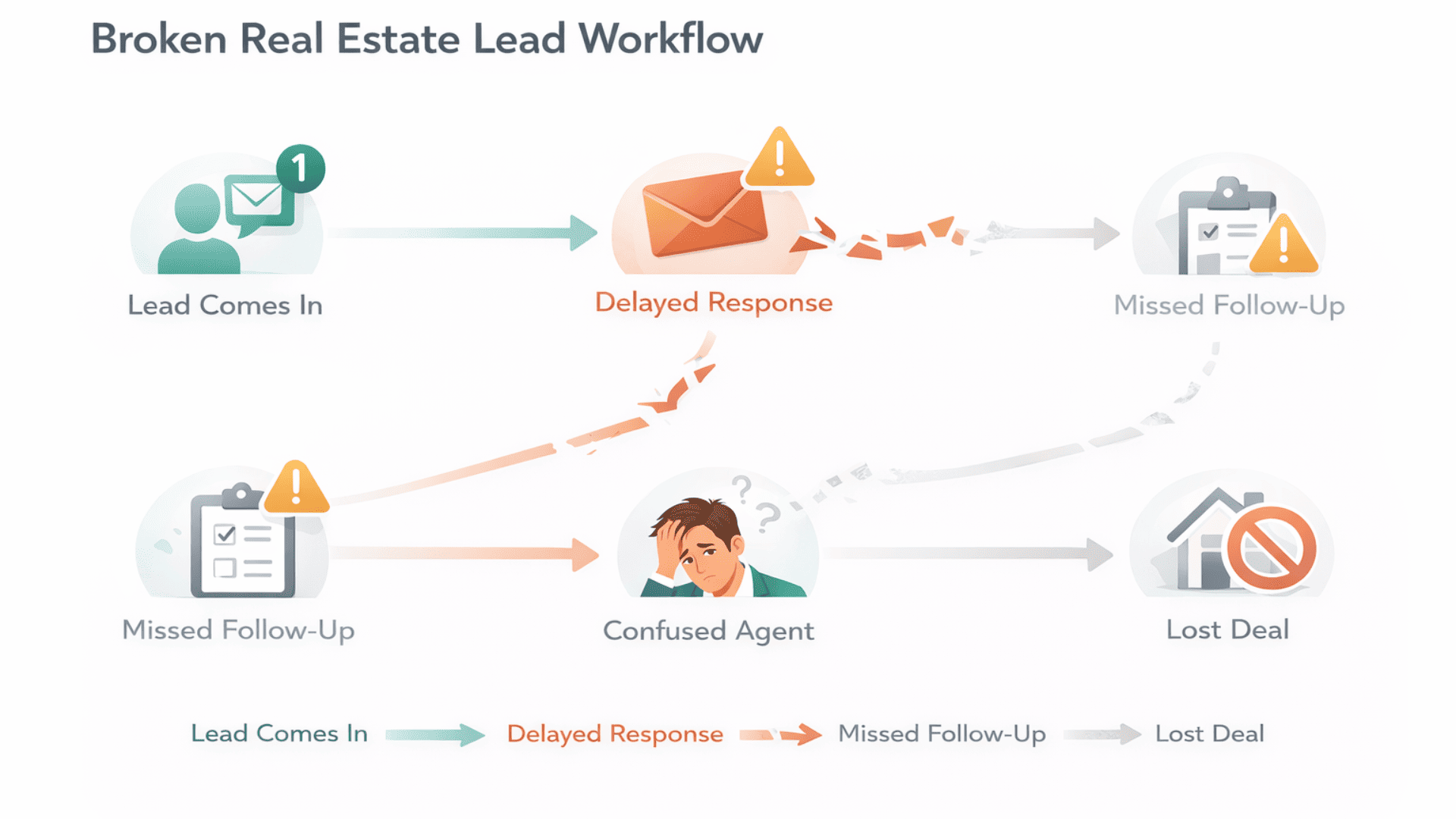
Leads come in.
But replies are delayed.
Follow-ups feel random.
And serious buyers quietly move on to the agent who responds faster and stays consistent longer.
That is where ChatGPT becomes useful.
Not as a magic button.
And not as a replacement for real sales skill.
But as the engine behind a smarter lead-generation system:
- content that attracts the right buyers
- landing pages that turn visits into inquiries
- follow-ups that keep conversations moving
- qualification flows that help you focus on serious prospects

In this guide, you will learn:
- what ChatGPT can actually do for real estate lead generation
- how it fits into traffic, conversion, and follow-up
- 11 practical use cases that agents can start using right away
- the prompt structure behind stronger AI outputs
- the full system that connects content, capture, and conversion
Quick Answer: How to Use ChatGPT for Real Estate Leads
ChatGPT helps real estate professionals generate more qualified leads by supporting the full buyer journey.
- It creates SEO content that attracts high-intent traffic
- It helps write lead magnets, landing pages, and CTAs that capture inquiries
- It generates follow-up messages, email sequences, and objection-handling scripts
- It structures qualification questions so agents can identify serious buyers faster
In short:
ChatGPT helps you create the content that brings traffic, the pages that capture leads, and the follow-up systems that move prospects toward calls, visits, and deals.
Sounds simple.
But here is where it gets interesting.
Most people only use ChatGPT for random copy.
The real upside appears when you use it as part of a complete pipeline.
What Is ChatGPT for Real Estate Lead Generation?
Let us clear up the biggest misconception first.
ChatGPT does not generate leads by itself.
It does not replace your CRM.
It does not replace local market knowledge.
And it definitely does not close deals for you.
What it does do is power the work that usually happens before a lead turns into a conversation.
- It helps you attract attention with useful content
- It helps you capture interest with stronger offers and pages
- It helps you convert faster with more consistent follow-up
Think of it like this:
ChatGPT is not the lead source.
It is the system layer that makes your lead source perform better.
ChatGPT becomes more valuable when it is used across multiple stages of the funnel instead of as a one-off writing tool. And once you start connecting those pieces into a working system, the next step is understanding how that system is actually implemented on a website — which is where a practical breakdown of building an AI chatbot for a real estate website fits into the bigger picture.
For example:
A buyer searches for homes in a specific area.
They find your blog post.
They download a checklist or inquiry guide.
Then they receive a relevant follow-up message within minutes.
ChatGPT can support all three parts of that flow.
How ChatGPT Actually Generates Real Estate Leads
This is the part most articles skip.
Big mistake.
Because once you understand the system, you stop treating AI like a shortcut and start using it like leverage.
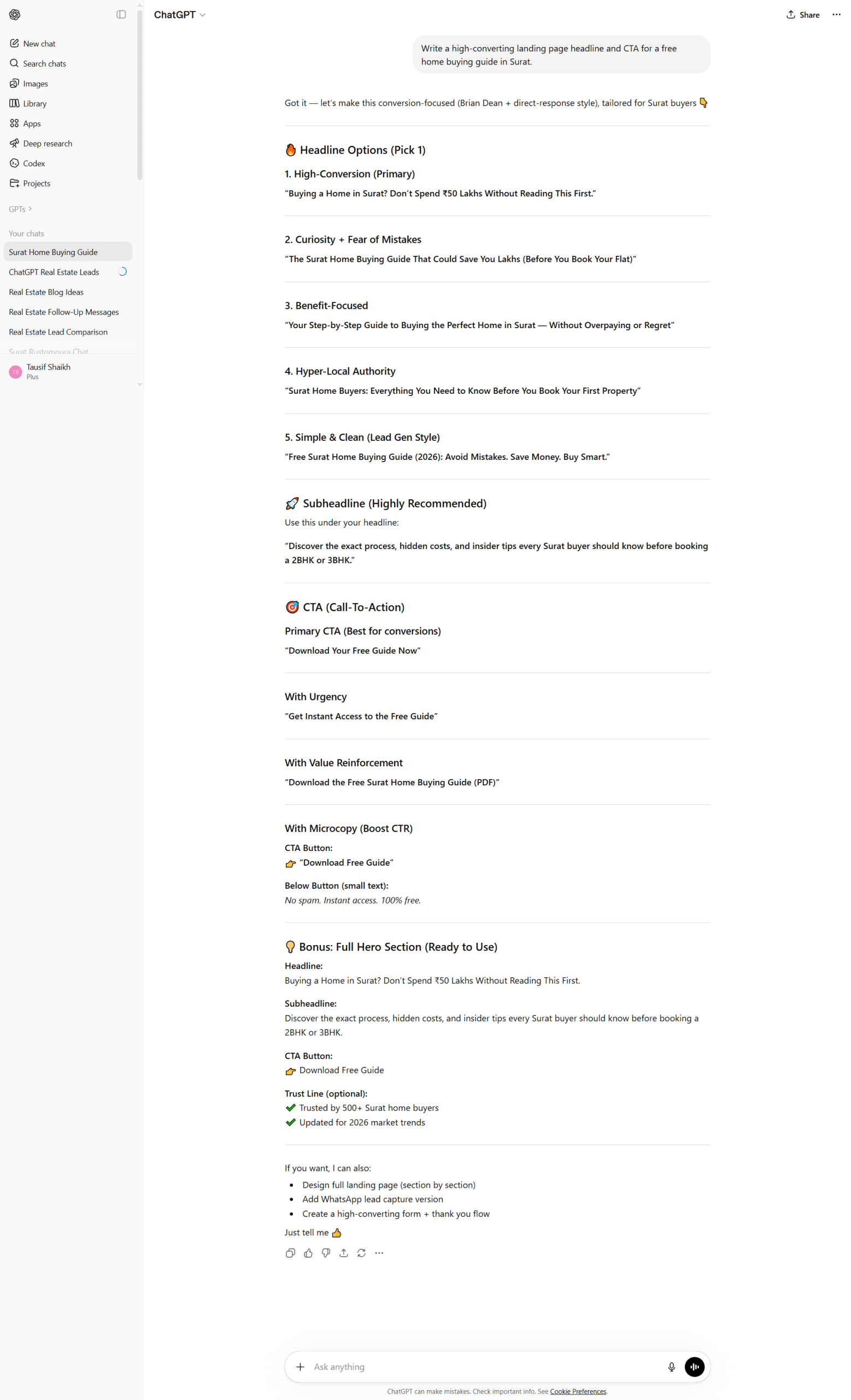
1. Attraction: Bring the Right Traffic In
Lead generation starts before the inquiry form.
It starts when a potential buyer or seller is actively looking for answers.
That is where ChatGPT helps you create:
- SEO blog posts
- city and neighborhood pages
- budget-specific buying guides
- social posts and short-form video ideas
- lead magnet topics aligned with search intent
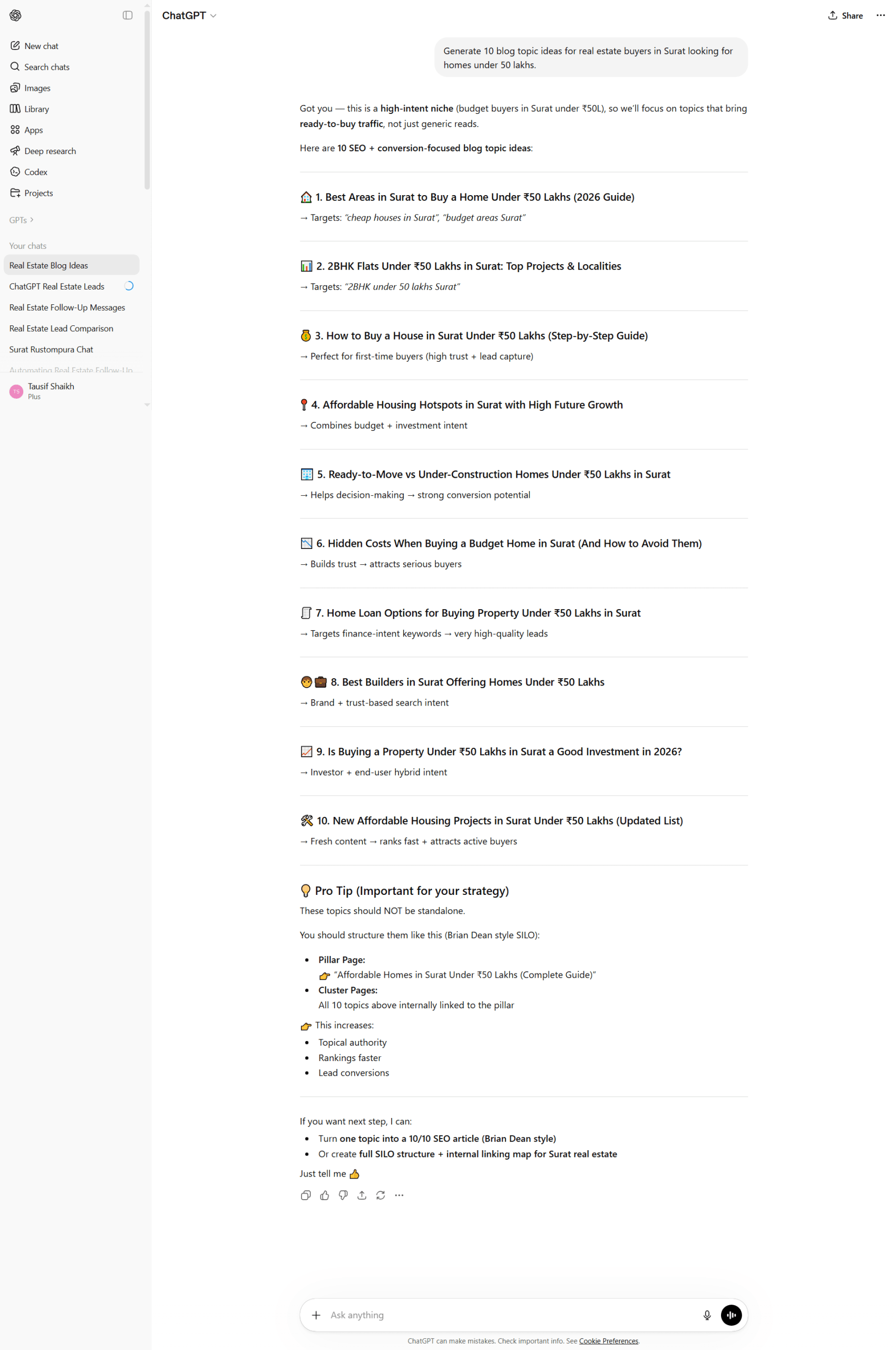
For instance, instead of publishing another generic article on “real estate tips,” you can create content around:
- best areas for first-time buyers in Surat
- 2BHK homes under a specific budget
- documents required for a home loan
- builder comparison pages for a target locality
That is also why agents who build content around real intent usually see better long-term results than agents who rely only on short bursts of promotion. Once that content engine starts compounding, it begins to function much more like a complete AI-powered real estate lead generation system than a basic blog strategy.
Key takeaway: content is not just branding. Done well, it becomes acquisition.
2. Capture: Turn Attention Into Inquiries
Traffic alone does not create pipeline.
Conversion does.
Once people land on your site or click through from social, ChatGPT can help you improve the pages that turn interest into action.
That includes:
- lead magnets
- landing page headlines
- form copy
- call-to-action buttons
- buyer and seller guides

A simple example:
Instead of asking visitors to “Contact Us,” you can offer:
- a first-time homebuyer checklist
- a local price comparison guide
- a budget planning worksheet
- a WhatsApp-ready consultation request flow
That tiny shift matters.
Because people are much more likely to respond to a useful next step than a vague invitation.
3. Conversion: Build a Follow-Up System That Actually Works
This is where deals are usually won.
And where too many leads are lost.
Not because the lead was bad.
But because the process after the inquiry was weak.
Slow replies.
No structure.
No consistent reminder.
No qualification.
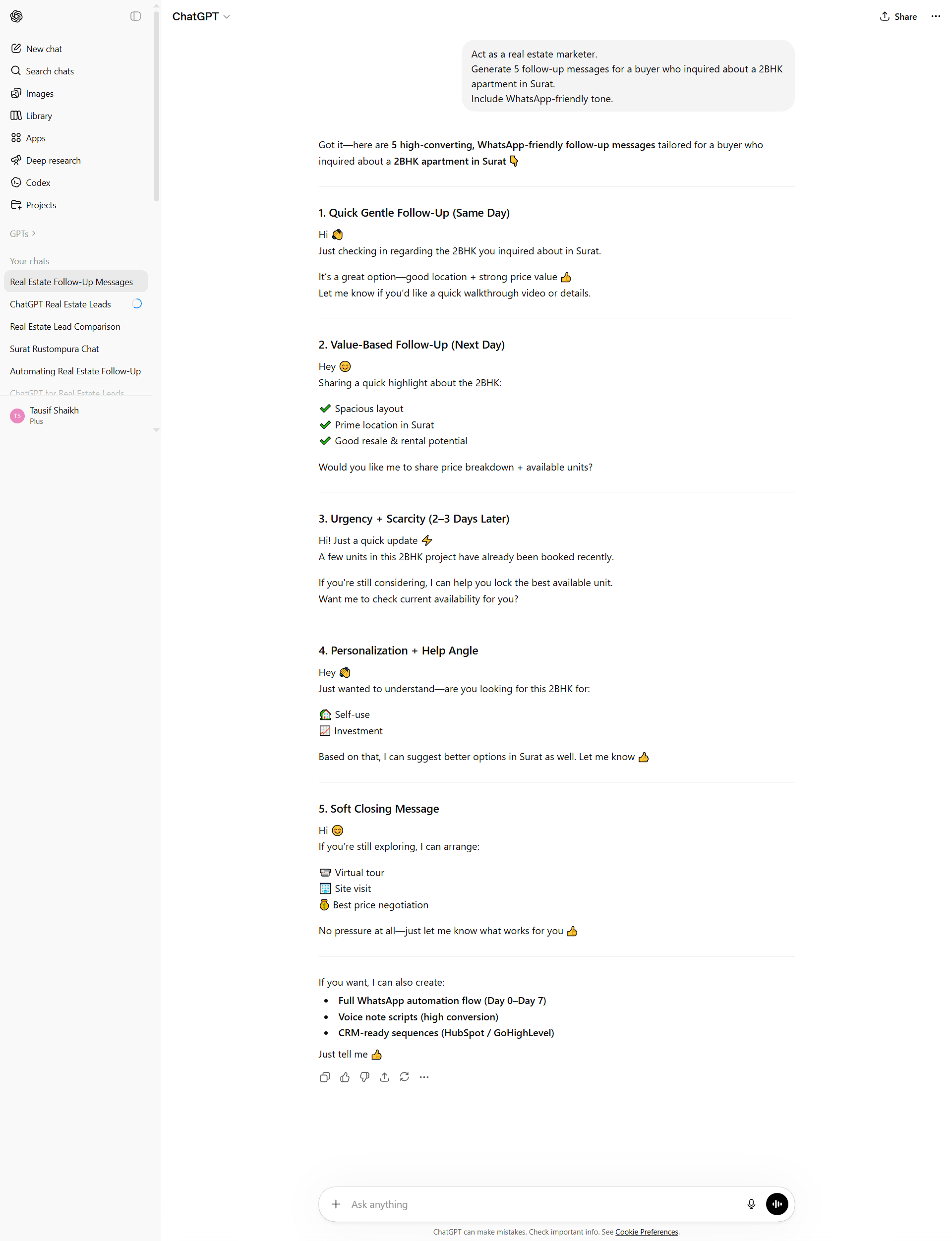
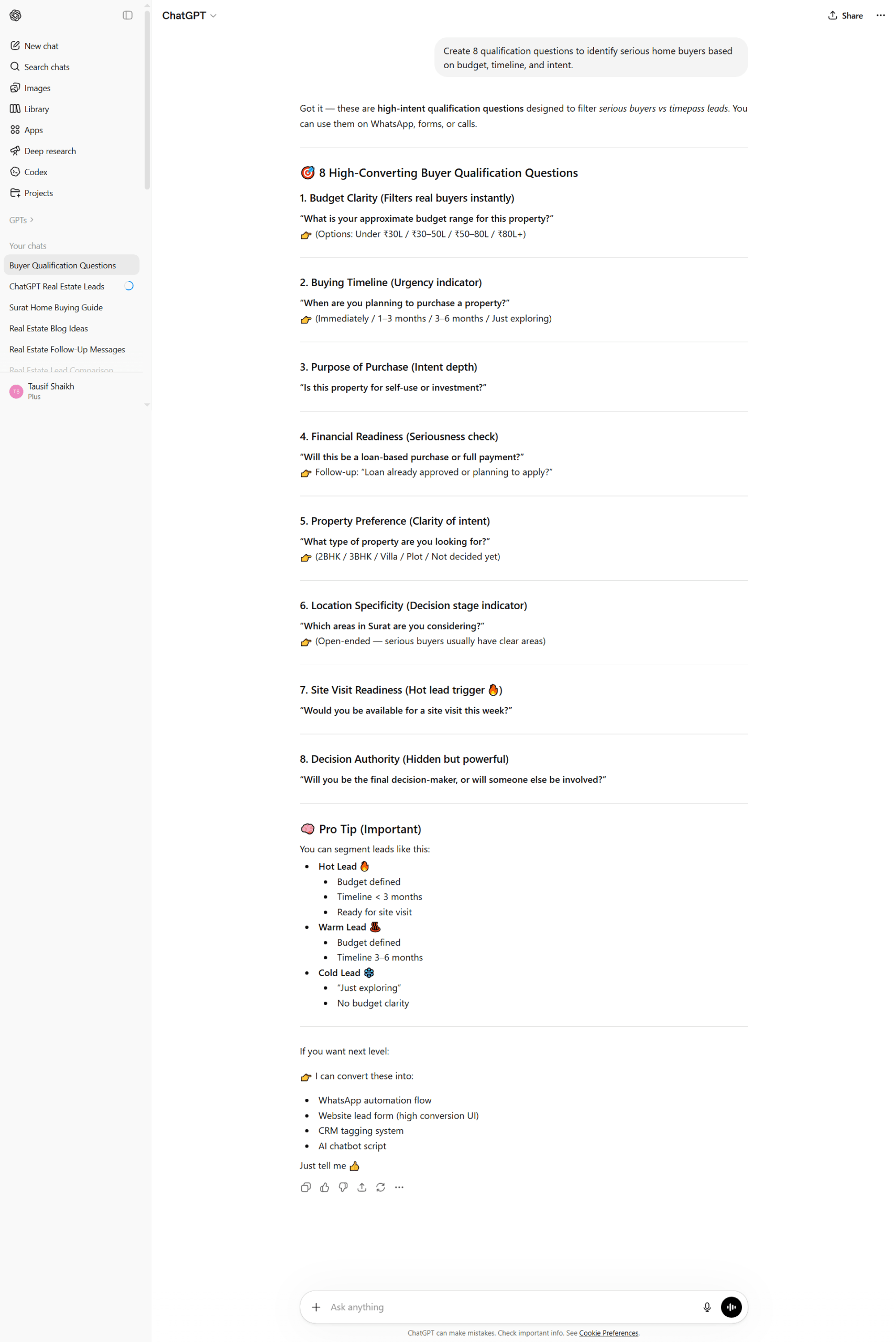
ChatGPT helps by generating:
- instant acknowledgment replies
- 1-hour and 24-hour follow-up messages
- WhatsApp sequences
- email drips
- objection-handling responses
- call-booking nudges
And once you connect that messaging logic to your process, follow-up stops feeling random. It becomes predictable. That is exactly why agents investing in AI-assisted real estate follow-up automation are able to stay consistent without increasing their day-to-day workload.
Key takeaway: the biggest conversion lift usually happens after the lead is captured, not before.
11 Proven Ways to Use ChatGPT for Real Estate Leads
Now let us get practical.
Many agents stop at content creation, but the real leverage comes from combining it with the right stack of AI tools that support writing, automation, and lead handling workflows — which is exactly where a well-structured AI tool stack for real estate lead generation starts to make a noticeable difference. Because theory is useful.
But execution is what moves pipeline.
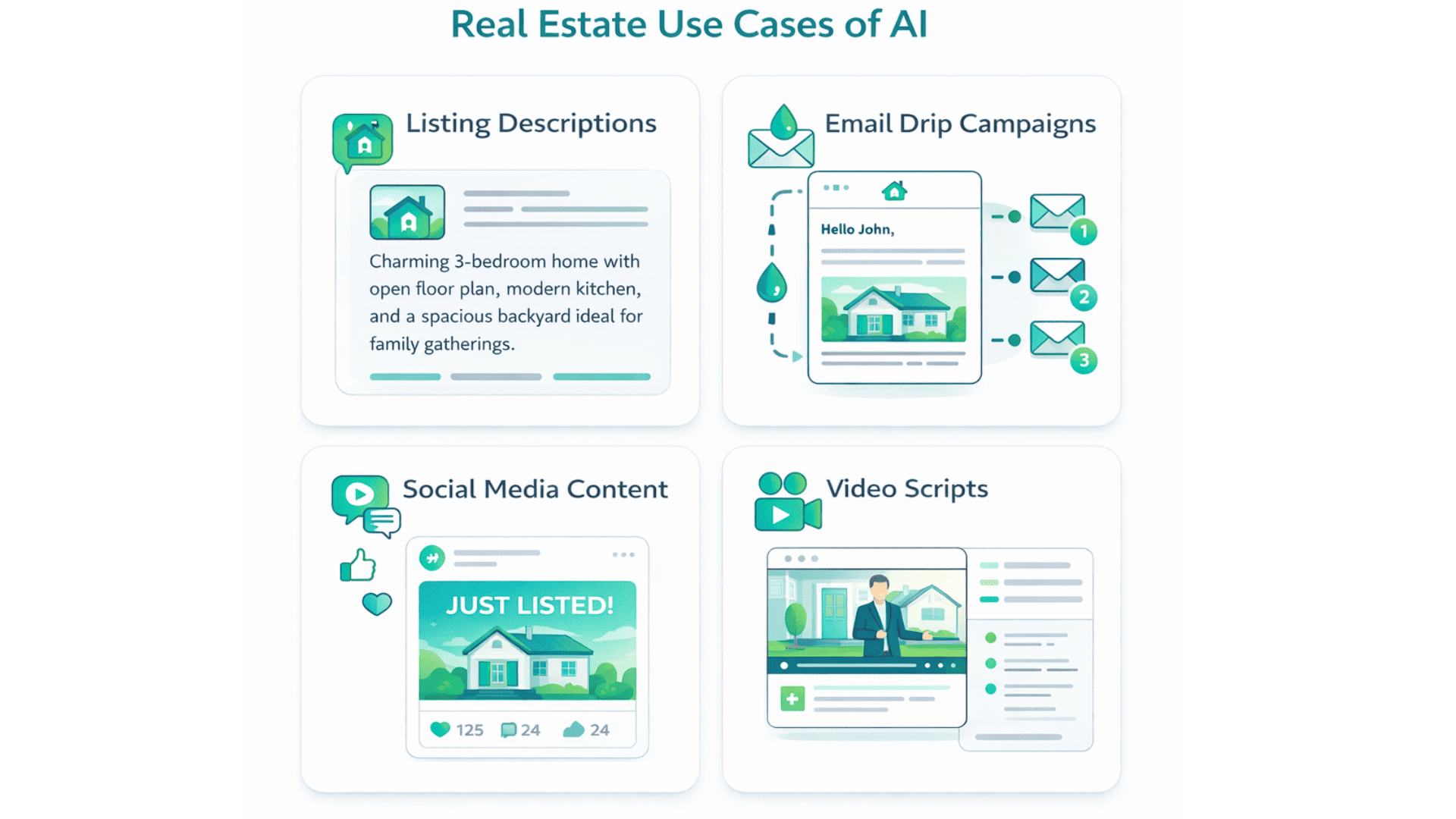
1. Generate SEO Blog Content
This is one of the strongest long-term use cases.
ChatGPT can help you create blog articles around real buyer and seller questions, such as:
- best places to buy a home in a specific city
- homes under a target budget
- loan, legal, and documentation guides
- investment-focused area comparisons

Best use case:
Target long-tail, high-intent topics first.
Common mistake:
Publishing generic AI drafts without local examples, pricing context, or market-specific nuance.
2. Create Lead Magnets
Lead magnets help cold traffic become warm leads.
ChatGPT can help you build:
- homebuyer checklists
- budget-planning guides
- location comparison PDFs
- property visit checklists
- investment decision worksheets
Best use case:
Pair each lead magnet with a page that targets a clear audience segment, such as first-time buyers, investors, or families relocating to a specific area.
3. Write Follow-Up Messages
This is where speed meets personalization.
Instead of writing every reply manually, you can use ChatGPT to generate:
- instant first responses
- follow-ups after no reply
- property reminder messages
- WhatsApp re-engagement messages
- call-booking prompts
Best use case:
Create a small sequence for each major inquiry type instead of improvising every message.
4. Build Email Drip Campaigns
Not every lead is ready today.
That does not mean the lead is bad.
It usually means timing is different.
ChatGPT helps you write email drips that educate, nurture, and bring the prospect back when they are ready.
Examples:
- first-time buyer sequence
- investor education sequence
- post-site-visit nurture sequence
- loan-assistance and documentation sequence
5. Create Social Media Content

ChatGPT can generate:
- carousel ideas
- short educational captions
- reels hooks
- market update posts
- FAQ-based content
Best use case:
Repurpose your blog topics into bite-sized social posts that lead back to a guide, landing page, or WhatsApp inquiry flow.
6. Write Property Descriptions
A listing description should do more than list features.
It should help the reader picture the property, understand the fit, and feel motivated to take the next step.
ChatGPT can help turn flat details into clearer, more appealing copy.
Best use case:
Give the AI the property type, locality, ideal buyer profile, key amenities, and tone.
Common mistake:
Using the same generic wording across every listing.
7. Generate Video Scripts
Short-form video can attract attention quickly, especially for location-based content, buyer FAQs, and property walkthroughs.
ChatGPT can write:
- reel hooks
- 1-minute scripts
- neighborhood explainers
- buyer education videos
- site-visit invitation scripts
8. Build Landing Pages
A landing page can make or break conversion.
ChatGPT helps with:
- headlines
- subheads
- benefit bullets
- form copy
- CTA copy
- FAQ support content
Best use case:
Create one page for one audience and one offer instead of trying to speak to everyone at once.
9. Handle Buyer Objections
Some leads hesitate because of price.
Others need more time.
Some are comparing options.
ChatGPT can help you prepare responses that sound helpful, not robotic, so your team is never stuck wondering what to say next.
10. Create Local SEO Pages
Local intent matters in real estate.
A lot.
ChatGPT can help you build pages around:
- areas
- project types
- budget brackets
- buyer goals
- commute or school preferences
Best use case:
Write pages that combine local context with practical buyer information instead of thin, duplicated location pages.
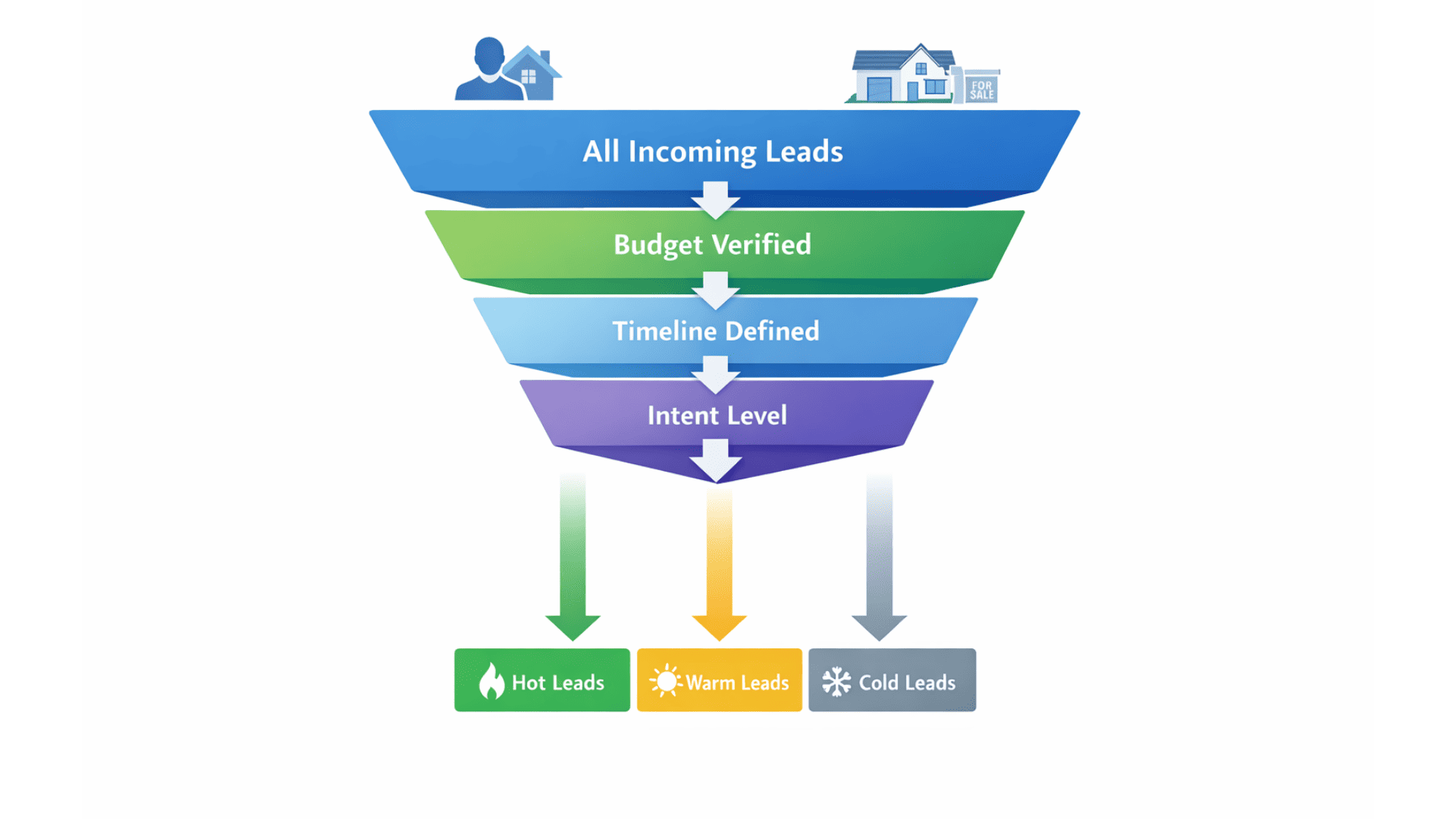
11. Qualify Leads Automatically
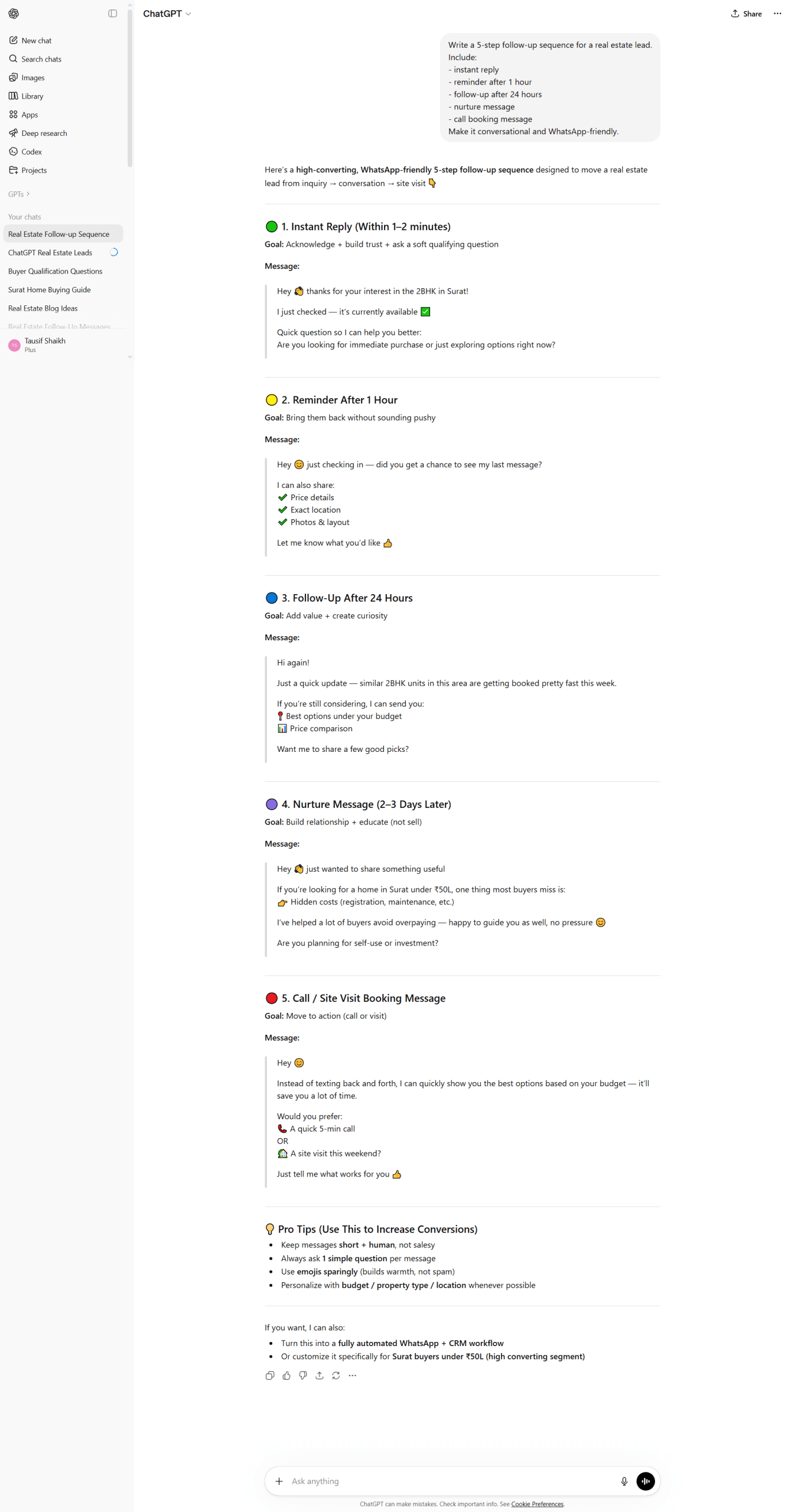
This is one of the most underrated use cases.
ChatGPT can help you create a smart qualification sequence around:
- budget
- timeline
- financing readiness
- property preference
- decision stage
That means less guessing.
And better prioritization.
ChatGPT vs Traditional Real Estate Lead Generation
Let us make this practical.
Because in the end, you are not really choosing tools.
You are choosing outcomes.
| Factor | Traditional Method | ChatGPT-Assisted System |
|---|---|---|
| Response time | Manual and often delayed | Faster and easier to standardize |
| Follow-up quality | Depends on memory and workload | Structured and repeatable |
| Content creation | Slow and resource-heavy | Faster to plan, draft, and scale |
| Lead qualification | Often inconsistent | Question-based and easier to systemize |
| Scalability | Limited by time | Much easier to expand across channels |
Notice the pattern?
The biggest shift is not just speed.
It is consistency at scale.
Traditional lead generation often breaks after the inquiry comes in.
That is why the biggest advantage of ChatGPT is not simply writing faster content.
It is making lead handling more repeatable.
The Complete ChatGPT Lead Generation System
Now let us zoom out.
Because this is where everything connects.
- Content → brings in the right traffic
- Traffic → moves to a focused landing page or lead magnet
- Lead capture → turns attention into inquiries
- Follow-up → keeps the conversation active
- Qualification → helps you prioritize serious prospects
- Conversion → moves the lead toward a call, visit, or deal
Miss one step and the whole system weakens.
For example:
- great traffic with a weak offer means low conversion
- strong landing pages with slow follow-up means wasted leads
- fast follow-up without qualification means low-quality conversations
That is why top-performing systems are connected.
Want to Build This System Step-by-Step?
Start small.
Then connect the pieces.
- Publish one high-intent article
- Add one useful lead magnet
- Create one landing page with one clear CTA
- Build one short follow-up sequence
- Use qualification questions to prioritize serious buyers
That is how predictable pipelines are built: one working layer at a time.
How to Write High-Converting ChatGPT Prompts
Here is the deal.
Bad prompts create average output.
Good prompts create usable assets.
Great prompts create assets that actually move leads forward.
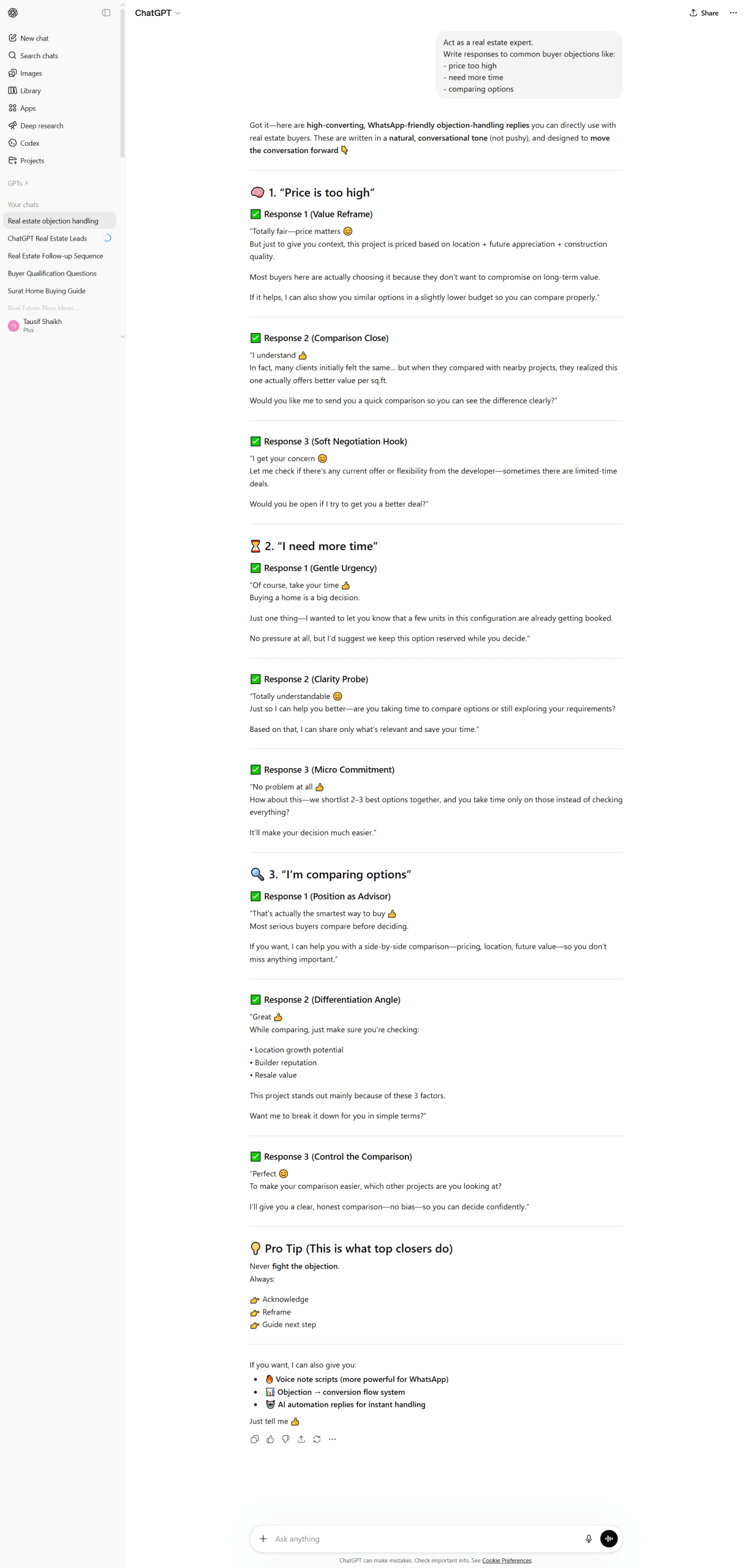
A simple framework:
Prompt formula:
Role + audience + context + goal + format + tone + constraint
For example:
Act as a real estate agent in Surat. Write a WhatsApp follow-up for a buyer who asked about a 2BHK apartment under 50 lakhs. The goal is to move the lead toward a site visit. Keep it conversational, short, confident, and not pushy. Give me 3 versions.
Why this works:
- the role shapes the voice
- the audience shapes the message
- the goal shapes the CTA
- the format shapes the output length
- the constraint reduces fluff
Here is another example for content:
Act as an SEO strategist for a real estate business. Create an outline for a blog post targeting first-time homebuyers searching for 2BHK homes in Surat under 50 lakhs. Include search intent, H2s, FAQs, CTA ideas, and internal-link opportunities.
And one for qualification:
Act as a real estate sales consultant. Create 8 lead qualification questions for a buyer interested in residential property. The questions should uncover budget, timeline, financing status, preferred area, property type, and seriousness level.
Key takeaway: the more context you give, the less cleanup you need later.
SEO Strategy to Rank This Content
Want consistent traffic?
Then do not publish random AI articles and hope for the best.
Build topical depth instead.
A stronger strategy looks like this:
1. Start With High-Intent Topics
Begin with pages and articles that map closely to real buyer questions, local searches, and conversion intent.
2. Build Topic Clusters
Support your main article with related pieces on follow-up, local SEO, buyer qualification, landing pages, and AI tools.
3. Use Contextual Internal Links
Link related articles where they naturally help the reader continue the journey, not as forced “read more” add-ons.
4. Add Original Context
Bring in local examples, prompt templates, workflow screenshots, and practical advice that generic AI summaries cannot match.
5. Match the CTA to Search Intent
Informational pages should guide readers toward the next useful step, such as a checklist, call, audit, or consultation.
That is also where tool-stack content fits naturally. Instead of treating software as a separate topic, it helps to frame it as part of a complete system. That is the same reason pages covering AI tools for real estate lead generation work better when they support content, capture, and follow-up together instead of listing tools in isolation.
Common Mistakes to Avoid
- Publishing generic AI content: if the draft sounds polished but says nothing specific, it will not build trust or generate strong conversions.
- Using one message for every lead: buyers at different stages need different follow-ups, not copy-paste replies.
- Skipping the lead-capture layer: traffic without a useful offer or clear CTA usually turns into lost opportunity.
- Ignoring follow-up timing: strong content cannot fix weak response speed.
- No qualification process: without structure, teams spend too much time on low-intent prospects.
- Relying on AI without human review: your local knowledge, tone, positioning, and judgment still matter.
Advanced Strategies for 2026

- AI + CRM integration: move inquiries into your pipeline with cleaner notes, tags, and next-step suggestions.
- Source-based follow-up logic: use different scripts for website leads, social leads, ad leads, and referral leads.
- Intent-based segmentation: separate first-time buyers, investors, and relocation leads so the messaging stays relevant.
- Lead scoring systems: rank prospects by budget, timeline, financing readiness, and engagement level.
- Content repurposing workflows: turn one article into emails, reels, WhatsApp tips, and landing page angles.
- Conversation libraries: build reusable prompts and reply banks so your team does not start from scratch every time.
Frequently Asked Questions
Can ChatGPT generate real estate leads?
Not directly. ChatGPT helps create the content, lead magnets, landing pages, follow-ups, and qualification flows that attract and convert potential buyers into inquiries.
Is ChatGPT good for real estate marketing?
Yes, when used properly. It can make content production, messaging, and lead nurturing faster and more consistent. It works best as part of a broader marketing and sales process, not as a standalone replacement for strategy.
How do real estate agents use ChatGPT?
Agents use ChatGPT for blog content, property descriptions, landing pages, WhatsApp replies, email drips, objection handling, buyer qualification questions, and social media content.
How can I get real estate leads using ChatGPT?
Start by creating high-intent content that targets real buyer questions. Then connect that content to a landing page or lead magnet, and follow it with a structured follow-up sequence.
Can ChatGPT replace a real estate agent?
No. It can improve speed and consistency, but it cannot replace relationship-building, local expertise, trust, negotiation, and closing skill.
What are the best prompts for real estate lead generation?
The best prompts include role, audience, context, goal, format, tone, and constraints. Clear prompts produce stronger, more usable outputs than vague prompts.
Is ChatGPT better than a CRM for real estate?
No. A CRM organizes contacts, pipeline stages, and activity. ChatGPT complements that by improving content, messaging, and communication workflows.
How does AI improve real estate follow-ups?
AI helps teams reply faster, create structured message sequences, personalize outreach more easily, and stay consistent even as lead volume increases.
Can ChatGPT write property descriptions?
Yes. It can help turn raw listing details into clearer, more engaging descriptions. The best results come when you add specifics about the property, buyer profile, and local context.
How do I automate real estate lead follow-ups using AI?
Create message sequences for different inquiry types, connect them to your CRM or communication workflow, and review the outputs so they match your tone and market.
What type of content works best for real estate lead generation?
High-intent content usually works best: local area guides, budget-based property topics, first-time buyer content, investment comparisons, and decision-stage resources.
Can ChatGPT help with local SEO for real estate?
Yes. It can help generate location-specific content ideas, page outlines, FAQs, and supporting copy for neighborhood or city-level search intent.
How accurate is ChatGPT for real estate advice?
It is useful for drafting, structuring, and idea generation, but local pricing, regulations, project details, and time-sensitive market information should always be reviewed carefully before publishing or sending to clients.
Is ChatGPT useful for real estate beginners?
Yes. It can shorten the learning curve by helping beginners create content, practice messaging, organize workflows, and build a more professional lead process.
What are the limitations of using ChatGPT in real estate?
It can produce generic output if the prompts are weak, and it still needs human review for accuracy, tone, market fit, and conversion quality. It works best as an accelerator, not an autopilot.
Final Thoughts
Real estate success is no longer about getting the most leads.
It is about building the kind of system that gives every good lead a real chance to convert.
That means:
- content that attracts the right audience
- offers that turn attention into inquiries
- follow-ups that arrive on time
- qualification that helps you focus on serious buyers
And that is the real advantage of ChatGPT.
Not hype.
Not shortcuts.
Consistency.
Start with one workflow.
Improve one prompt.
Build one working sequence.
Then scale from there.
Because in 2026, the agents who win will not just be the ones with more traffic.
They will be the ones with better systems.
In other words: ChatGPT does not replace great agents. It gives great agents a system that scales.