
What Is AI Visibility in Marketing? A Complete 2026 Guide
Search is still here. But search behavior has changed fast. More people now ask a question, get an AI-generated answer, and decide what to do next before they ever click a result.
That changes how marketers win attention. Your content can rank in search and still stay invisible during the answer stage. That is where AI visibility comes in.
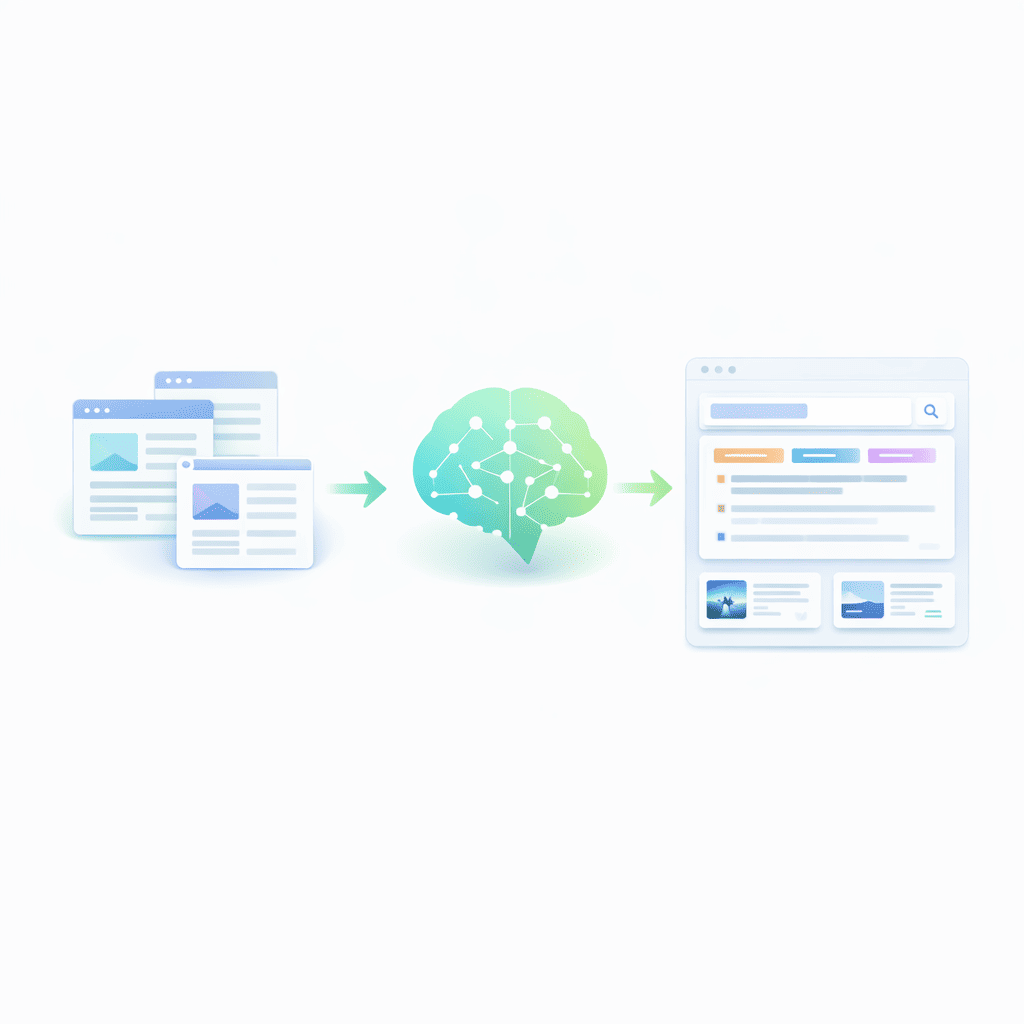
Here’s the deal: AI visibility is not an official Google metric or a universal platform score. It is a practical way to describe whether your brand, website, or content shows up inside AI-powered answers, citations, summaries, and recommendations.
Most people think AI visibility is about ranking. It is not. It is about becoming the easiest trustworthy source for an answer engine to understand, reuse, and cite.

What is AI visibility in marketing?
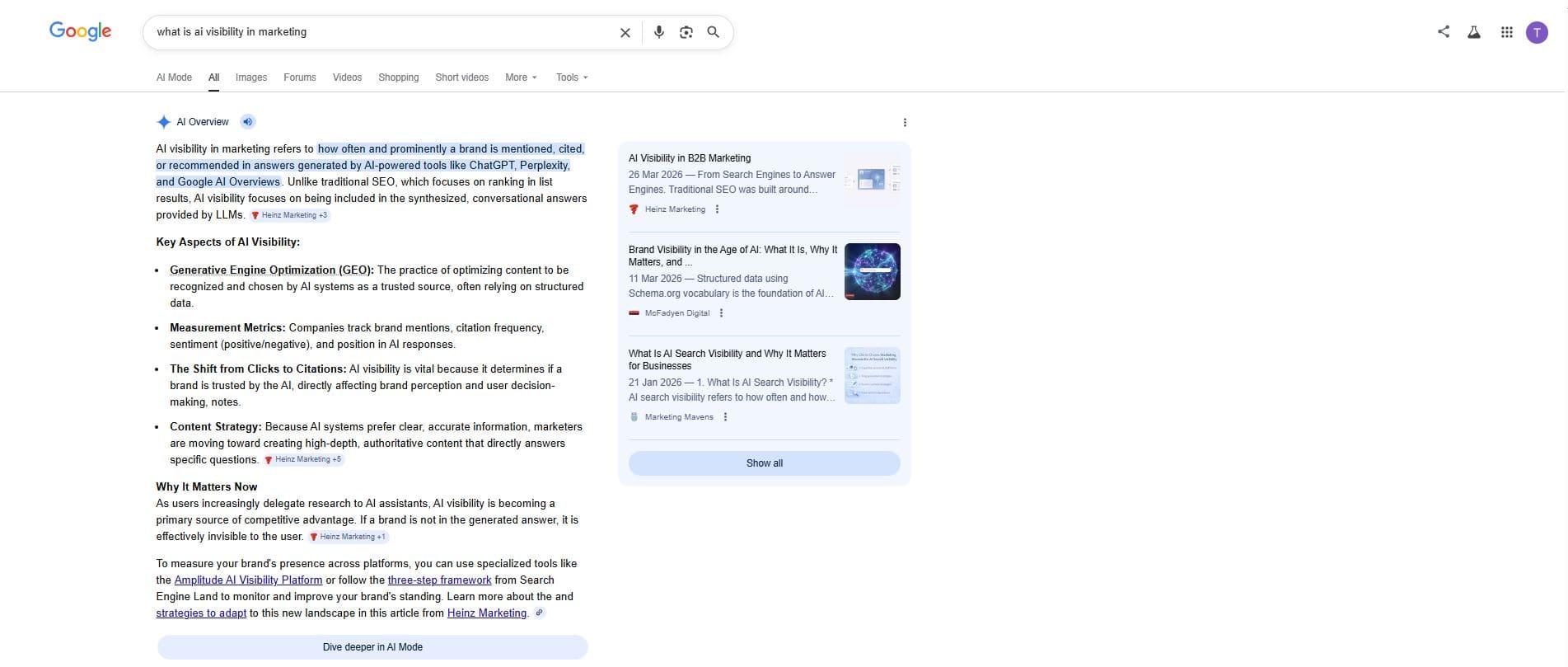
AI visibility in marketing means your content being selected, summarized, mentioned, or cited inside AI-generated answers across platforms like Google AI Overviews, ChatGPT Search, Perplexity, and Copilot.
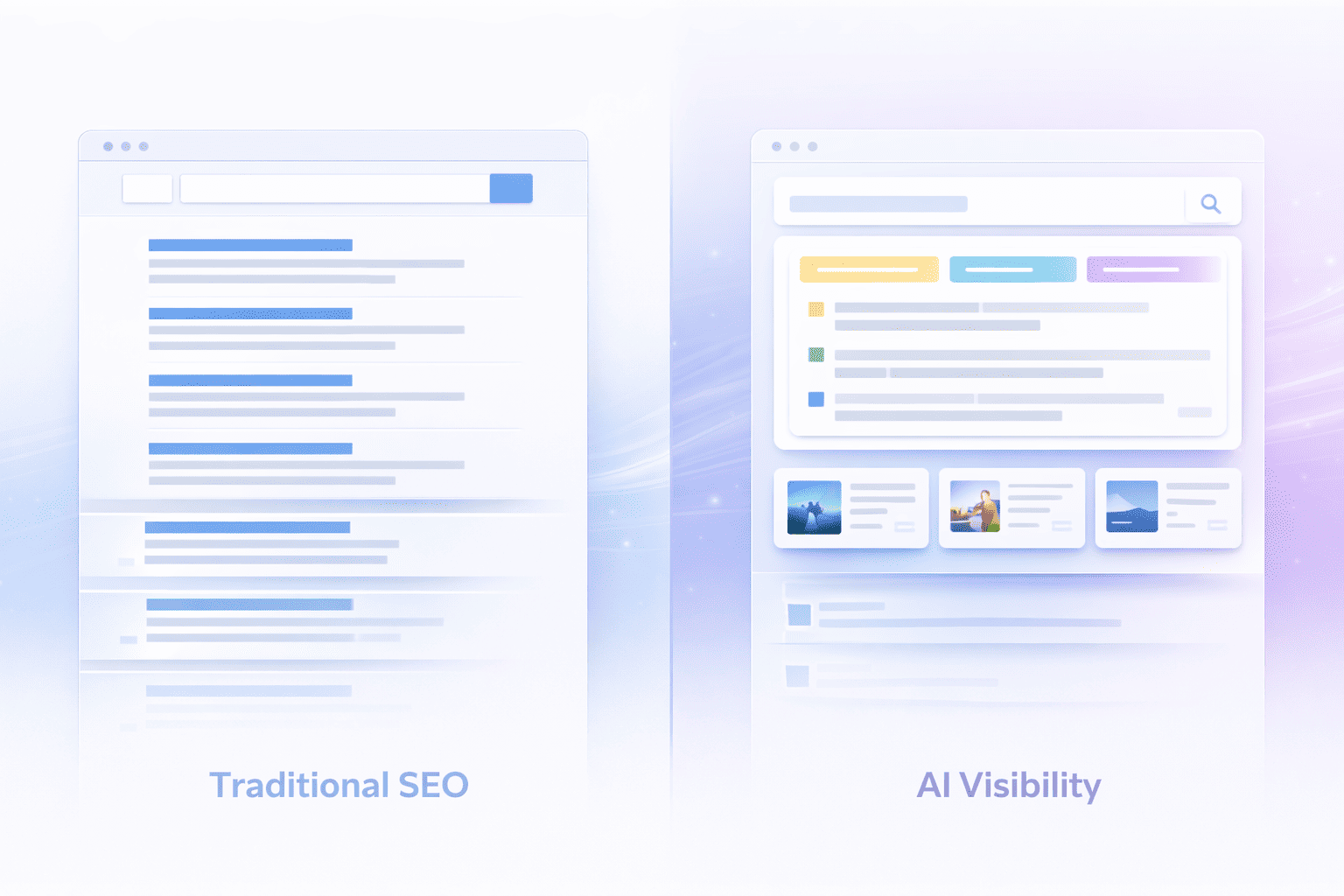
In simple terms: SEO helps users find your page. AI visibility helps your page show up inside the answer itself.
Why AI visibility matters now
For years, the main goal was simple: rank in search and earn the click.
That still matters. A lot.
But now there is one more layer. Users increasingly get a summarized answer before they decide whether to visit a site. So the question is no longer just, “Did my page rank?” It is also, “Did my page influence the answer?”
- You can have strong rankings and weak answer visibility.
- You can appear in an AI answer without getting a large traffic spike.
- You can influence an answer without always getting obvious credit.
- You now need content that is both discoverable and easy to reuse.
Bottom line: classic SEO gets you discovered. AI visibility determines whether you stay visible when users consume answers instead of links.
Is AI visibility a real metric or just a marketing concept?
It is a useful marketing concept. Not a built-in universal metric.
You will not open every platform and see one official “AI visibility score.” But the idea is still useful because it describes a real question marketers now need to answer: am I showing up when answer engines respond to the questions my audience asks?
What Google actually says about AI visibility
This is where hype needs to stop.
To appear in Google AI Overviews or AI Mode as a supporting link, your page must be indexed, eligible to appear in Google Search with a snippet, and follow normal Search technical requirements. There is no separate AI ranking system and no extra technical requirement just for AI features.
In other words: Google is not asking you to invent a new optimization playbook from scratch. It is still asking you to publish useful, crawlable, indexable, snippet-eligible pages.
Eligibility comes first
If the page is not indexed or not snippet-eligible, it is already in trouble before AI visibility becomes a strategy question.
Useful content still wins
Helpful, reliable, people-first content remains the foundation. AI visibility is not a shortcut around SEO quality.
The big mistake? Treating AI visibility like a secret hack. It is usually the outcome of strong fundamentals plus content that is clear enough to interpret and useful enough to cite.
What AI visibility really means
Most articles oversimplify this topic. They talk about AI visibility as if it were one clean number. It is not.
AI visibility usually shows up in four ways:
Your page is directly linked or cited as a source. This is the clearest and easiest form to verify.
Your brand name is mentioned inside the answer, even if the exact page is not the main linked source.
Your ideas influence the answer, but your brand is not clearly credited.
Your product, service, or brand is suggested during the research or comparison journey.
How AI visibility is different from SEO and AEO
| Concept | Main focus | Key question |
|---|---|---|
| SEO | Getting pages discovered and ranked in search | Can users find my page in search results? |
| AEO | Structuring content so it is easier to answer from | Is my page built to answer questions clearly? |
| AI visibility | Whether your brand or page is surfaced in AI answers | Am I showing up when answer engines respond? |
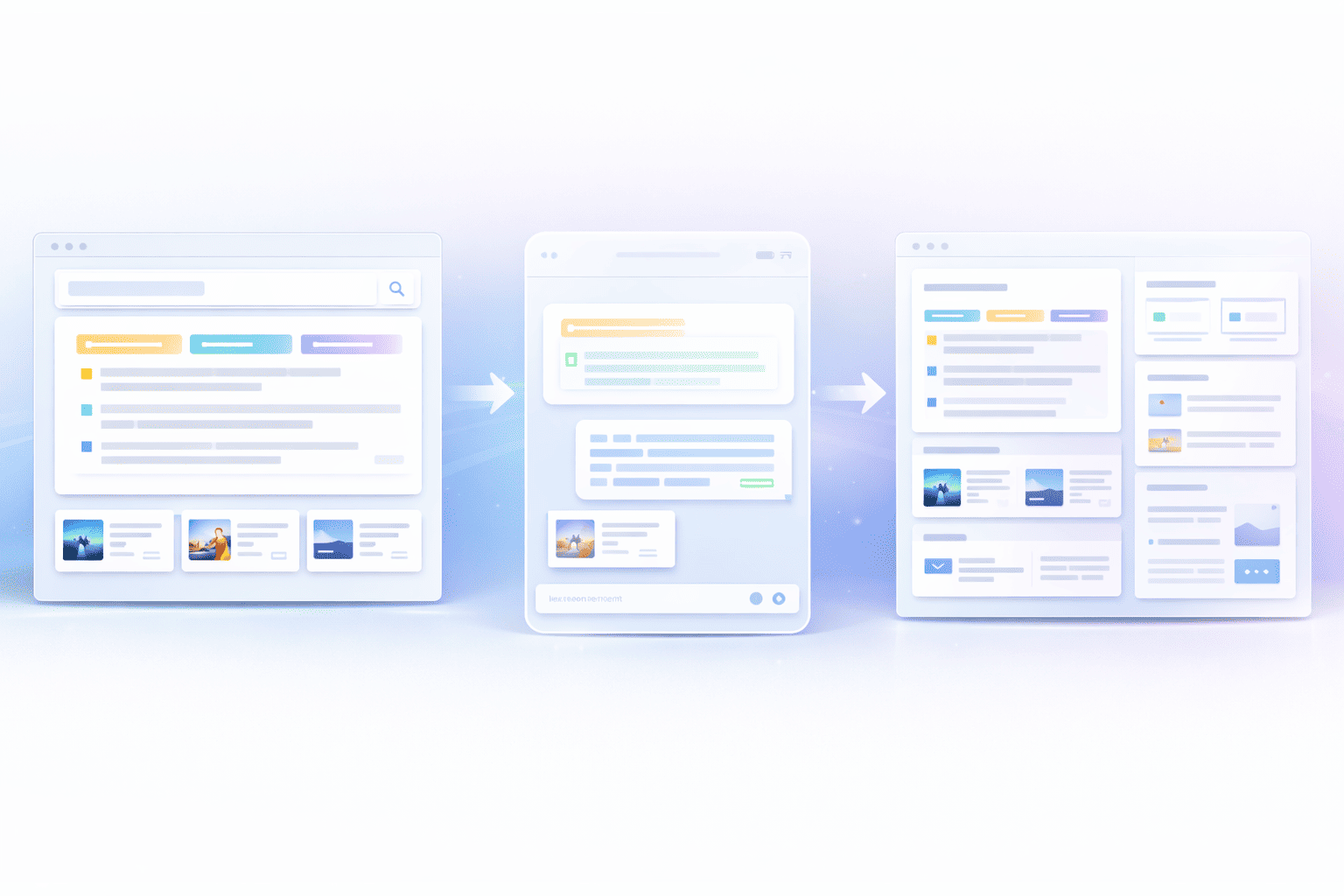
So no, AI visibility does not replace SEO. It builds on top of it.
If SEO is the foundation and AEO improves answer-readiness, AI visibility is the real-world outcome you are trying to observe.
That is also why a site working on AI-driven lead generation or improving automated follow-up workflows should not treat AI visibility as a separate silo. It sits on top of the same content quality and structural clarity that already drive strong SEO.
How Google, ChatGPT Search, Perplexity, and Copilot differ
One of the fastest ways to get this topic wrong is to treat every AI answer interface as if it behaves the same way. It does not.
| Platform | How visibility appears | What marketers can observe | What matters most |
|---|---|---|---|
| Google AI Overviews / AI Mode | AI-generated answers inside Search with supporting links | Whether your page appears as a supporting link for eligible informational queries | Indexing, snippet eligibility, clear answer blocks, and broad topical coverage |
| ChatGPT Search | Direct answers with inline citations and sometimes a Sources panel | Whether your page is cited, mentioned, or repeatedly reused across follow-up prompts | Clarity, clean structure, concise explanations, and source-worthy depth |
| Perplexity | Citation-led answers with numbered links built into the response | Which URLs get cited and how often they appear across research-style prompts | Factual clarity, concise definitions, and easy-to-verify claims |
| Copilot | Conversational summaries that can show a Sources button when web search is used | Whether your page appears in grounded web-assisted answers and comparison flows | Clear informational formatting, trustworthy source alignment, and strong explanatory content |
Sharpest way to think about Google
Google is mostly an eligibility + SEO game. If the page is crawlable, indexed, snippet-ready, and genuinely useful, it can compete for visibility in AI features.
Sharpest way to think about ChatGPT
ChatGPT Search is more clarity + extraction driven. If your page explains the topic clearly and fast, it becomes easier to reuse and cite.
Sharpest way to think about Perplexity
Perplexity is more citation density driven. It makes source visibility easier to inspect because citations are built into the answer experience.
Sharpest way to think about Copilot
Copilot is more hybrid search + summarization driven. When web search is involved, source visibility depends on whether your page is judged useful enough to ground the response.
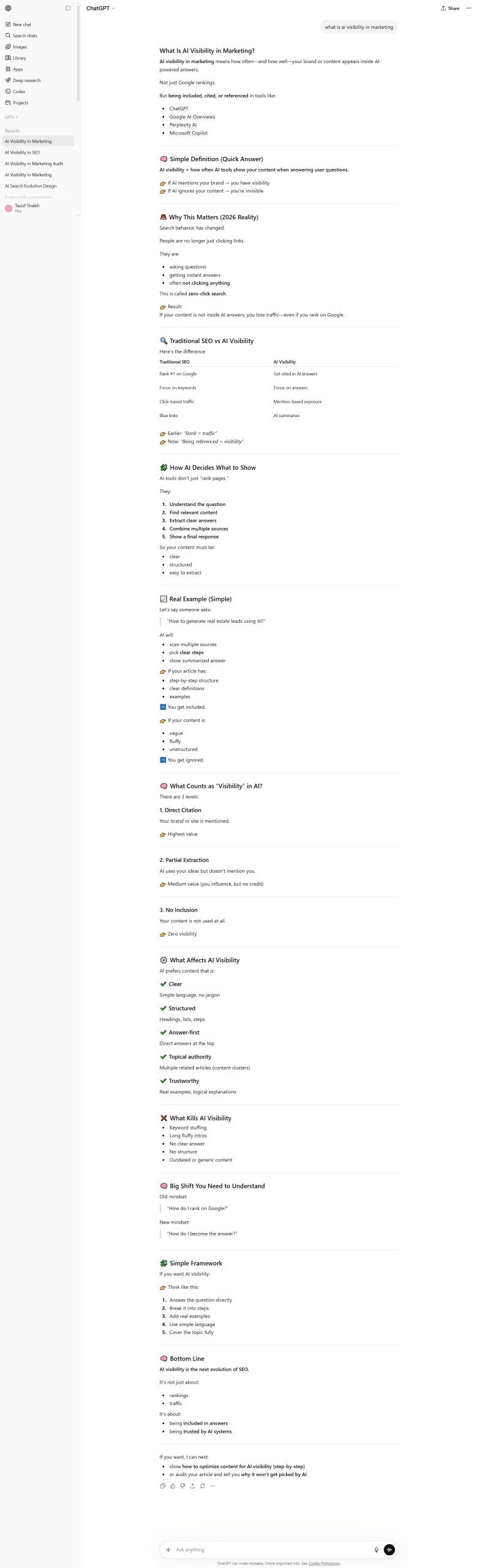
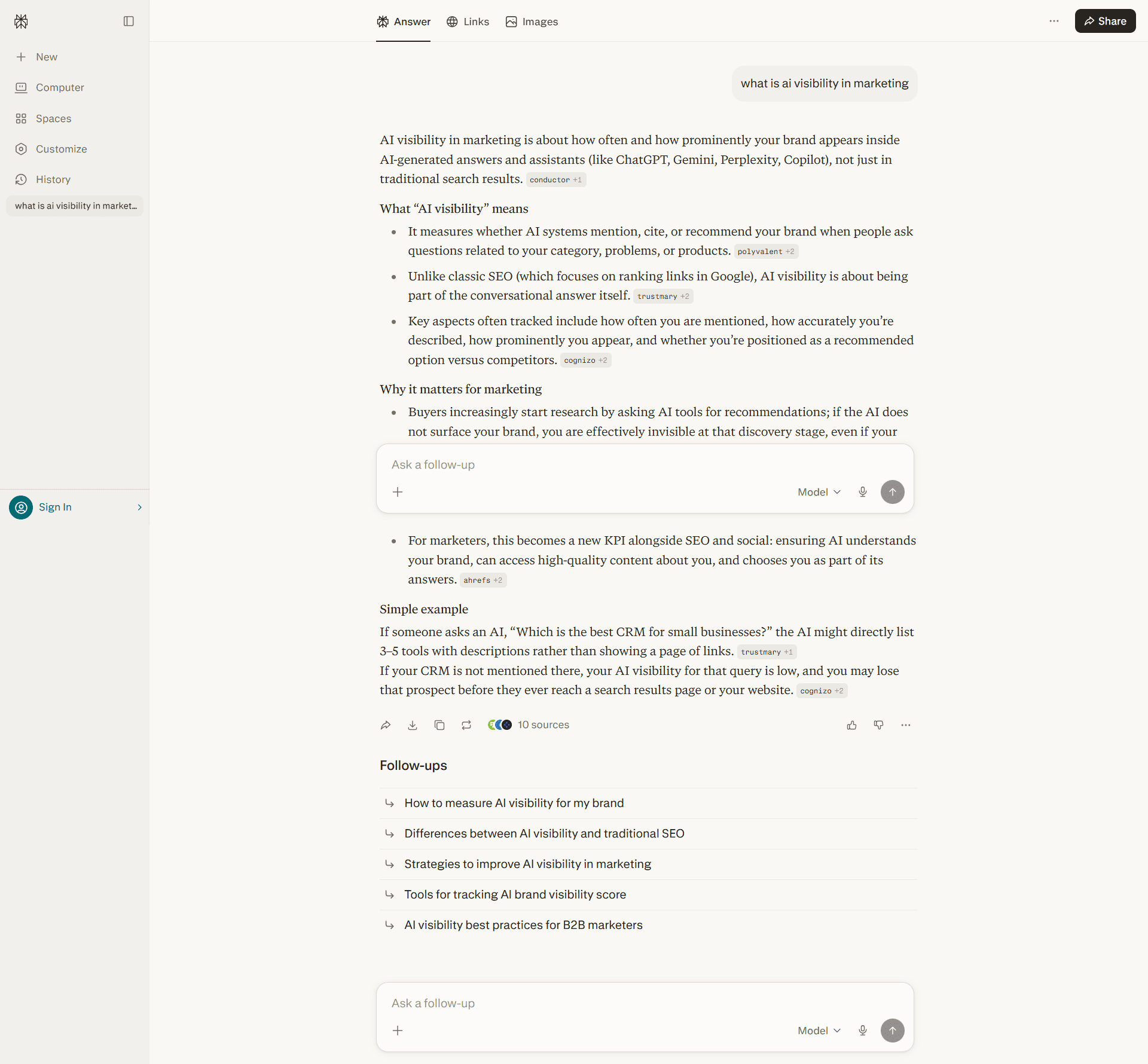
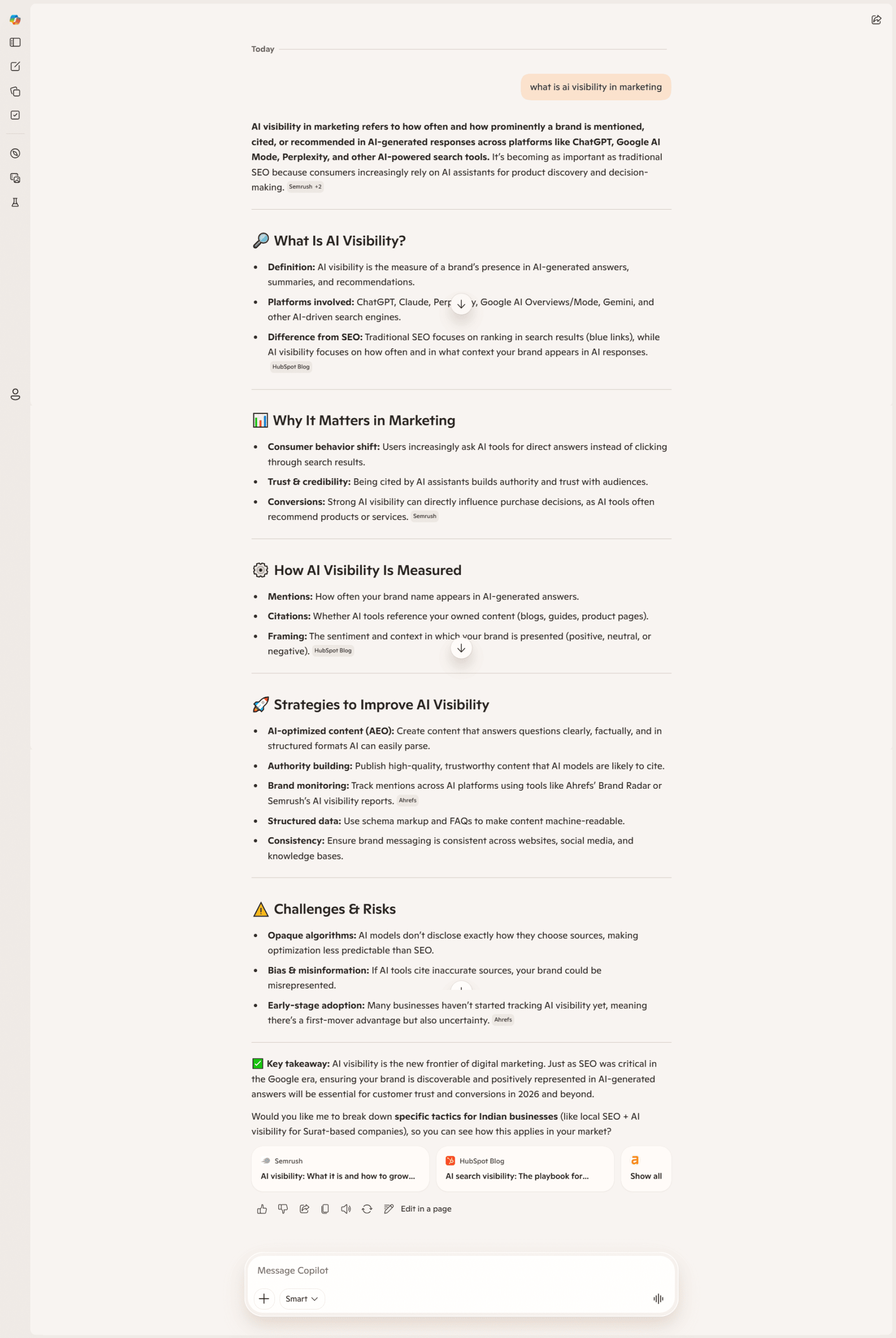
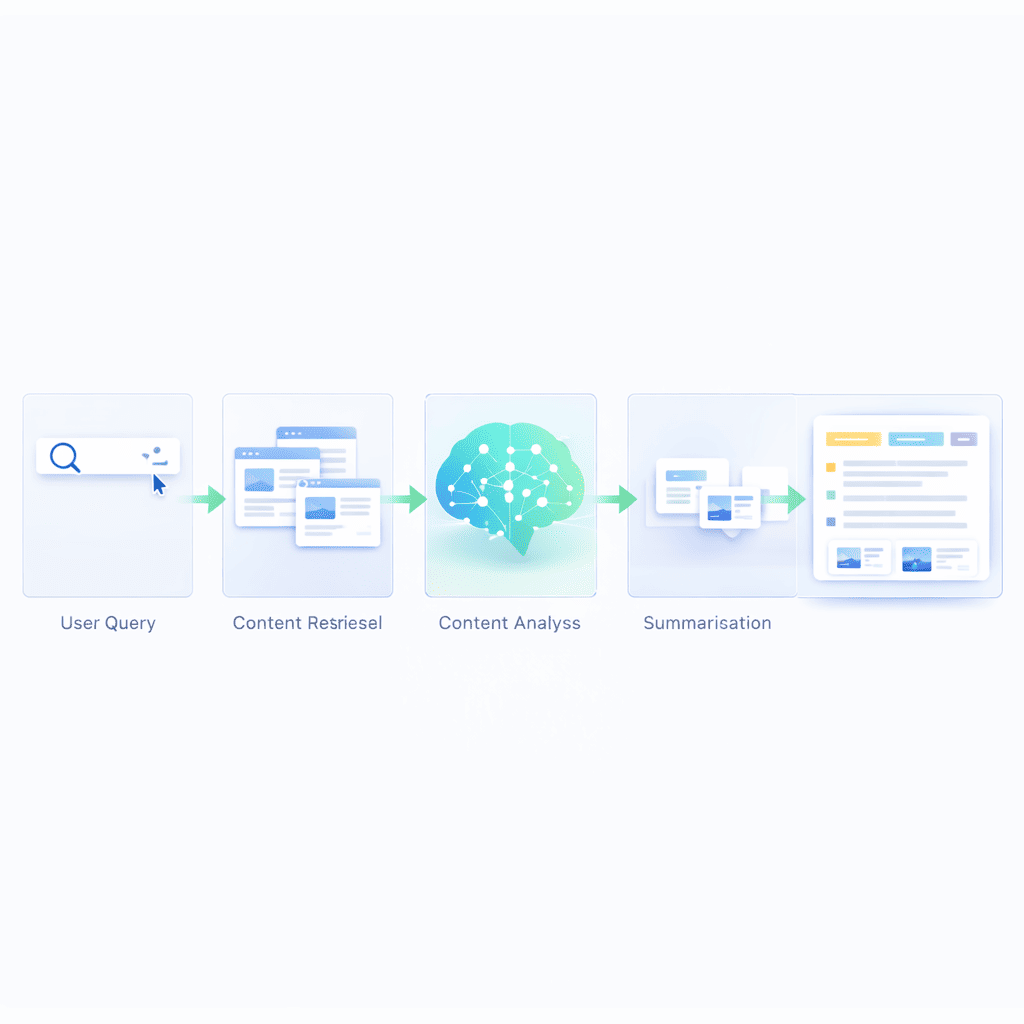
How AI-assisted answer systems surface and summarize information
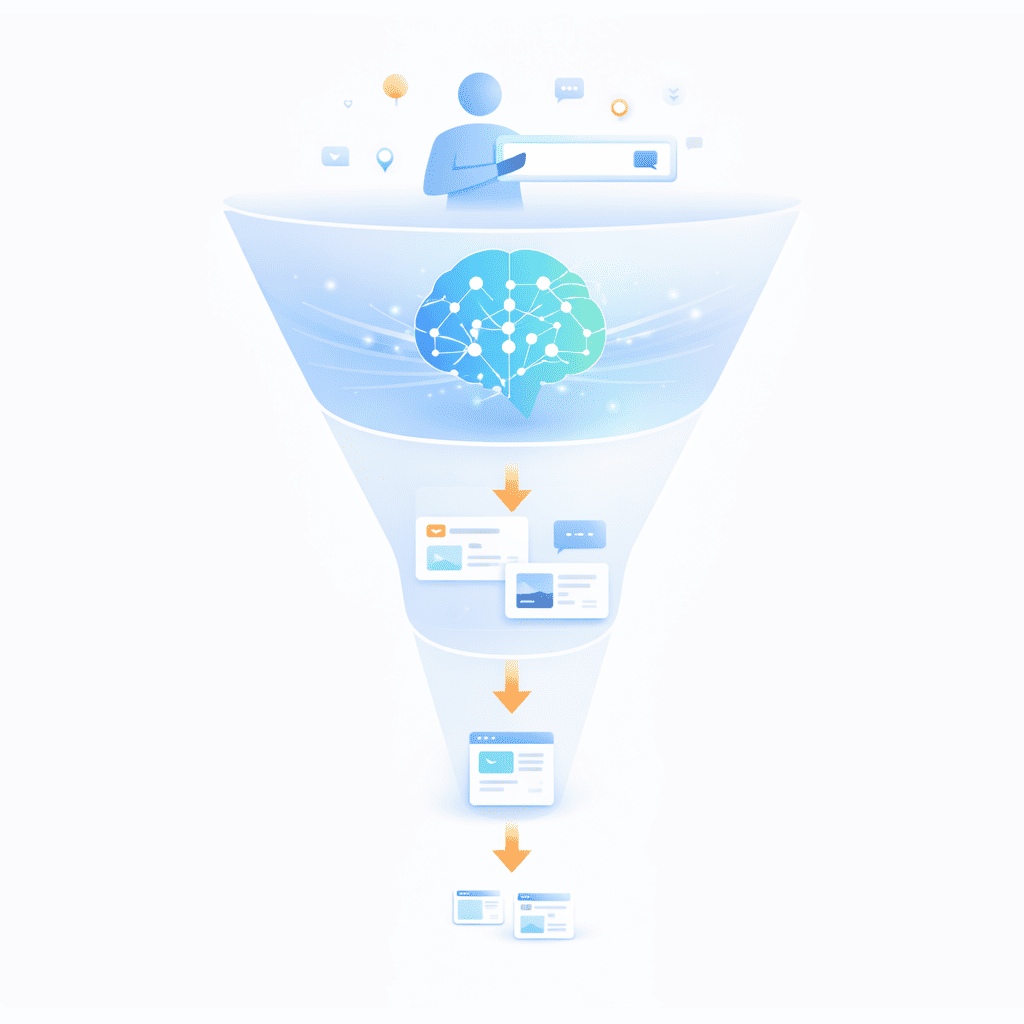
At a high level, many AI-assisted answer systems follow a similar pattern: they find candidate information, judge what looks useful, generate a response, and sometimes show supporting sources.
But the exact process varies by platform, interface, model, and query type.
-
Retrieval
The system first needs possible sources. That often includes indexed web pages or retrieved supporting content.
-
Selection
Not every relevant page gets used. Pages that are clearer, more useful, and easier to understand are stronger candidates.
-
Synthesis
The answer is reformulated. The system is not simply pasting your page word for word.
-
Attribution
Sometimes you get a citation. Sometimes a mention. Sometimes your page influences the answer without obvious credit.
What AI visibility does not guarantee
- No guaranteed traffic: appearing in an answer does not always lead to a click.
- No stable citations: the same query can surface different sources over time.
- No one-size-fits-all formula: platform behavior changes by query and interface.
- No universal score: there is no single cross-platform AI visibility metric you can trust blindly.
Eligibility comes before inclusion
This part sounds less exciting. But it is critical.
You cannot ask, “Why am I not visible in AI answers?” before checking whether your page is even set up to compete.
Crawlable
Your content must be accessible to search systems.
Indexable
If the page is not indexed, your visibility opportunity drops immediately.
Snippet-ready
Pages need enough visible, useful text to function as strong supporting sources.
In plain English: no amount of AI strategy can fully rescue a page that is blocked, buried, thin, or poorly structured.
That same logic is why pages explaining how ChatGPT fits into lead generation or showing how AI helps qualify leads tend to perform better when they answer fast, use visible text, and cover the obvious follow-up questions on-page.
Which query types create the biggest AI visibility opportunities?
Not every query behaves the same way. Some naturally create stronger AI-answer opportunities than others.
| Query type | Example | Visibility opportunity | Best page type |
|---|---|---|---|
| Definition queries | What is AI visibility in marketing? | High | Definition-led page with a direct answer near the top |
| How-to queries | How do you improve AI visibility? | High | Step-by-step guide with examples and logic |
| Comparison queries | SEO vs AEO vs AI visibility | Medium to high | Comparison page with tables and use-case detail |
| Commercial research | Best AI tools for SEO reporting | Medium | Balanced comparison content with clear criteria |
| Local intent | Best digital marketing agency near me | Variable | Local pages, reviews, and local SEO signals |
| High-intent transactional | Buy CRM software today | Usually lower informational citation value | Product and pricing pages |
Bottom line: AI visibility usually matters most for research-stage queries. That means definitions, explainers, comparisons, early-stage problem solving, and complex informational searches.
Documented platform-behavior examples you can actually learn from
This is the section most articles get wrong. They either stay vague or invent fake “case studies.”
So let’s keep it honest. The safest evidence base is not made-up wins. It is documented platform behavior plus a repeatable test log.
ChatGPT Search
When ChatGPT uses search, the response can include inline citations. It can also show a Sources button or panel.
What that tells marketers: if your page is clear enough to be reused, source visibility can be inspected directly inside the answer flow.
Perplexity
Perplexity is built around numbered citations linking to original sources.
What that tells marketers: it is often the easiest place to check whether your content is being chosen as a source for research-style prompts.
Copilot
When Copilot uses web search, users can open a Sources button to inspect the query and sources used.
What that tells marketers: visibility is tied to whether your page is selected as grounding material for the response.
What this means in practice
These are not hypothetical “growth hacks.” They are observable behaviors built into the actual answer interfaces.
So instead of asking, “What is the secret AI ranking trick?” ask a better question: Is my page the kind of source these systems can cleanly cite, summarize, and trust?
A real testing framework with example output
Now let’s turn that into something a marketer can actually use.
The right workflow is simple: use the same query idea across platforms, log what happened, then decide what to improve.
| Query | Platform | What result looked like | Visibility | Action |
|---|---|---|---|---|
| What is AI visibility in marketing | Google AI Overviews | Definition-style summary with supporting links | Check whether your page appears as a supporting link | Strengthen definition block, intro clarity, and snippet-readiness |
| What is AI visibility in marketing | ChatGPT Search | Direct answer with inline citations and possible Sources panel | Check whether your page is cited, mentioned, or absent | Tighten answer block and make the page easier to extract from |
| What is AI visibility in marketing | Perplexity | Citation-led answer with numbered source links | Check which URLs win repeated research-style prompts | Add concise definitions, examples, and verifiable claims |
| SEO vs AEO vs AI visibility | Copilot | Conversational summary with source inspection when web search is used | Check whether your comparison page appears in grounded answers | Improve comparison table and clarify platform differences |
This is the shift: stop treating AI visibility like a mystery score. Start treating it like a repeatable observation process.
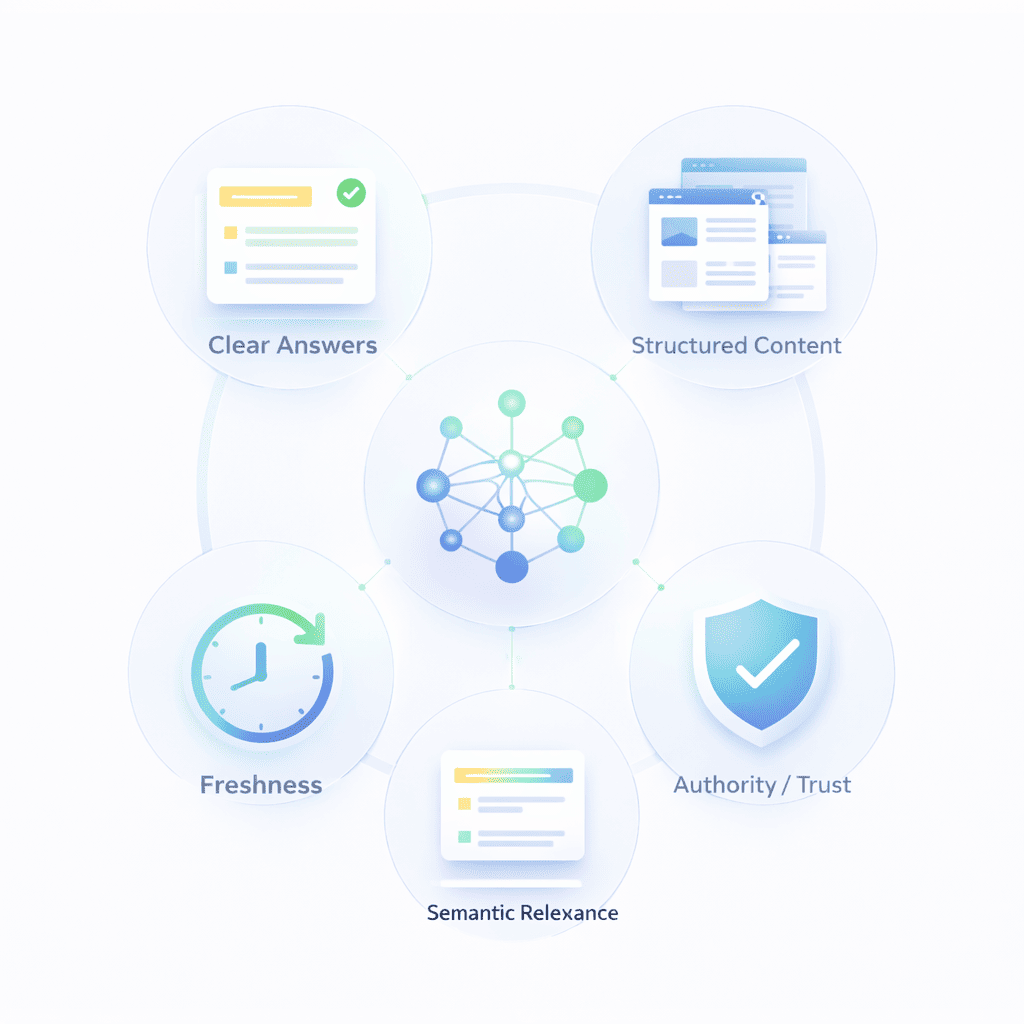
What increases the chances that your content gets surfaced or cited?
There is no public universal list of AI-answer ranking factors across every platform. So it is smarter to focus on patterns that make content easier to retrieve, interpret, and trust.
1. Direct answers early
If your page takes too long to answer the main question, it becomes a weaker source candidate.
2. Strong structure
Clear headings, short sections, comparison tables, and useful FAQs make pages easier to parse.
3. Topical depth
One thin page is weak. A connected cluster of useful pages creates stronger context.
4. Entity clarity
Precise names, concepts, and relationships make your content easier to interpret correctly.
5. Useful examples
Pages become more trustworthy when they combine explanation with scenarios, screenshots, or practical detail.
6. Freshness when needed
Some topics stay stable. Others change fast. Updated facts and current terminology matter more on fast-moving topics.
A step-by-step framework to improve AI visibility
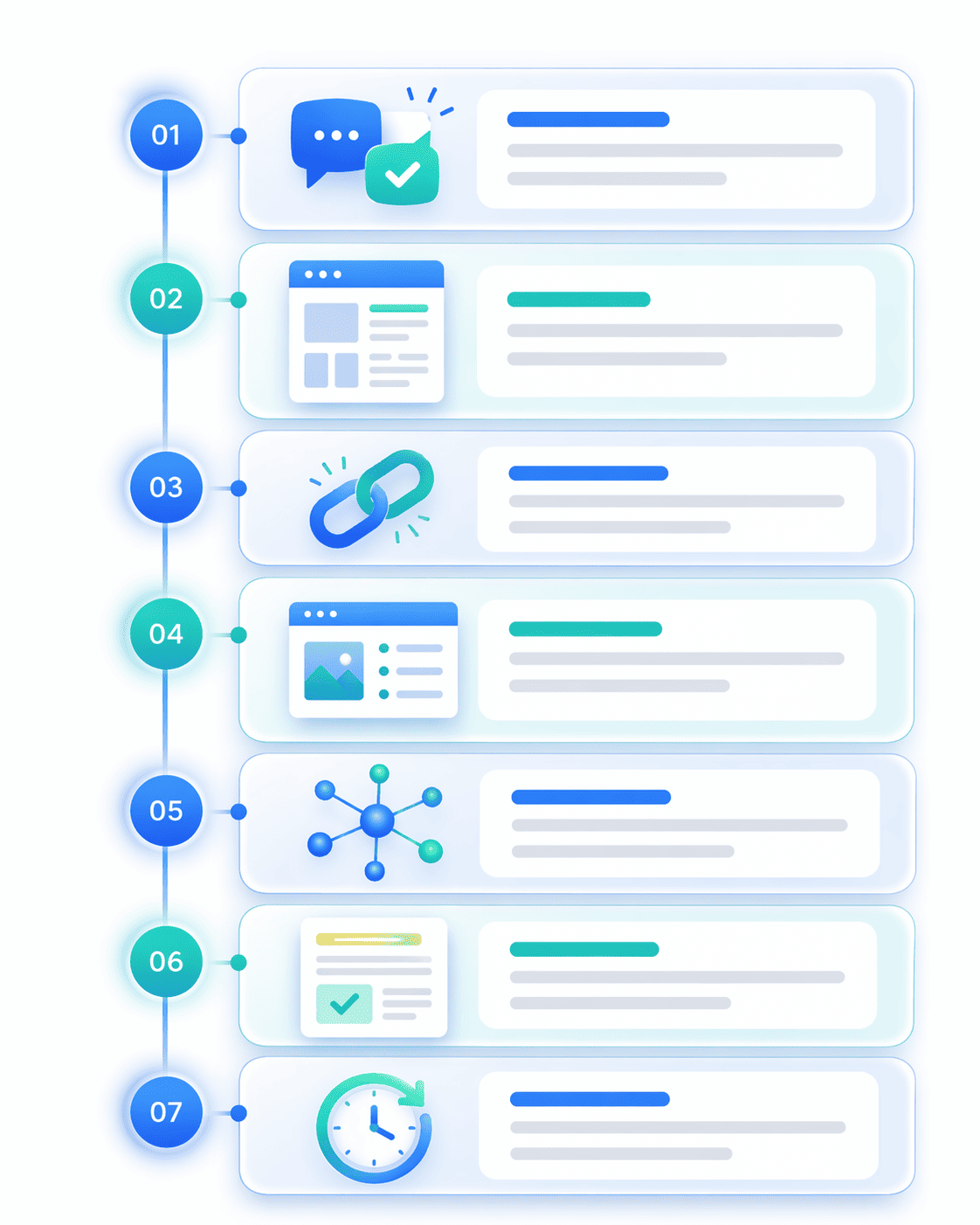
Now let’s make this practical. Here is a framework you can actually use.
-
Choose the right query set
Start with real audience questions. Focus on high-value definitions, how-to searches, comparisons, and early-stage commercial research.
-
Write a clear answer block near the top
Answer the main question in the first 40 to 70 words. This improves clarity and creates a clean snippet-style explanation.
-
Build the page around follow-up questions
Cover what it is, how it works, why it matters, how to improve it, and how to measure it.
-
Add examples and decision logic
Show how the idea works in practice and explain what changes when intent changes.
-
Support the page with related content
One strong page helps. A connected topic cluster helps more.
-
Test across platforms
Check Google, ChatGPT Search, Perplexity, and Copilot using the same core query and close variations.
-
Log what you see
Record whether you were cited, mentioned, summarized without credit, or absent.
-
Improve based on evidence
If visibility is weak, fix clarity, coverage, structure, and freshness before blaming the platform.
Real-world example: strong page vs weak page
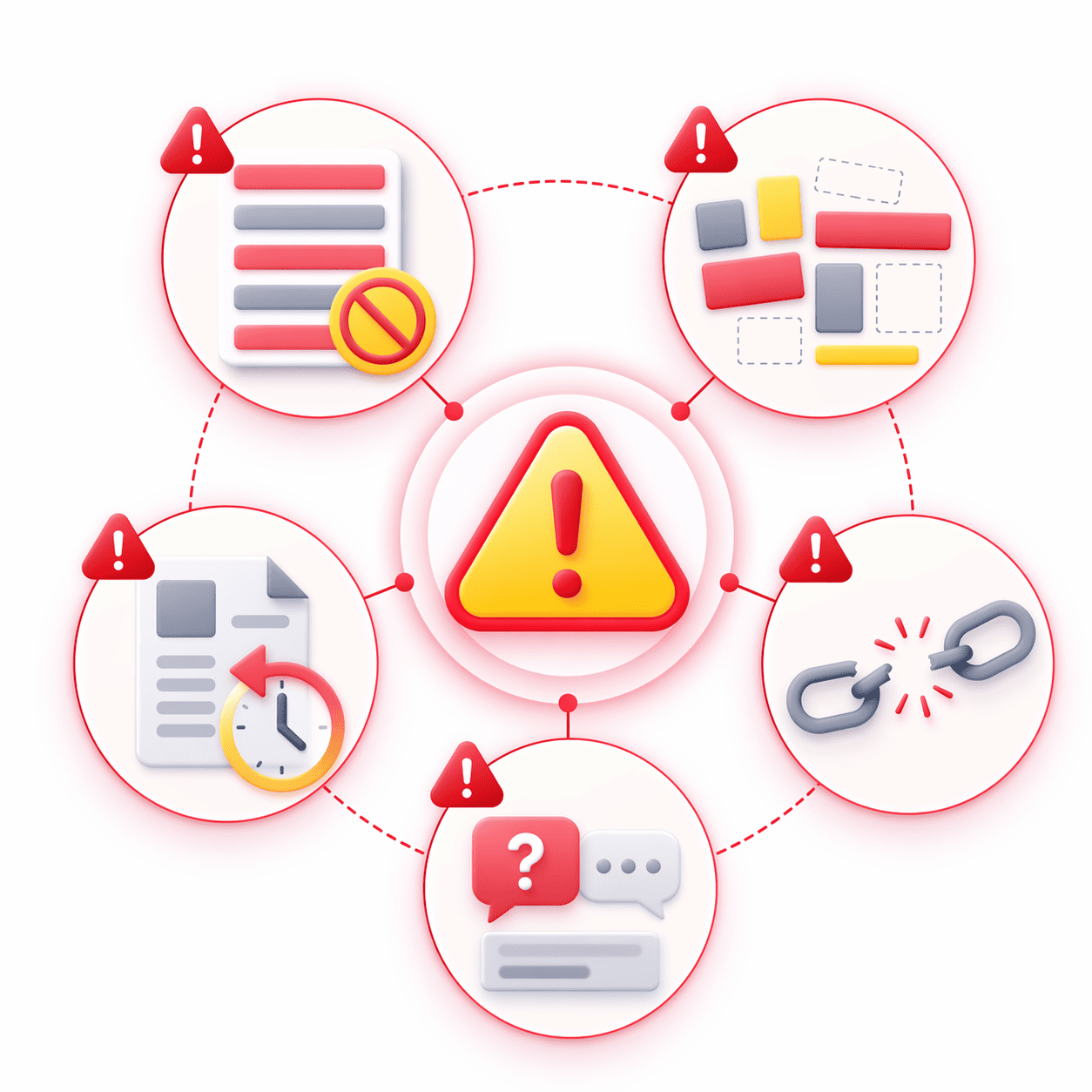
Let’s use a simple scenario. Two companies publish on the same topic: “What is AI visibility in marketing?”
Why it struggles
- Long dramatic intro with no direct definition
- Vague claims with little proof
- Lumps all platforms together
- No testing workflow or measurement logic
- Thin examples and weak section depth
Why it wins more often
- Answers the question early and clearly
- Separates Google, ChatGPT Search, Perplexity, and Copilot
- Explains eligibility, measurement, and limitations
- Uses comparison tables, examples, and FAQs
- Matches the follow-up questions users actually ask
Which page is more likely to become a useful source for answer systems? The stronger page.
Not because it used a trick. Because it did a better job answering the question in a way that is easier to interpret, trust, and cite.
A practical monthly workflow for marketers
Here is a simple operating system you can use every month.
Monthly AI visibility workflow
- Build a target query list: start with 20 to 50 high-value audience questions.
- Group by intent: definition, how-to, comparison, commercial research, branded, local.
- Test across platforms: Google, ChatGPT Search, Perplexity, and Copilot.
- Log the output: cited, mentioned, uncited influence, or absent.
- Track page-level signals: impressions, clicks, branded demand, and assisted visibility changes.
- Identify patterns: which pages keep earning citations and which topics stay invisible.
- Update weak pages: improve intros, add examples, tighten structure, refresh facts.
- Repeat next month: trends matter more than one-off wins.
| Column in your tracking sheet | What to record |
|---|---|
| Query | The exact prompt or search wording used |
| Platform | Google, ChatGPT Search, Perplexity, or Copilot |
| Visibility type | Cited, mentioned, included without credit, or absent |
| Landing page | The URL that appeared, if any |
| Answer notes | What the tool emphasized and how your page fit in |
| Follow-up drift | Whether follow-up questions changed sources |
| Next action | Rewrite intro, add table, improve FAQ, update facts, or build support content |
This is where your broader content cluster matters. A page explaining AI visibility will usually perform better when it is supported by related, useful pages on practical implementation, like building an AI chatbot for lead capture or evaluating AI tools for lead generation.

How to measure AI visibility without fooling yourself
Measurement is where this topic gets messy. So let’s keep it honest.
You can measure parts of AI visibility. You cannot reduce it to one perfectly stable score.
What you can track
- Citation frequency for target queries
- Brand mention rate across repeated tests
- Prompt coverage across a topic set
- Informational page growth over time
- Changes in branded search demand
- Assisted visibility patterns after content updates
What you cannot fully track
- Every hidden influence on an answer
- A universal cross-platform AI visibility score
- A fixed ranking order for all answer interfaces
- Perfect attribution from answer visibility to revenue
- Stable source behavior for every repeated prompt
Bottom line: use a proxy-based approach. That means citation share, prompt coverage, mention rate, informational page performance, and branded demand over time.
When AI visibility should matter less
AI visibility matters. But it does not matter equally for every business goal.
AI visibility matters less when
- the user is already searching your brand name
- the page is a checkout or bottom-funnel pricing page
- repeat buyers come from email, direct traffic, or community channels
- you already own the relationship through a strong audience
AI visibility matters more when
- the query is research-driven and non-branded
- the user is comparing options
- the topic needs explanation before purchase
- the market is education-heavy and content drives discovery
How humans and AI should divide the work
Publishing generic AI-written pages at scale usually does not create strong AI visibility. It creates predictable content. And predictable content is easy to ignore.
Human job
- choose the right questions
- add lived experience and nuance
- fact-check platform claims
- explain trade-offs and edge cases
- decide what deserves depth
AI job
- speed up drafts
- suggest missing subtopics
- tighten definitions
- organize outlines and FAQs
- support refreshes and rewrites
Common mistakes that kill AI visibility
Mistake 1: Treating it like a hack
There is no universal shortcut. Strong fundamentals beat gimmicks.
Mistake 2: Testing one prompt once
One result is noise. A repeated prompt set gives you something closer to signal.
Mistake 3: Confusing mentions with strong visibility
A vague mention is weaker than a clear citation and harder to turn into measurable value.
Mistake 4: Writing with no direct answer
If users must dig for the answer, answer systems may skip the page too.
Mistake 5: Ignoring technical eligibility
Blocked, buried, or weakly indexed pages often fail before content quality gets a chance.
Mistake 6: Assuming visibility always means more clicks
Sometimes the value is awareness, trust, or brand memory rather than immediate traffic.
Best practices that actually help
- Put the answer near the top of the page.
- Use headings that match real user questions.
- Add examples, not just claims.
- Use comparison tables where they clarify differences.
- Keep key information in visible text, not only in images.
- Update terminology when platforms or products change.
- Support core pages with related topic-cluster content.
- Track visibility across a query set, not just one vanity phrase.
Advanced insights most marketers miss
1. Different visibility types create different business value
A citation can drive traffic. A brand mention can build memory. Uncredited answer inclusion can still shape perception, but it is much harder to prove.
2. Follow-up prompts can change the source set fast
A broad question might surface one group of sources. A narrower follow-up can replace them completely. That is why subtopic coverage matters so much.
3. One great page is good. A great cluster is better.
A strong definition page helps. But a strong definition page supported by comparisons, use cases, FAQs, and deeper subtopic content is harder to ignore.
4. AI visibility is a visibility layer, not a full strategy
It should support SEO, brand building, education, and demand capture. It should not replace them.
Can you optimize specifically for AI Overviews and AI answers?
Yes and no.
You can improve your chances by doing the same things that help strong SEO: make pages crawlable, indexable, useful, well-structured, and clearly written.
But no, there is not a secret AI-visibility hack playbook that replaces core SEO. The better way to think about it is simple: optimize your page to become a stronger source candidate.
What this guide is based on
This guide is built on current public platform guidance and practical testing logic.
- Google Search documentation on AI features, eligibility, preview controls, and Search technical requirements
- OpenAI documentation on ChatGPT Search citations and the Sources panel
- Perplexity documentation on citation-linked answers
- Microsoft documentation on Copilot web search and source inspection
- Real marketer workflows for prompt testing, citation logging, and content refinement
No fake stats. No invented case studies. No hype-based shortcuts.
FAQ
What is AI visibility in marketing?
AI visibility in marketing is how often your content, brand, or page appears inside AI-generated answers, citations, summaries, or recommendations for relevant searches and prompts. It is a practical observation model, not an official universal metric.
Does AI visibility replace SEO?
No. AI visibility does not replace SEO. For most publishers, SEO is still the base layer because pages need to be discovered, indexed, and useful enough to surface as sources.
Is AI visibility measurable?
Partly. You can track citation frequency, brand mentions, prompt coverage, informational page growth, and branded demand. But you cannot reduce the whole topic to one clean cross-platform score.
Why can a page rank in search but still miss AI answers?
Because ranking and answer usefulness are not the same thing. A page may rank, yet still be a weak citation candidate if it lacks a direct answer, strong structure, good examples, or enough topical completeness.
Do AI citations always lead to traffic?
No. Sometimes citations create awareness more than clicks. That is why marketers should track both direct traffic and assisted signals like branded demand and repeated appearance across relevant prompts.
What kind of content performs best for AI visibility?
Definition pages, how-to guides, comparison pages, FAQs, category explainers, and topic-cluster content often create stronger informational visibility than thin product pages alone.
How often should you test AI visibility?
Monthly is a good starting point for most teams. That gives you enough time to spot trends without overreacting to one-off fluctuations.
Final thoughts
AI visibility is not a buzzword you can ignore. But it is also not a magical new metric that replaces everything you already know about SEO.
The smartest way to approach it is simple:
- build pages that answer clearly
- make sure those pages are technically eligible
- add depth, examples, and useful structure
- test across platforms, not just one
- measure patterns over time, not one lucky appearance
Bottom line: if your content is easier to discover, easier to understand, and easier to trust, it has a better chance of showing up in AI-powered answers.
Start with one high-value question. Publish the clearest answer in your niche. Then test whether the answer engines agree.
 ✓
✓
Tausif Shaikh
AI Tools Research • Lead Gen Systems • Automation WorkflowsHi, I’m Tausif. I write practical, research-backed content on AI tools, automation, lead generation, and conversion-focused systems for real businesses.
My focus is simple: study how tools actually fit into workflows, explain where they help, where they fall short, and help readers choose based on realistic business value rather than hype.
- Workflow-based evaluation
- AI software research
- Lead capture systems
- CRM & follow-up analysis
- Conversion-focused content
This article is built around product research, official product positioning, workflow comparison, and practical use-case analysis for businesses that want better lead capture and follow-up systems.
Recommendations are written to help readers make better decisions, not to promote tools blindly. Features, pricing, and positioning can change, so readers should verify current details on the official website before buying.